What determines the cost of a swimming pool?
Pool cost is the sum of seven line items — excavation, structure, waterproofing, mechanical plant, electrical/automation, finishing, and landscaping — each shifted by six variables: pool type, size, soil condition, equipment class, waterproofing quality, and site complexity. A trustworthy quote itemizes these; a single lump-sum figure hides them.
Why a Single Number Is Misleading
Search for pool construction cost and you'll find a wide spread of numbers with no shared context — different pool sizes, different equipment classes, different soil conditions, different regions. Presented as a single figure, none of them tell you what your project will actually cost.
This guide takes the opposite approach: instead of a number, it gives you the structure — the variables that move the budget and the line items a serious quote should itemize — so you can read any quote, including ours, with an informed eye.
6 Variables That Set the Budget
1Pool Type (Reinforced Concrete / Fiberglass / Prefab-Composite)
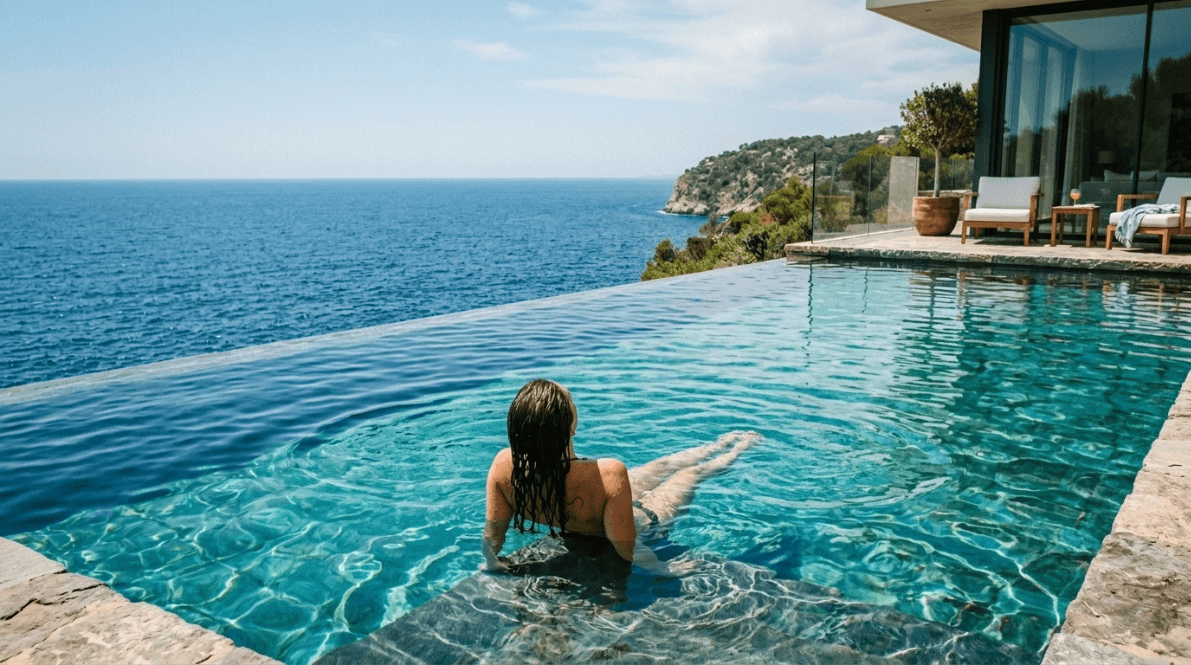
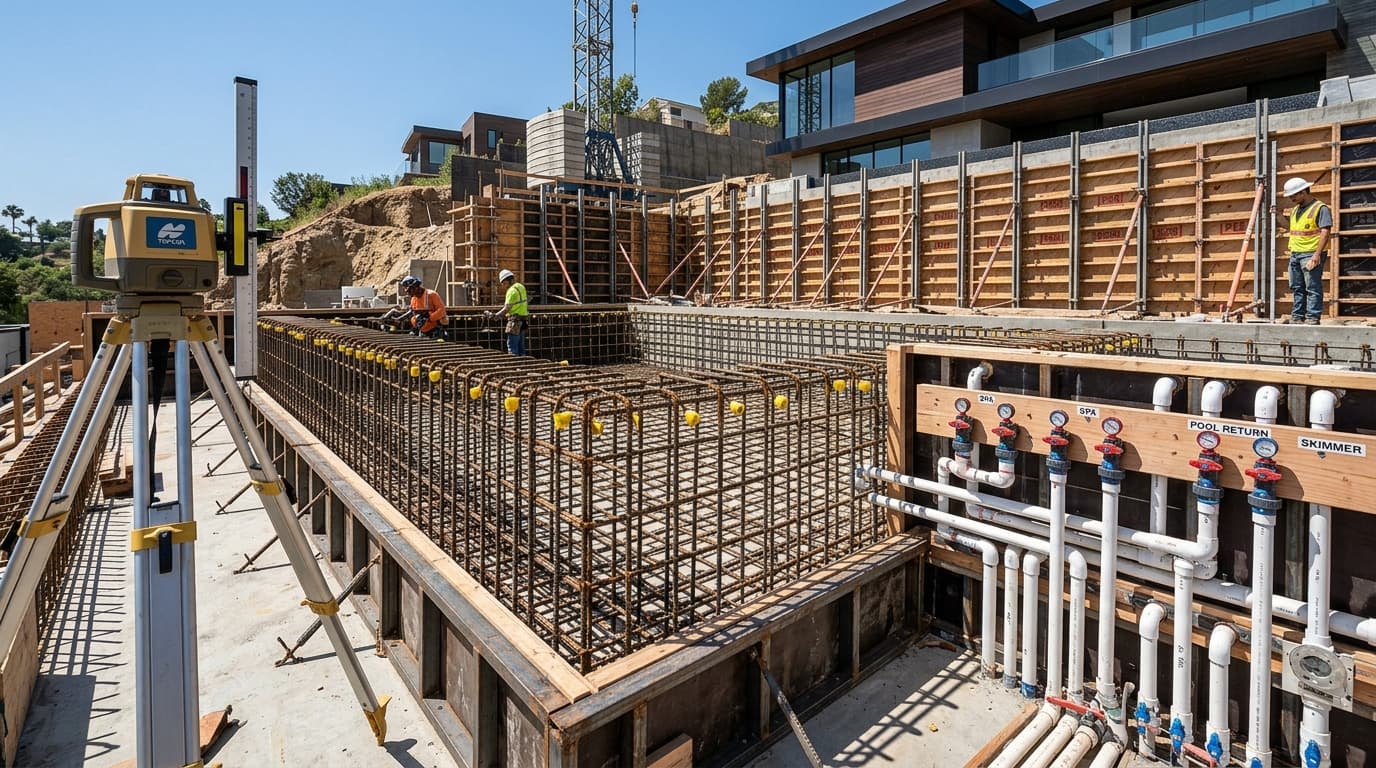
Reinforced-concrete pools carry the highest unit cost because they require formwork, rebar, and on-site labor — but they offer the widest design freedom (infinity edges, irregular shapes, custom depth). Fiberglass monoblock pools are factory-built and transported to site, which shortens labor time and pulls cost down for mid-budget projects. Prefab/composite systems suit entry-level budgets but come with limited size and shape options.
2Volume and Surface Area
Cost does not scale linearly with square meters or cubic meters — below a certain size threshold, fixed line items (pump station, dosing unit, electrical panel) make up a larger share of the total budget. As a result, the per-m² cost of a small pool is typically higher than that of a large one.
3Soil Condition
The bearing capacity, groundwater level, and excavation difficulty revealed by the soil survey directly affect rebar quantity and any additional measures needed (drainage, soil improvement, an extra waterproofing layer). Two pools of the same size can land on noticeably different budgets under different soil conditions.
4Equipment Class (Filtration, Heating, Automation)
There is a clear trade-off between standard sand filtration with manual chlorination and a combination of UV-C disinfection, automatic pH/ORP dosing, a variable-frequency pump, and salt chlorination — the latter lowers operating cost but raises the upfront investment. Adding a heat pump follows the same pattern: higher initial cost, longer usable season.
5Waterproofing Quality
The difference between a single standard waterproofing layer and a two-layer flexible polymer membrane with reinforced pipe-penetration seals looks like a small line item at first glance, but it is one of the most critical variables determining long-term leak-repair cost.
6Application Complexity
Site conditions such as sloped terrain, restricted access, construction adjacent to an existing structure, or an indoor pool (including roof/glazing systems) increase labor and equipment logistics compared to standard flat-garden construction. This line item is usually clarified only after a site survey.
Cost Structure by Line Item
The table below shows the typical relative weight of each line item within a pool construction budget — not an absolute price, since that depends on the six variables above, but the structure a written quote should follow.
| Line Item | Relative Weight | Note |
|---|---|---|
| Excavation & Site Preparation | Low–Medium | Varies with soil condition and site access |
| Reinforced Concrete Structure | High | Typically the single largest line item |
| Waterproofing | Low | Small share, but disproportionately costly to fix later |
| Mechanical Plant (Pump / Filtration / Heating) | Medium–High | Ranges widely depending on equipment class |
| Electrical & Automation | Medium | Increases when dosing and remote monitoring are added |
| Tiling / Mosaic | Medium | Depends on material class (ceramic–glass mosaic–natural stone) |
| Landscaping & Surroundings | Variable | Usually handled as a separate budget line |
This structure mirrors the itemized quote format recommended in our pool company selection guide — ask for exactly these seven lines, priced separately.
Cost by Pool Type
Reinforced-concrete pools sit at the top of the budget range because of formwork and site labor, but they're the only option for infinity edges, irregular shapes, and custom depths. Fiberglass monoblock pools reduce labor time and typically land in the mid-range for standard shapes. Prefabricated/composite pools suit entry-level budgets and simpler installations.
See our fiberglass pool solutions and our reinforced concrete pool construction guide for the engineering trade-offs behind each type.
Cost After Completion (TCO)
The construction budget is only the first half of the equation — energy for pumps and heating, chemical dosing, and periodic filtration maintenance continue every year the pool operates. A lower construction budget with basic equipment often means a higher recurring cost, and vice versa.
Comparing Quotes Correctly
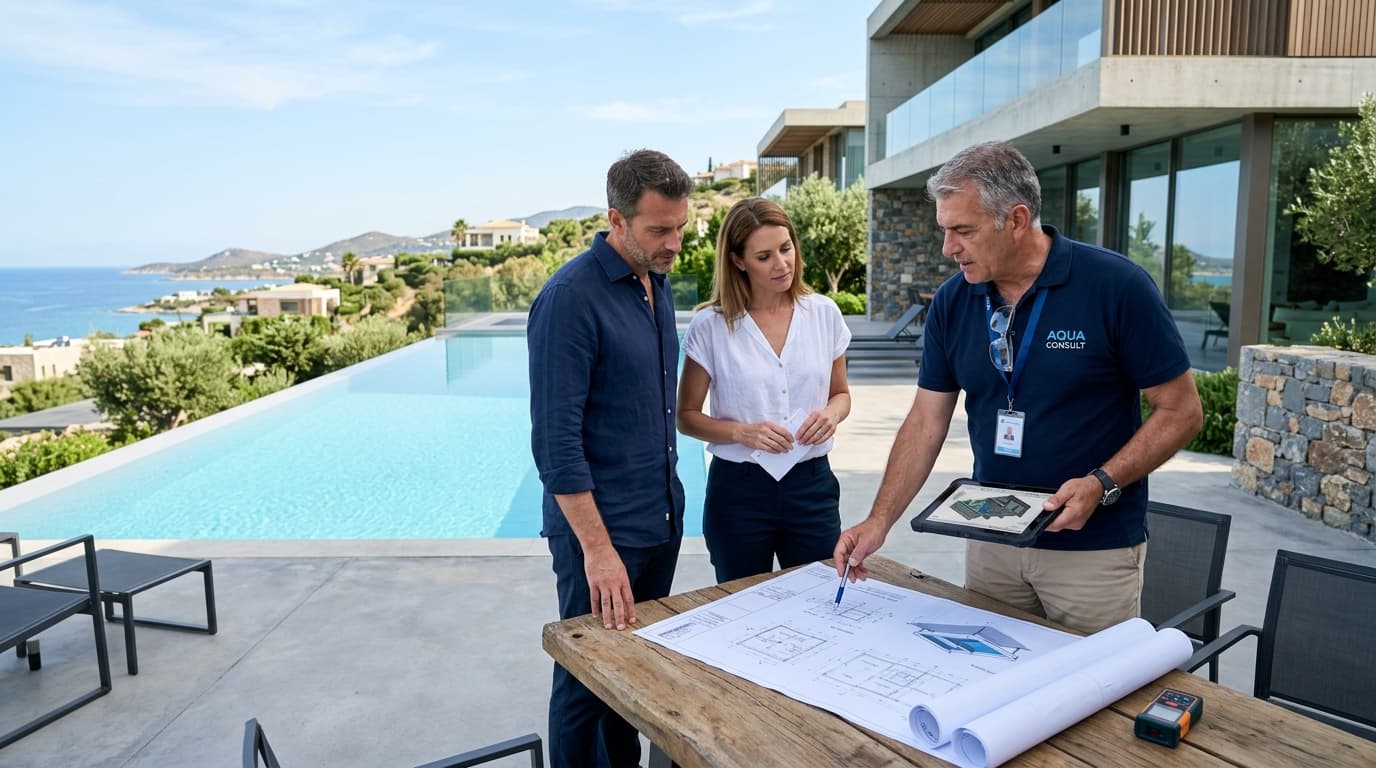
Two quotes with the same total figure can still describe two very different pools if the line items behind them aren't itemized. Before comparing prices, confirm both quotes cover the same equipment class, the same waterproofing spec, and the same finishing materials.
Conclusion
A trustworthy pool budget isn't a single number you're quoted — it's a structure you can verify: six variables that explain why your project costs what it does, and seven line items a written quote should break out separately.
As Artemis Pool, we run every project through a site survey and hydraulic/structural calculation before quoting, and we itemize our quotes by the same seven categories used in this guide.
Frequently Asked Questions
Why doesn't Artemis Pool publish a fixed price list?+
Because pool cost depends on project-specific variables — soil condition, equipment class, waterproofing spec, and site access — that only a survey and a hydraulic/structural calculation can determine. A published price list without these inputs would either mislead the buyer or force the contractor to quietly downgrade materials to hit the advertised number.
Which single line item most often causes budget overruns?+
Soil-related surprises discovered after excavation begins — unexpected groundwater, weak bearing capacity, or buried obstructions — are the most common source of overruns, because they weren't priced into the original quote. A soil survey before quoting, not after signing, is the main defense against this.
Is a fiberglass pool always cheaper than a reinforced-concrete pool?+
For standard shapes and mid-range sizes, yes, mainly because factory production shortens on-site labor time. But for irregular geometries, infinity edges, or unusual depths, reinforced concrete becomes the only option, making the comparison moot rather than a straightforward cost question.
What should I ask for instead of a single lump-sum number?+
Ask for a written, itemized quote broken down by excavation, structure, waterproofing, mechanical plant, electrical/automation, finishing, and landscaping — the same categories used in this guide. That structure lets you compare two contractors' quotes on equal terms and see exactly where your budget is going.
Does the equipment class really change the total that much?+
Yes — moving from manual chlorination to automatic pH/ORP dosing, salt chlorination, a variable-frequency pump, and a heat pump adds meaningfully to the upfront budget, but each of these also reduces a specific recurring operating cost (chemical consumption, energy use, or labor). The right mix depends on how the pool will actually be used, not on picking the cheapest or most expensive tier by default.
Get a Line-Item Quote for Your Project
Request a site survey and an itemized quote broken out exactly as described in this guide — no obligation.