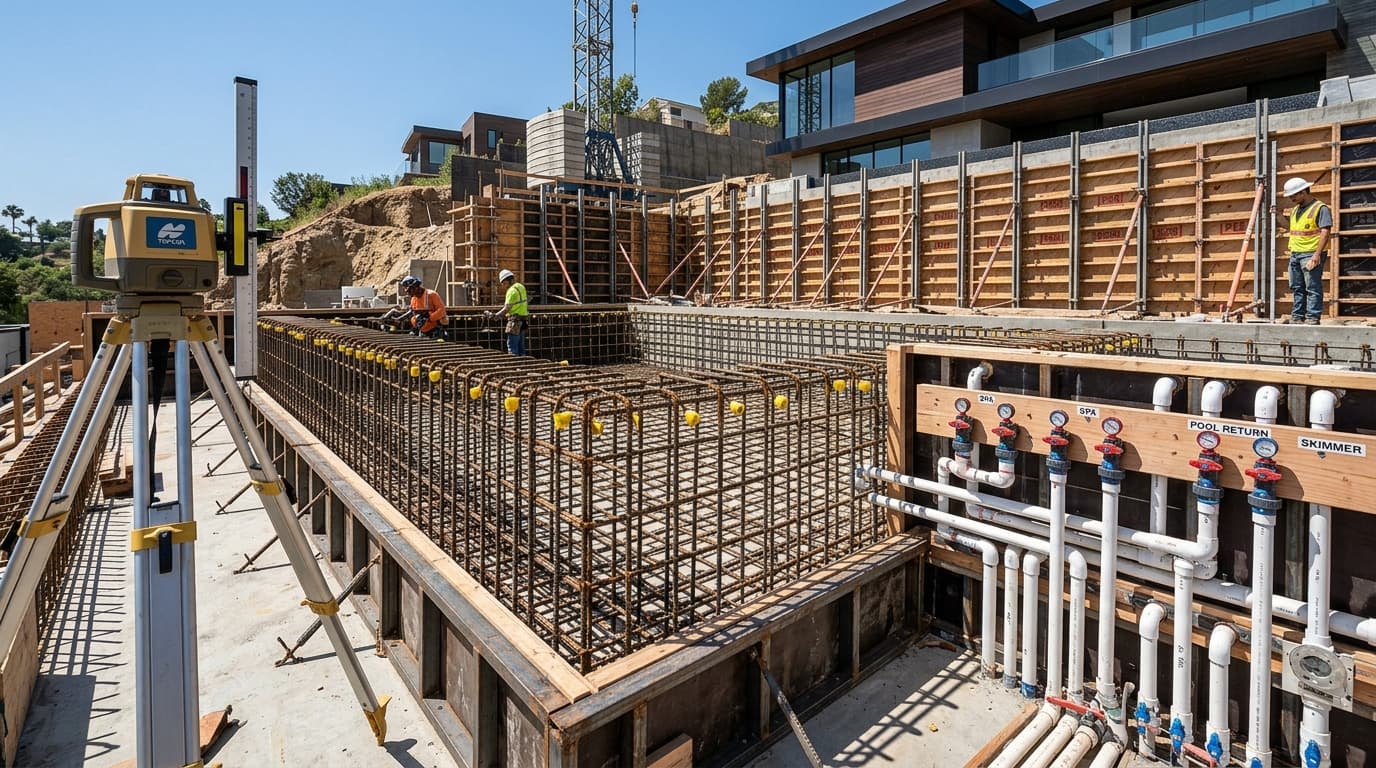

Why is dual-layer waterproofing critical in swimming pool construction?
Swimming pool waterproofing is critical to prevent hydrostatic water loss, soil settlement, and chloride-induced rebar corrosion in concrete basins. Standards require positive-side multi-layer elastic cementitious or pure polyurea waterproofing (TS EN 14891 CM P), swellable waterstop tapes along cold joints, and 100% solids epoxy tile grouting.
The most fundamental element for a swimming pool to be comfortable, safe, and long-lasting is pool insulation. Even a pool with a reinforced concrete shell will, over time, lose its watertightness, develop cracks, and lead to serious costs if it is not properly insulated. In this article, we will examine in detail why pool insulation is critical, the methods used, the points to pay attention to, and tips for achieving long-lasting pools.
How Is Pool Waterproofing Done?
Pool waterproofing is not just theoretical knowledge — it requires the right materials and professional application. Would you like to learn in detail about the systems used to completely prevent water leaks in reinforced concrete pools?
When correct waterproofing techniques are not applied, water leaks, damage to the reinforced concrete structure, and high maintenance costs can arise over time. For this reason, insulation systems applied with professional solutions guarantee the long-lasting and safe use of the pool.
Waterproofing in reinforced concrete pools is one of the most critical stages of the project.
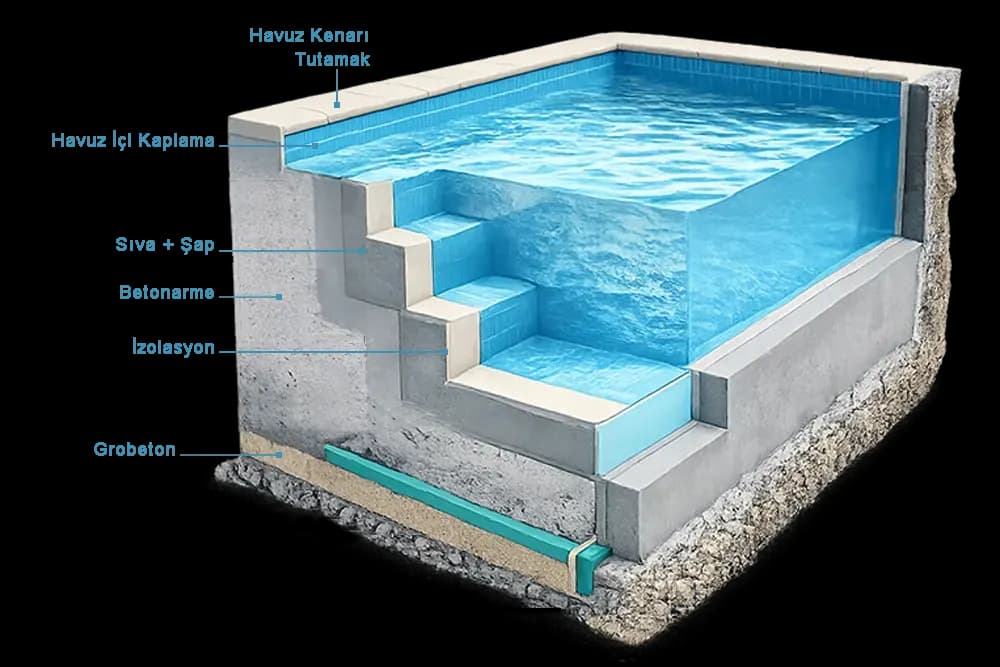
The Core Purpose of Pool Insulation
The greatest threat to a pool's structure is water pressure. Concrete that is continuously exposed to pressure from inside and outside develops microscopic cracks over time. The purpose of insulation is to prevent these cracks from growing and turning into water leaks.
- Prevents water losses.
- Extends the lifespan of the structure.
- Reduces chemical consumption.
- Lowers operating costs.
Properly executed pool insulation is a critical element both for user safety and for protecting the investment.
Problems That Arise When Watertightness Is Not Ensured
When watertightness is not properly ensured in a swimming pool, problems that start with just small drips can turn into serious issues in a short time. A lack of insulation leads to damage that is difficult to reverse, both structurally and aesthetically. Here are the most common problems encountered:
As can be seen, a lack of insulation threatens not only the pool's water-holding capacity but also its long-term durability and safety. Such problems significantly shorten the pool's service life and multiply maintenance and repair costs. Therefore, a correct insulation investment made at the initial stage provides both financial and non-financial gains in the long run.
Types of Pool Insulation
Today, many different techniques are used for pool insulation. The method chosen varies depending on factors such as the pool's intended use, structural characteristics, ground structure, and budget. Each method has its own advantages, disadvantages, and standout areas of use:
In conclusion, the insulation method to be chosen should be determined based on factors such as the type of pool, intensity of use, ground structure, climate conditions, and budget. When the most appropriate insulation system is selected through professional survey and engineering analysis, the pool can be used trouble-free and safely for many years.
The Importance of Professional Application for Long-Lasting Pools
Pool insulation is directly related not only to choosing the right material but also to the quality of application. Non-professional applications can render even the highest-quality material ineffective and can lead to serious watertightness problems down the line. Therefore, if a long-lasting pool is the goal, the experience of expert teams and applications that comply with engineering standards are critically important.
The main elements to pay attention to:
- The reinforced concrete surface must be made smooth, clean, and ready for application.
- There must be no cracks, segregation, or voids on the surface; otherwise the insulation layer will be weakened.
- The insulation layers must be applied at a homogeneous thickness and without interruption.
- The curing and waiting times specified in the products' technical specifications must always be observed.
- Careful work must be carried out to ensure the insulation layer is not damaged during subsequent stages such as coating, mechanical installation, or electrical wiring.
All of these steps ensure that the pool remains watertight, safe, and aesthetically pleasing for many years. Therefore, when having a pool built, attention should be paid not only to the materials but also to the professionalism of the team carrying out the application. Working with experienced and expert teams increases the quality of insulation and secures your investment in the long term.
The Relationship Between Energy Efficiency and Insulation
Properly executed pool insulation not only guarantees watertightness but also provides a great advantage in terms of energy savings. Thanks to insulation, potential heat losses and water losses in the pool are minimized. This both lowers operating costs and supports environmental sustainability.
The water level stays constant: The need to continuously add fresh water is eliminated, preventing unnecessary water consumption.
Chemical usage decreases: In insulated pools, the water balance is maintained, and chemical consumption drops by 20–30%.
Heat loss is minimized: The temperature of the pool water is maintained, and heating costs are noticeably reduced.
As a result, pools with good insulation see both increased energy efficiency and a significant cost advantage in the long run. In addition, environmentally conscious, sustainable pool use becomes possible.
Tips for Long-Lasting Pools
For a pool to operate trouble-free for years, not only insulation but also regular maintenance processes are critically important. Without proper maintenance, even the highest-quality insulation can lose its function over time. Here are practical tips to extend the life of your pool:
- Regular visual inspections should be carried out after insulation, observing surfaces for blistering and discoloration.
- Grout joints should be renewed at least once a year, and any loosening or emptying joints should be refilled.
- When the pool is drained, all surfaces should be inspected in detail for the possibility of cracks, blistering, or leaks.
- Chemical balances (chlorine, pH) should be measured regularly to prevent sudden fluctuations.
- Environmental factors (tree roots, groundwater, ground movements) should be taken into account and preventive measures should be taken.
Implementing these steps supports the insulation in achieving a long-lasting pool with strong watertightness and preserves the value of your investment for many years.
Frequently Asked Questions
How many years does insulation last?+
With the right choice of materials and professional application, it can be used safely for 15–20 years. Regular maintenance can extend this period even further.
Which is the best insulation method?+
The most preferred methods in reinforced concrete pools are crystalline insulation and liquid membrane coatings. These methods provide high strength, are resistant to cracks, and offer economical solutions in the long run.
How much does insulation cost?+
The cost varies depending on the size of the pool, the material chosen, and the quality of workmanship. However, in the long run, insulation ensures a return on investment by preventing water losses and reducing chemical consumption.
Conclusion
The heart of a pool is its insulation. Pool insulation does not just hold the water in; it extends the lifespan of the structure, lowers operating expenses, and offers users a safe experience. Thanks to the right materials, professional application, and regular maintenance, it is possible to achieve pools that are strongly watertight, aesthetic, and long-lasting.
At Artemis Pool, with years of experience, we apply the most modern techniques in pool insulation, offering our customers solutions that are both durable and aesthetic.