
Explore our full product range, project applications, and service areas in detail through our E-Catalogue. Our engineering-led solutions and internationally certified services are presented in this comprehensive reference document.
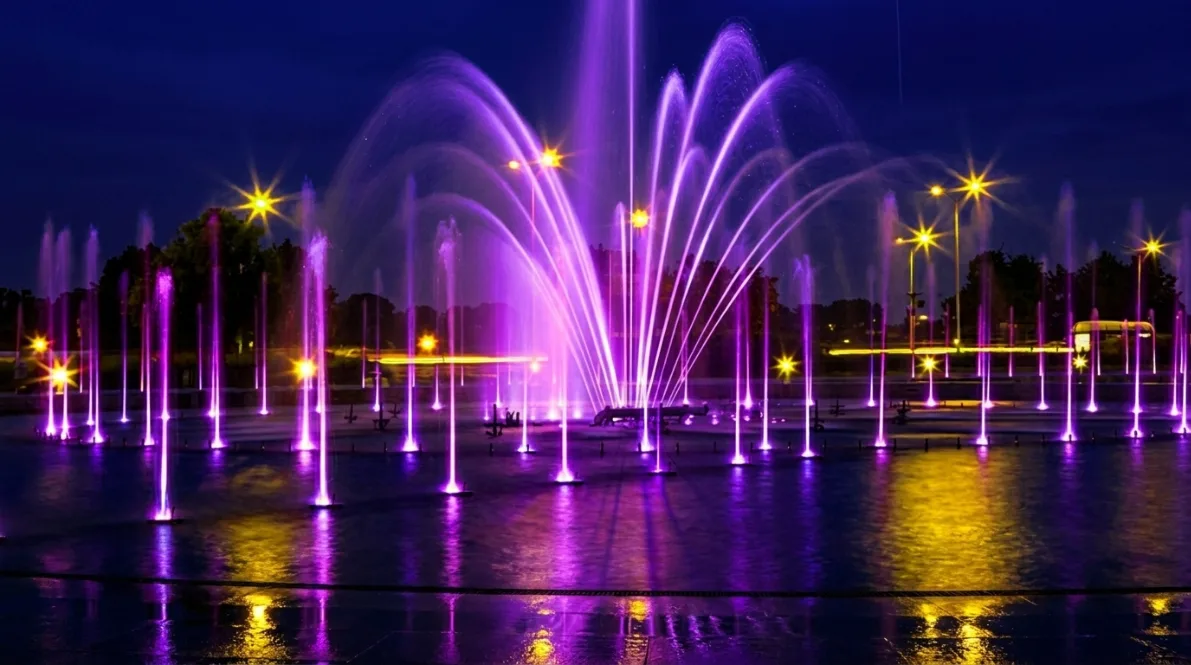
Ornamental pools and dancing fountains combine water aesthetics with modern engineering to enrich urban landscapes and architectural spaces.
Decorative fountains are special applications that consciously combine the aesthetic power of water with architecture and give character to the space in which they are located. Throughout history, these structures — ranging from palace courtyards to public squares, from monumental gardens to interior spaces — have been used not merely as a decorative element, but as focal points that define the soul of the space. Today, decorative fountains have been carried to a much more advanced level, both visually and technically, thanks to advanced engineering solutions, modern construction materials, and digital control systems.
A decorative fountain is not merely a water feature that appeals to the eye. When properly designed, it strengthens the perception of the space, creates an emotional bond between the user and the space, and markedly increases the prestige of the area in which it is located. The movement, sound, and reflection of water, when combined with architectural forms, bring dynamism to static surfaces and balance to hard masses. However, this effect cannot be achieved through aesthetic design decisions alone.
A truly successful decorative fountain application requires detailed technical calculations, correct hydraulic balance, equipment selection appropriate to the purpose, and long-term operating criteria to be addressed together. Every element, from pump capacity to nozzle geometry, from filtration systems to energy consumption, is an inseparable part of the design. Otherwise, a fountain that appears impressive at first glance will soon face maintenance problems, performance loss, and user dissatisfaction.
For this reason, decorative fountains are complex systems that must be approached not merely to “look beautiful,” but to be sustainable, safe, and long-lasting. At the point where aesthetics and engineering meet in balance, what emerges is not an ordinary water surface, but a powerful architectural element that adds value to the space.
Review Our Pool Design and Consultancy Services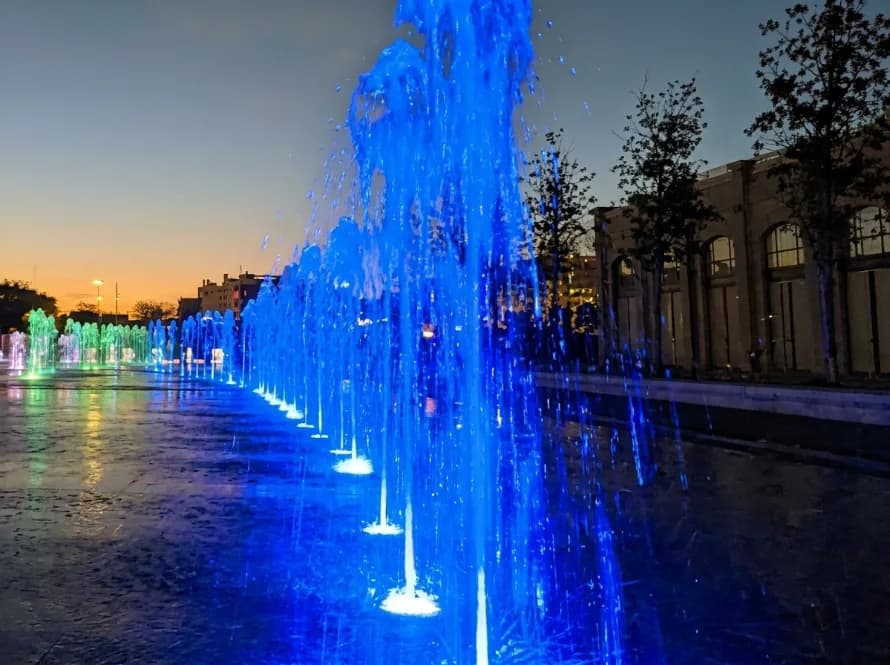
Decorative fountains are water structures that are not intended for swimming, but are designed purely to create visual and spatial effect. They can be implemented in the form of still water surfaces, moving fountains, water curtains, or animated systems.
Each area of use requires different technical and aesthetic approaches in decorative fountain design.
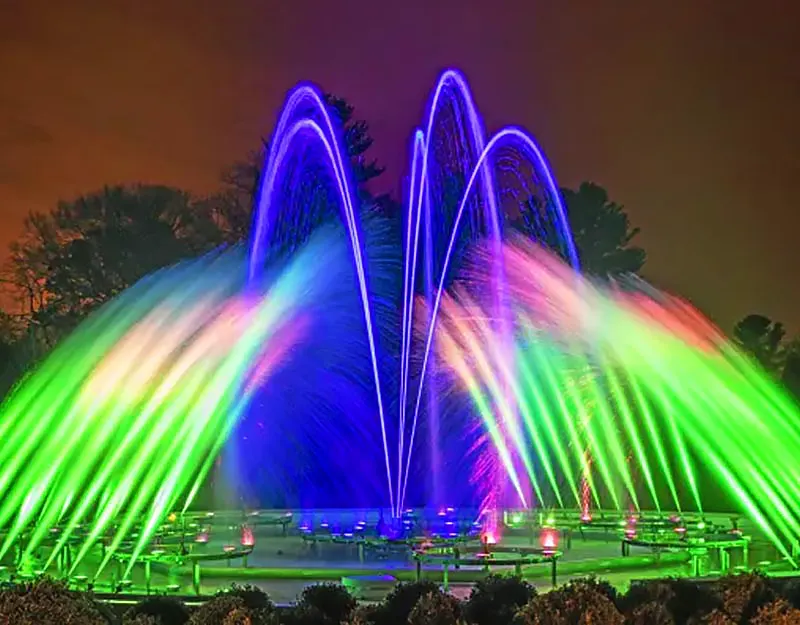
In our projects, we offer a wide range of fountains and water effects suited to the architectural concept and technical requirements:
This is the most commonly used type of decorative fountain. Different water effects are created with single or multiple nozzles. Wind, area width, and viewing distance are determining factors in the design of these systems.
These systems, in which water, light, and music are synchronized, offer high visual impact, especially for squares and hotels. They are programmed using PLC-based control systems.
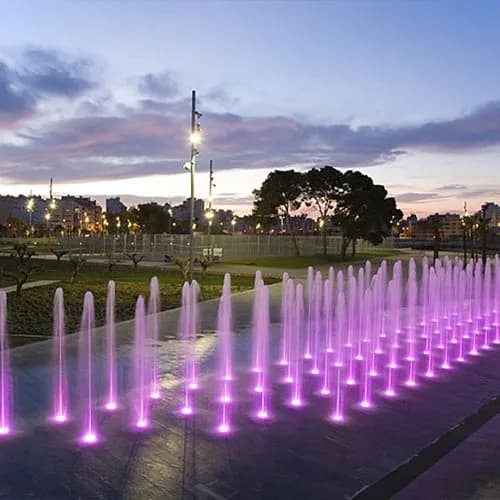
These are preferred in areas open to pedestrian traffic. The water surface is invisible, spouting up from beneath the ground. This is a safe and fun solution for children and public spaces.
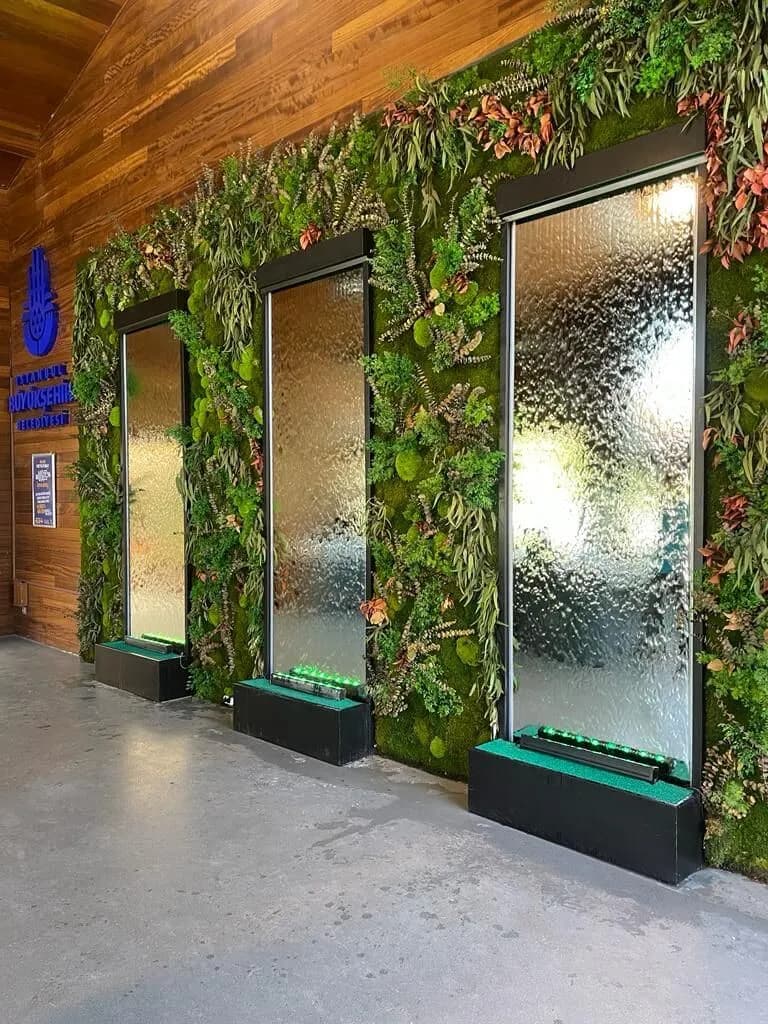
These are used indoors or on building facades. Water flows along a vertical surface, creating a calming and sophisticated atmosphere.
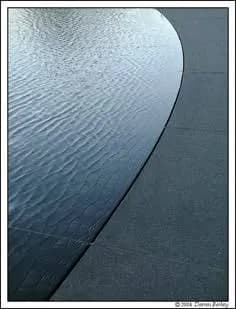
This is an indispensable element of minimalist architecture. The still water surface reflects the surrounding structure and the sky, providing spatial depth.
A successful decorative fountain application is not a decoration project carried out at random. The design process requires the architectural, engineering, and operational perspectives to be evaluated together.
The form of the pool must be in harmony with the surrounding architectural language. In modern architecture, sharp lines and reflective surfaces stand out, while in classical structures, natural stone, round forms, and soft transitions are preferred.
The sustainability of the visual effect in decorative fountains is directly related to correct hydraulic design. Fountain height, water column form, and spray stability are ensured not only by nozzle selection, but by the correct calculation of flow rate and pressure. The required liters-per-minute value and pump head for each nozzle type must be determined according to engineering calculations.
During the hydraulic design process, total pool volume, water turnover rate, pipe diameters, friction losses, and static height differences are taken into account. In applications carried out without calculating the pressure losses that may occur in the piping system, the desired water effect cannot be achieved, and the system quickly suffers a loss of performance.
In addition, the correct balance must be established between filtration capacity and circulation flow rate in decorative fountains. Balance tank volume, overflow channels, and water level control systems are of critical importance, especially in public space projects. Systems designed without these calculations can lead to problems such as water turbidity, algae formation, and high energy consumption.
A professional engineering approach takes into account not only aesthetic goals, but also energy efficiency, ease of maintenance, and long-term operating costs. For this reason, hydraulic design is the most technical and most decisive stage of decorative fountain design.
Decorative fountains are systems that operate continuously. For this reason, energy consumption directly affects long-term costs. Variable-speed pumps, LED lighting, and automation systems play a critical role at this point.
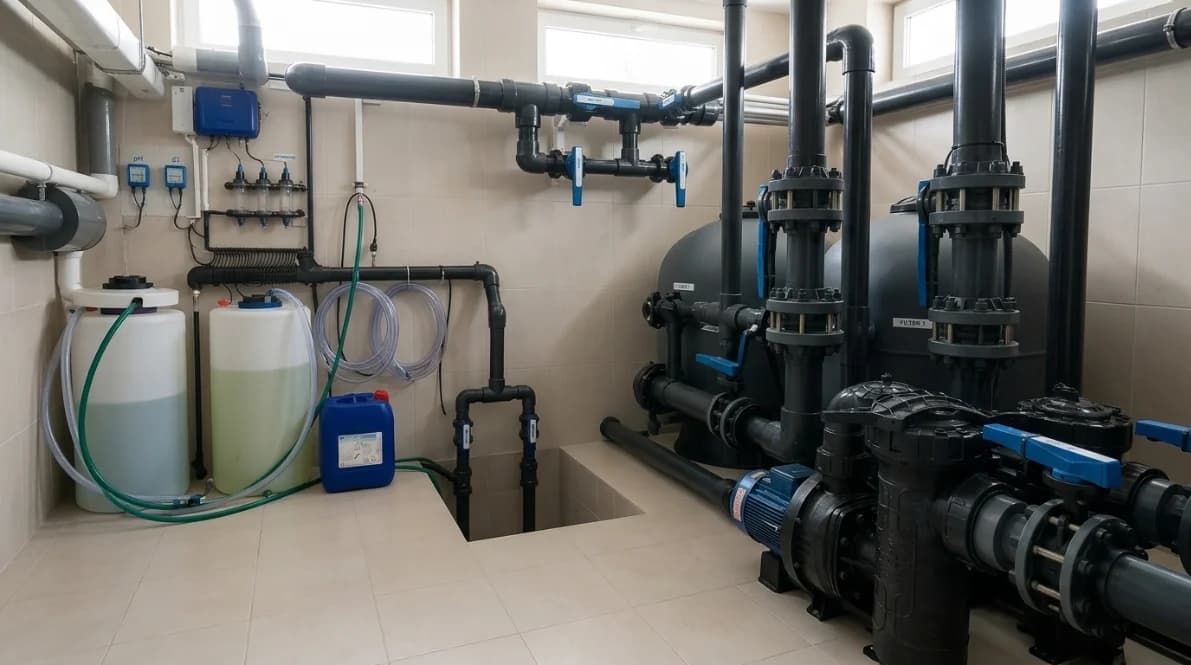
The long-lasting and trouble-free operation of a decorative fountain is directly related to the quality of the equipment used.
Each of this equipment must be selected specifically for the project and evaluated within the integrity of the system.
Although decorative fountains may seem to require less maintenance compared to swimming pools, they quickly lose their aesthetic value if neglected.
Professional maintenance plans both extend the system's lifespan and prevent unexpected breakdowns.
Decorative fountains are not details that can be “added later.” They must be addressed at the architectural project stage and considered together with the infrastructure and electrical plans. An improperly designed decorative fountain constantly breaks down, fails to create the expected visual effect, and leads to high operating costs.
For this reason, decorative fountain projects must always be carried out by engineering and implementation teams expert in this field.
A properly designed decorative fountain increases not only the aesthetics of the area in which it is located, but also its perceived value. It creates prestige for hotels, brand strength for commercial buildings, and a social attraction point for public spaces.
Decorative fountains give character to spaces by combining the calming effect of water with the possibilities offered by technology. For this reason, every project must be addressed specifically within its own context, and standard solutions should be avoided.
Contact Us for Your ProjectExplore our comprehensive engineering solutions and discover the right system for your project.