What are the core engineering stages of swimming pool construction?
Turnkey swimming pool construction comprises 7 standardized stages: site survey & geotechnical assessment, 3D architectural & structural design, reinforced C30/37 concrete pouring, positive-side elastic waterproofing (TS EN 14891), filtration & hydraulic plant installation (TS 13661), tile cladding, and 72-hour hydrostatic pressure testing.
Artemis Pool brings together aesthetic design, high safety standards, and engineering expertise in swimming pool construction projects of every scale, from private residences to large-scale commercial facilities. For us, building a pool is not merely a combination of concrete and water; architectural harmony, user comfort, long-lasting durability, and energy efficiency are all handled as a single whole.
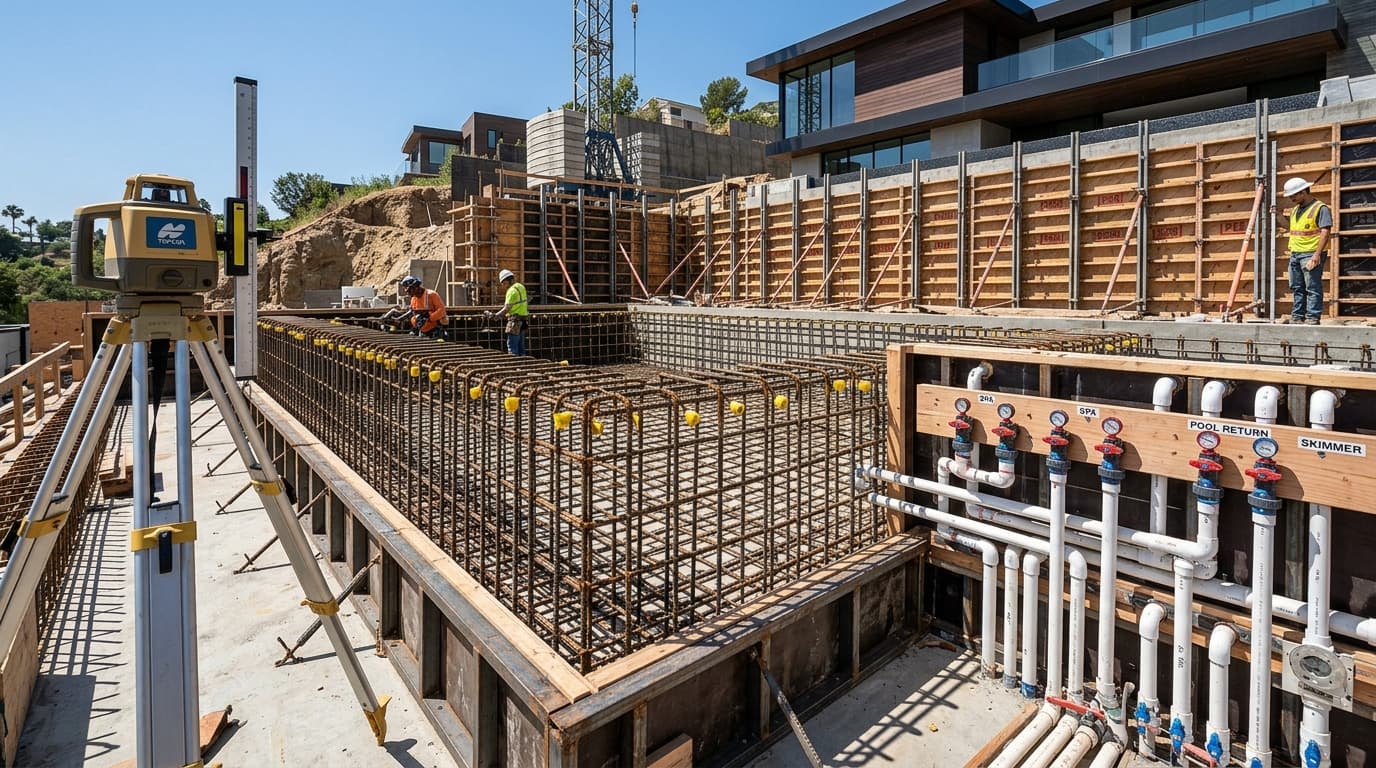
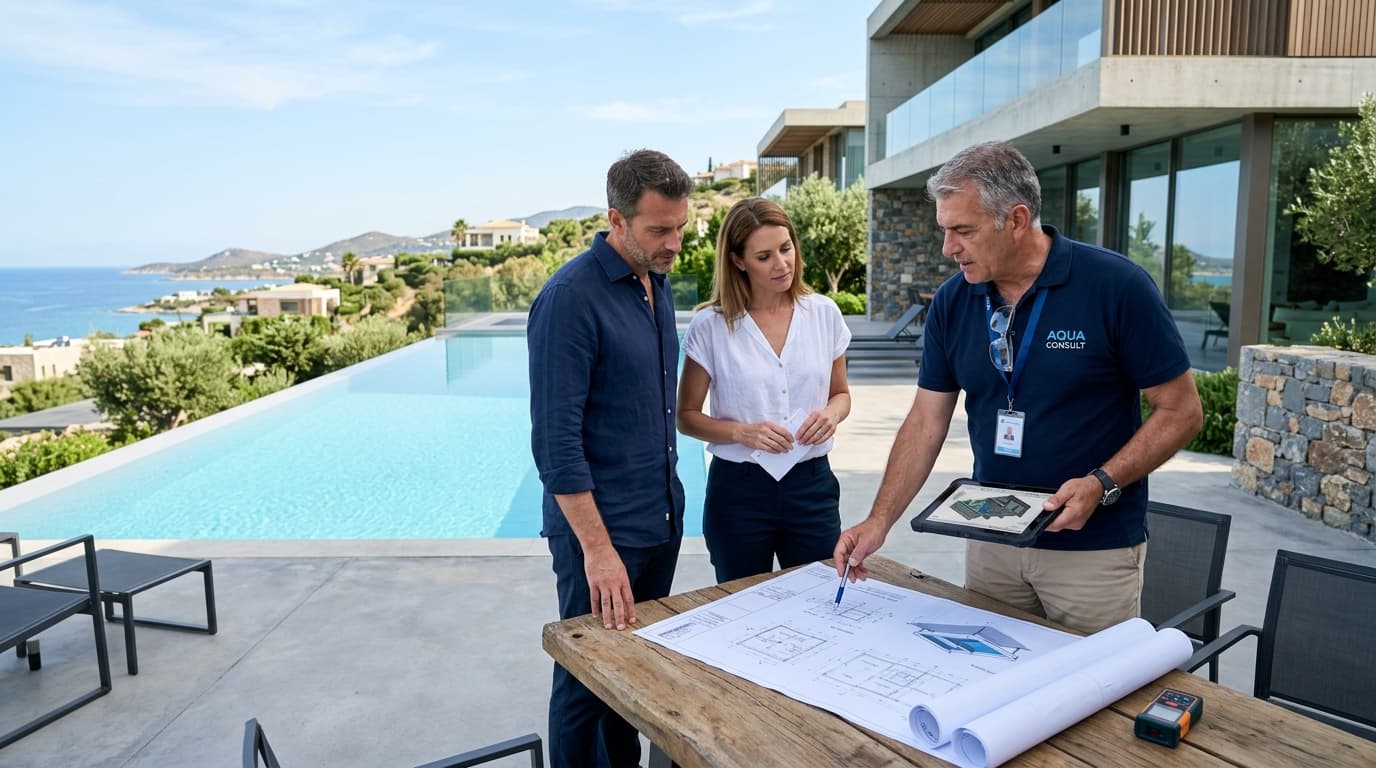
In the first stage, detailed on-site surveys are carried out to determine the physical conditions of the area, user needs, and project goals. The pool construction process is then designed using modern software and engineering calculations. Reinforced concrete pool works, carried out in line with structural and mechanical drawings, are supported by strong isolation systems. This guarantees watertightness and provides long-term pool isolation.
During the mechanical and electrical installation stage, components such as filtration systems, circulation pumps, automatic chlorination and pH control devices, LED lighting units, and heat pumps are installed in accordance with international standards. These solutions not only guarantee hygiene and safety but also reduce operating costs.
In the final stage, the pool is completed with finishing materials such as ceramic, mosaic, or liner and aesthetic details. As a result of all these steps, Artemis Pool delivers turnkey pool projects to its clients. In this way, users gain not just a pool, but a living space they can use safely and enjoyably for many years to come.
Swimming Pool Construction and Building Processes
Artemis Pool offers long-lasting, high-standard solutions in swimming pool construction projects by bringing together aesthetic design, user safety, and engineering discipline. It develops turnkey pool applications suited to different usage scenarios, from residences to housing complexes and residential projects, and from hotels to sports complexes.
Every project is planned by taking into account the physical conditions of the site and user needs, and is brought to life with modern engineering calculations, correct material selection, and up-to-date technologies. Below, you can find detailed, guiding information about the pool building process, the mechanical and electrical systems used, isolation solutions, pool automation, project costs, and average delivery times.
A modern pool design, including a swimming pool and a hydromassage pool, engineered with structural calculations and also fully implemented
The Pool Building Process – Step by Step
Pool Types
Thanks to its economical cost and ease of application, this is the most widely preferred pool type. It draws surface water into chambers called skimmers and sends it to the filtration system. This method offers safe, practical, and low-cost solutions for both individual residential projects and mid-sized housing complexes.
The water at the pool surface is transferred to a balance tank through overflow channels and is continuously refreshed and recirculated. Thanks to their aesthetic appearance and hygiene advantages, they are the most preferred system especially in hotels, spa centers, and commercial projects. The overflow detail along the edge line gives the water a mirror effect, creating a stylish look.
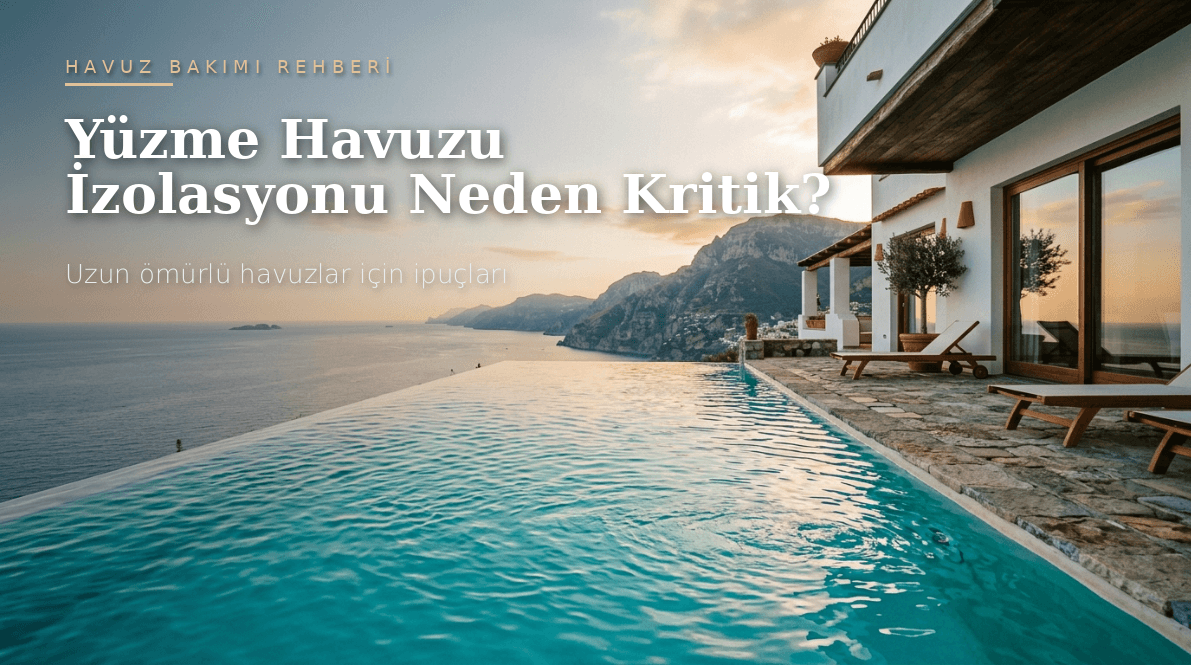
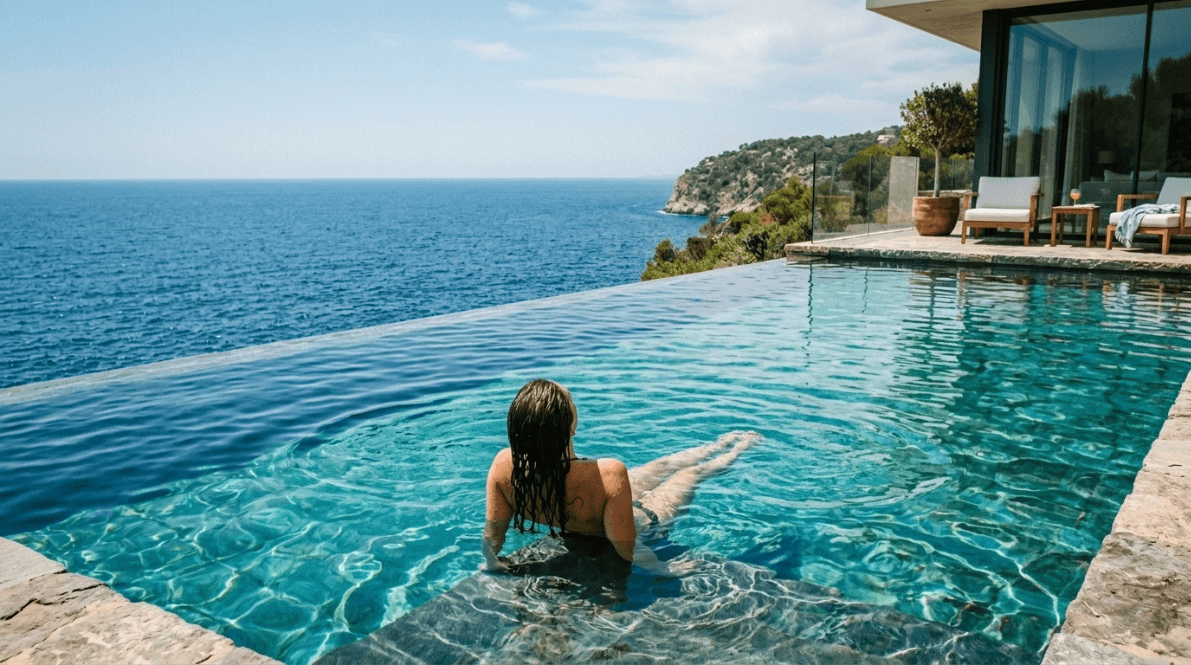
Especially preferred in areas with a view, this pool type makes the water appear to flow into the horizon line. The overflow line that creates the infinity effect has become a symbol of modern architecture. It is generally used in villa, luxury hotel, and residential projects, adding prestige with its visual impact while also working with a functional overflow system.
Built in enclosed spaces, this pool type offers comfortable use throughout all four seasons. Special systems are installed for temperature control in winter and humidity management in summer. Thanks to heating, ventilation, and dehumidification units, the indoor environment is kept at ideal conditions. It is commonly preferred in gyms, hotels, health centers, and luxury residential projects.
Thanks to factory-manufactured ready-made shells or liner finishing options, it offers practical and economical solutions that can be installed in a short time. With low maintenance needs and long-lasting finishing materials, it is frequently preferred in individual residential projects. It also offers an alternative pool with different color and pattern options.
These offer a natural pond aesthetic, with water quality provided through plant-based filtration or biological treatment solutions. In harmony with nature, these pools are preferred in villas, boutique hotels, and landscape-focused projects. Thanks to their eco-friendly structure and visual elegance, their popularity has been rapidly increasing in recent years.
Materials and Systems Used
Pool Isolation and Safety
Pool isolation is a critical element for a swimming pool to be both long-lasting and usable with low operating costs. Correctly applied isolation systems prevent leaks and water loss, while also preserving the pool's structural integrity for many years. The quality of the isolation materials and the application technique are the most important factors directly affecting the pool's durability. A pool with strong insulation not only saves water but also reduces operating expenses to a minimum by lowering chemical consumption.
On the safety side, user comfort and protection are the priority. Non-slip surface coatings minimize the risk of falling, especially in wet areas. Residual current protection systems used in the electrical installation guarantee safety against possible electrical risks. In addition, correctly planning the pool depths provides a safe usage area for both adults and children. Safety ladders, life buoys, and warning signs that come into play in emergencies are also an integral part of our standards. In this way, as Artemis Pool, we guarantee the health, safety, and long-term satisfaction of users by basing both our isolation and safety practices on international standards.
Pool Automation
Pool automation ensures that hygiene standards are maintained in modern swimming pools by continuously monitoring water quality. It also significantly reduces operating costs by optimizing energy consumption. While in traditional systems users have to manually measure and adjust the water chemistry, automation systems make this process fully automatic through sensors and control panels.
Thanks to a correctly designed automation infrastructure, chlorine and pH levels are measured instantly, chemical dosing is done automatically when needed, and the water is thus guaranteed to always remain healthy. Filtration pumps, lighting, and heating systems are also optimized with set timers; this prevents unnecessary operation and provides energy savings.
In addition, pool automation improves not only maintenance convenience but also the user experience. With smart control panels or mobile apps offering remote access, the pool owner can view the status of their pool from anywhere in the world, turn devices on and off, and receive alarm notifications. Data such as water level, temperature, conductivity, and chemical values are reported regularly.
As a result, pool automation has become an indispensable standard today, both in private villas and in commercial facilities such as hotels, housing complexes, and sports complexes, as a smart solution that offers safety, hygiene, comfort, and savings together.
- Automatic Chlorination & pH Control: Continuously measures the chemical balance of the pool water, precisely tracking chlorine and pH levels and automatically dosing when needed.
- Filtration Timers: Automatic operation during the day's efficient hours.
- Lighting & Heating Control: Remote management via panel or mobile app.
- Sensor-Based Monitoring: Instantly monitors the pool's water level, temperature values, electrical conductivity ratio, and chemical balance; thanks to this data, the quality and safety of the water are always kept under control.
Cost and Duration
Depending on the project scale, design details, and the systems to be implemented, the swimming pool construction period is generally completed within 8–12 weeks. This period covers all of the reinforced concrete works, isolation work, mechanical and electrical installations, and finishing stages.
The total cost, on the other hand, varies according to the pool's dimensions, the preferred finishing type, the mechanical equipment to be used, and optional attractions such as counter-current systems, automation, or hydromassage. Following a free site survey, we provide a detailed, clear, and transparent price quote prepared specifically for your needs.
Frequently Asked Questions
How long does swimming pool construction take?+
It varies depending on the project scale, but is generally completed within 8–12 weeks.
Which items determine the cost of the pool?+
Dimensions, finishing type, mechanical-electrical equipment, and optional attractions determine the total cost.
Do you provide maintenance and operating support?+
Yes. We offer periodic maintenance contracts, chemical supply, and technical service.
Is pool automation necessary?+
Automation improves water quality and energy efficiency and reduces the need for manual intervention; it provides a significant advantage especially in commercial facilities.
Ready to Build Your Dream Pool?
Contact our engineering team today for architectural planning, hydraulic reports, and turnkey pricing tailored to your project.