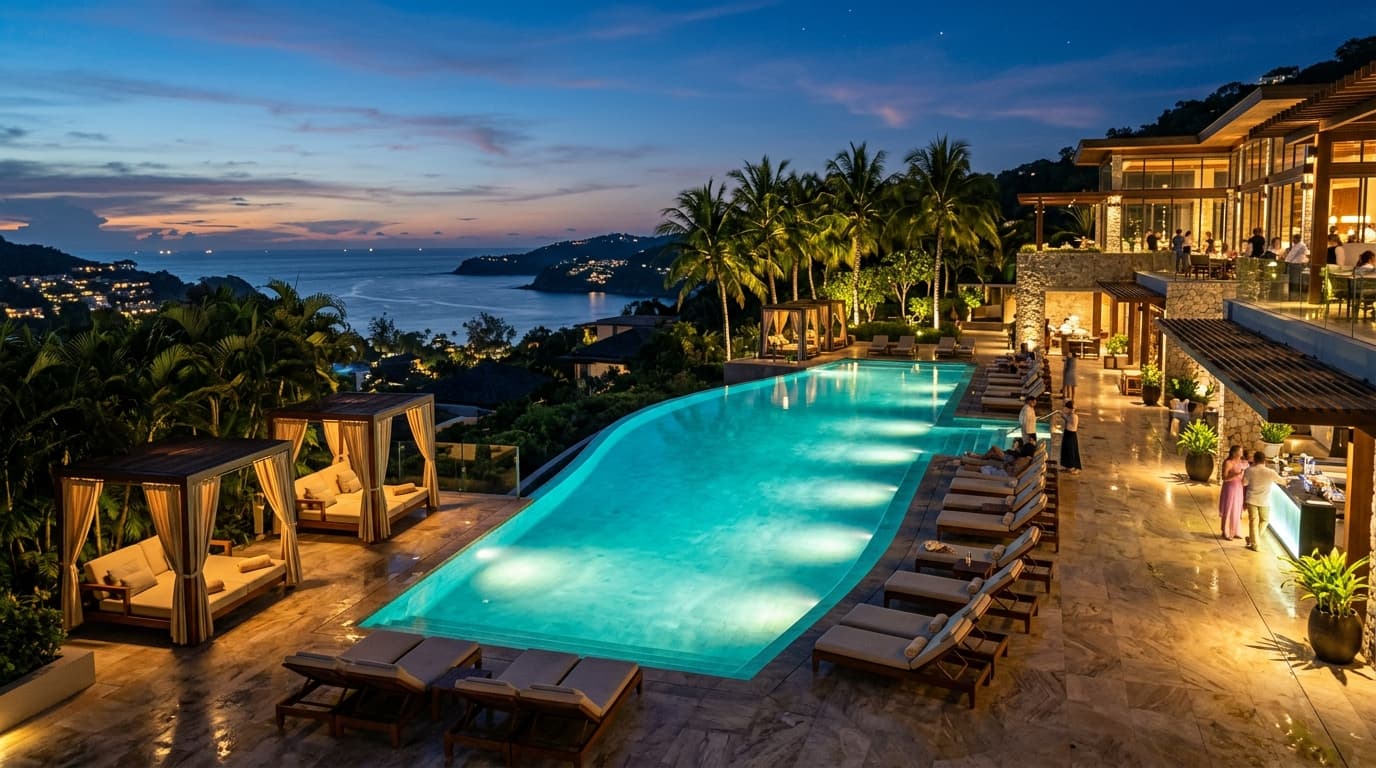
How does engineering a hotel pool differ from a residential pool?
Five priorities shift: filtration must be sized against peak (not average) bather load, TS 13661's shorter public-pool turnover target becomes binding rather than a reference, automation becomes a requirement rather than a comfort feature, equipment redundancy matters far more due to low downtime tolerance, and water-quality documentation must be audit-ready.
Why Residential Rules of Thumb Don't Transfer
Most published pool guides — including much of our own content — default to residential scale. A hotel, spa, or public facility pool operates under a different load profile, a stricter standard target, and a much lower tolerance for downtime, which changes the engineering brief in ways that scaling up a villa pool design doesn't capture.
5 Priorities Specific to Commercial Pools
1. Peak Bather Load
A hotel pool can host far more simultaneous bathers in a single day than any residential pool ever will. Filtration capacity and turnover time must be sized against peak, not average, bather load — otherwise water quality degrades quickly during busy hours.
2. The Binding Nature of TS 13661 Compliance
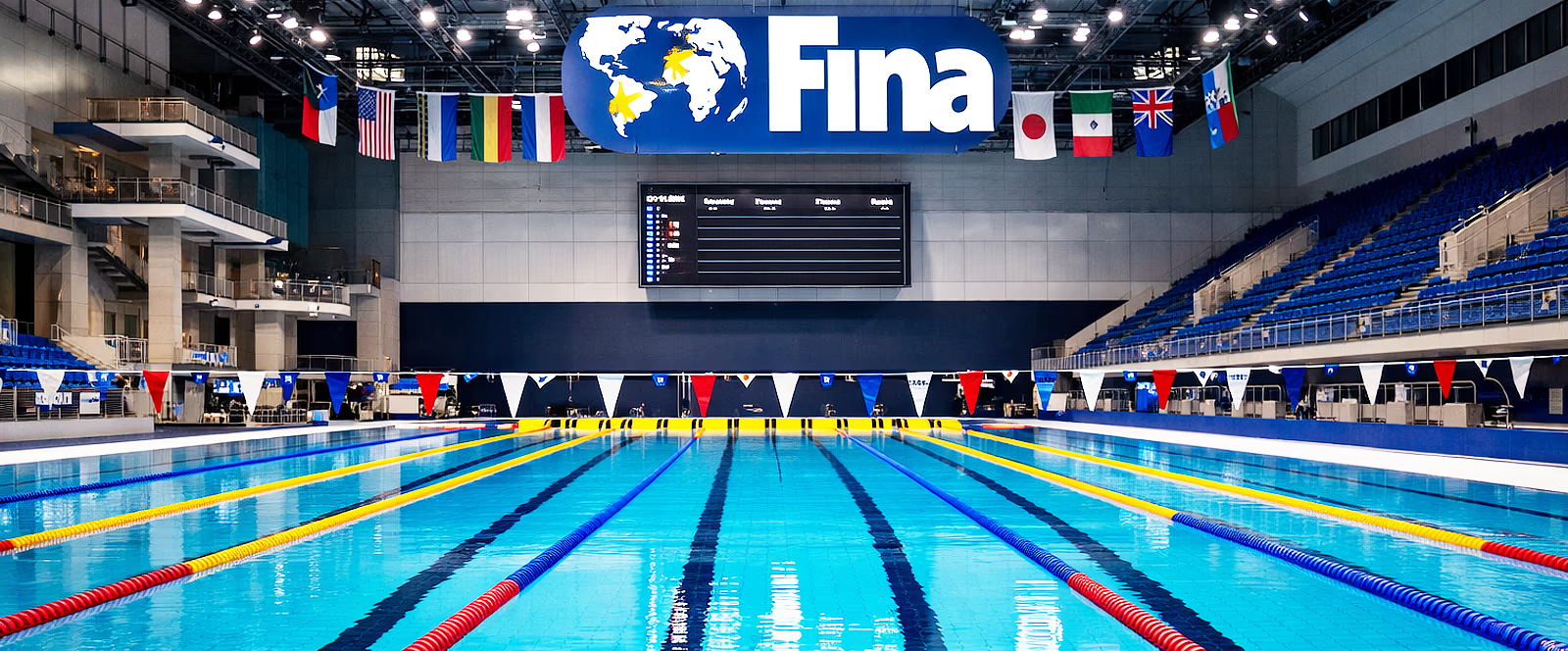
For public/commercial pools, the TS 13661 turnover time target is typically shorter than for private pools (roughly 4 hours). This isn't a theoretical reference — it's the concrete requirement for sustaining hygienic water quality under high bather density.
See Standard Detail →3. Automation as a Requirement, Not a Comfort Feature
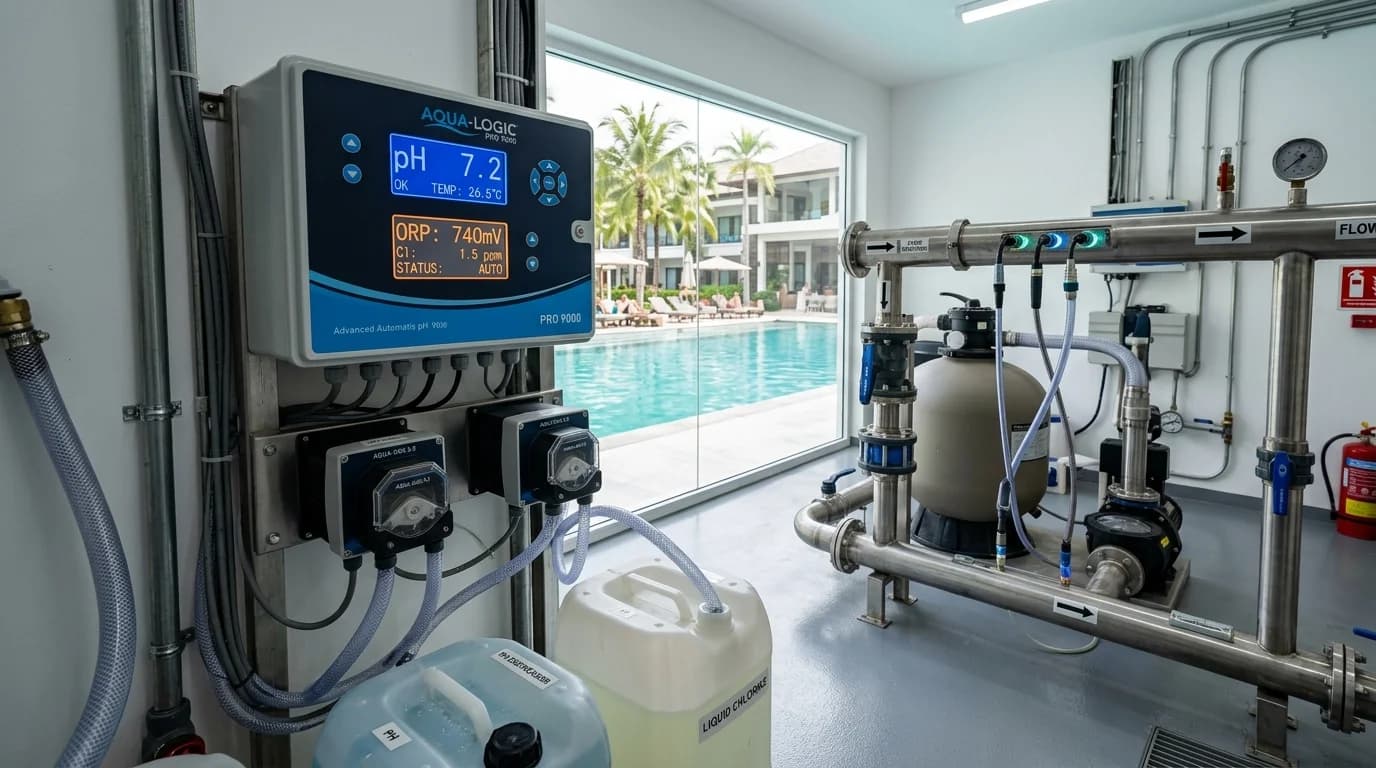
Manually keeping a hotel pool's constantly fluctuating daily load in balance isn't practical. Automatic pH/ORP dosing and continuous monitoring — a comfort option in residential pools — becomes a precondition for water quality consistency in commercial operation.
Read the Automation Guide →4. Low Tolerance for Downtime
A one-day maintenance stoppage is an inconvenience for a residential pool; for a hotel, it directly affects guest experience and occupancy revenue. This makes equipment redundancy (paired pumps/filters, for instance) and a preventive maintenance schedule more critical than in residential projects.
See Our Maintenance Service →5. Audit-Ready Documentation
Public/commercial pools must be able to show water-quality records (chlorine, pH, temperature logs) during health inspections. An automation system's data-logging/reporting capability substantially eases this audit process.
Planning Around Operational Continuity
For a facility operator, the real cost of a pool problem is rarely the repair itself — it's the closure. Planning maintenance windows, equipment redundancy, and dosing automation around continuity, not just around the equipment's rated lifespan, is what separates facility-scale planning from residential planning.
Conclusion
A hotel or facility pool project should be scoped around peak load, binding standard compliance, automation, redundancy, and audit-ready documentation from day one — not retrofitted onto a residential design after the fact.
Frequently Asked Questions
How is a hotel pool's filtration system different from a villa pool's?+
It's sized against peak simultaneous bather load rather than average use, typically requires a shorter TS 13661 turnover time (~4 hours vs. 6-8 for private pools), and is far more likely to need paired/redundant equipment so a single component failure doesn't force closure.
Does a commercial pool legally need water quality logging?+
Requirements vary by facility type and local health authority, so this should be confirmed with the relevant authority for your specific facility. What we can say technically is that automation systems capable of logging chlorine, pH, and temperature readings make demonstrating water quality — whenever it's required — far more straightforward than manual record-keeping.
Can an existing hotel pool be retrofitted with automation, or does it require a rebuild?+
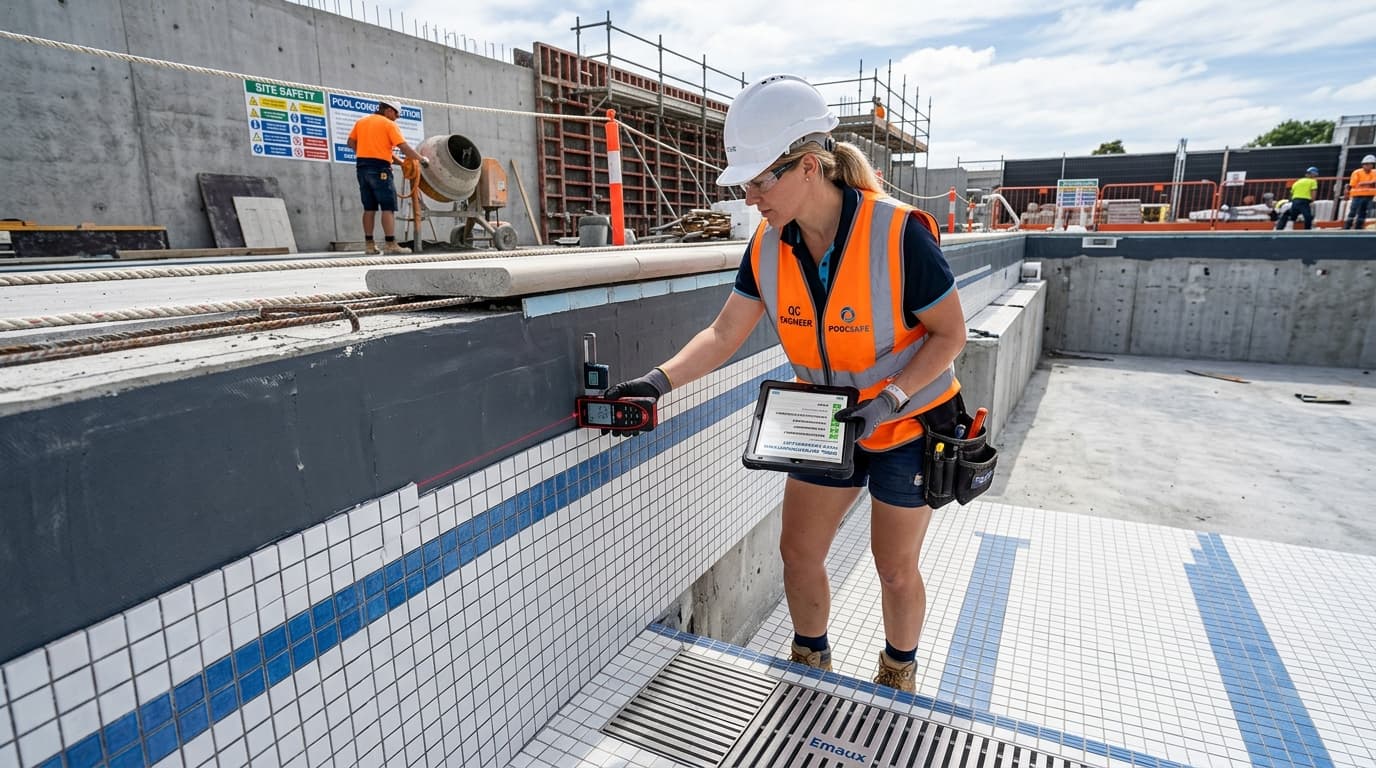
In most cases, automatic dosing, monitoring, and variable-frequency pump upgrades can be retrofitted into an existing mechanical room without rebuilding the pool shell itself — the scope depends on the condition of the existing plant, which a site survey clarifies.
Get a Peak-Load Evaluation for Your Facility
Whether new construction or retrofitting an existing facility pool, request a technical evaluation — no obligation.