
Which pool type should I choose: concrete, fiberglass, or composite?
Choose reinforced concrete for infinity edges, irregular shapes, or custom depths. Choose fiberglass for standard shapes where faster installation and a joint-free shell matter. Choose prefabricated/composite for the smallest budgets and simplest installations. None is categorically higher quality — each fits a different shape and timeline.
Three Structural Systems, Not Three Quality Tiers
Pool type comparisons are often framed as a quality ladder — concrete at the top, composite at the bottom — but that framing hides the real decision. Each system trades off design freedom, build time, and budget differently, and the right answer depends on your site and shape, not on picking the "best" option in the abstract.
Side-by-Side Comparison
| Reinforced Concrete | Fiberglass | Prefab / Composite | |
|---|---|---|---|
| Design Freedom | Unlimited — infinity edges, irregular shapes, custom depth | Limited to manufacturer molds, standard shapes | Most limited — fixed size and shape options |
| Build Time | Longest — requires formwork, rebar, curing time | Short — factory-built, transported and set on site | Shortest — modular assembly |
| Budget Position | Typically the highest unit cost | Mid-range, below concrete for standard shapes | Entry-level budget |
| Long-Term Maintenance | Low with correct waterproofing; a waterproofing failure risks costly repair | Low — one-piece shell, less joint/crack risk | Medium — panel joints require periodic inspection over time |
| Typical Use Case | Villas, hotels, Olympic/competition, aquaparks, custom architectural projects | Villa and residential pools, fast delivery at standard sizes | Small garden pools, budget-constrained projects |
Reinforced Concrete
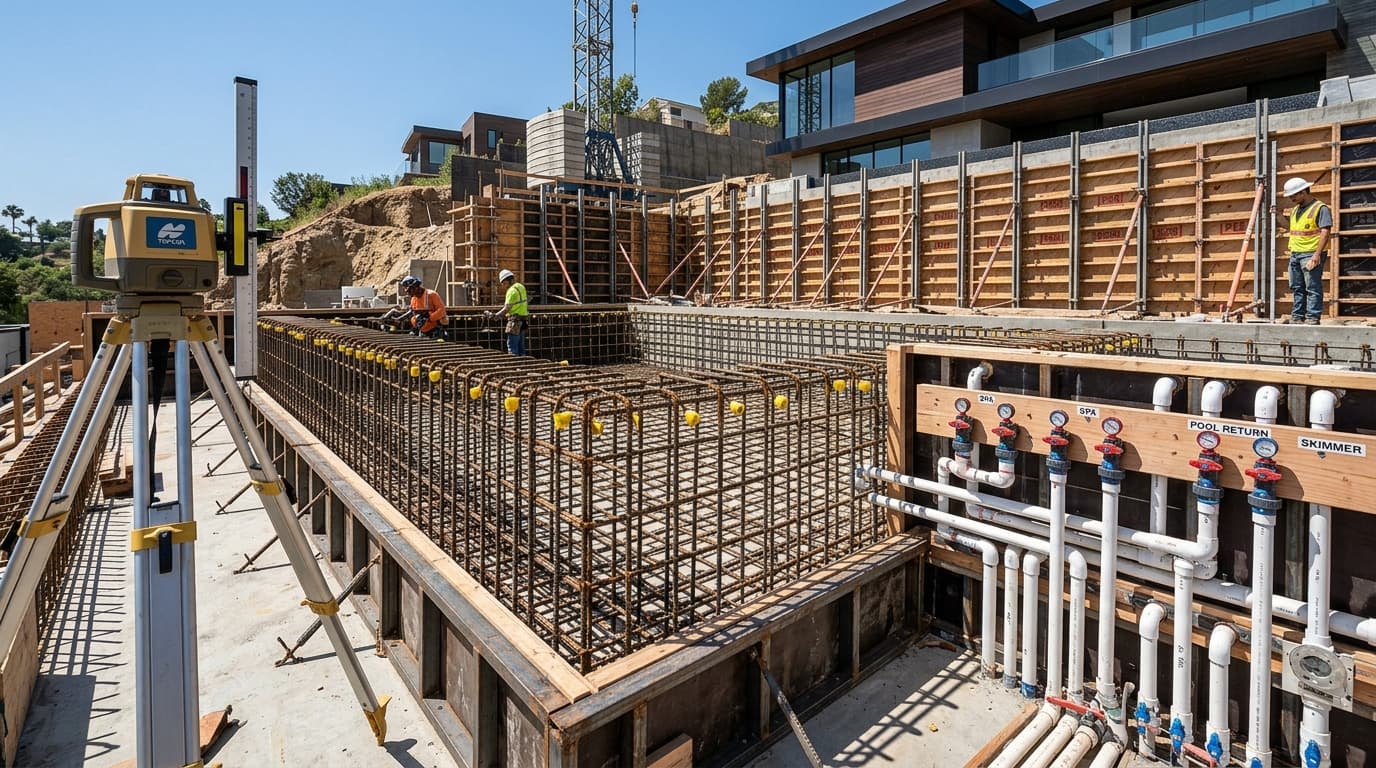
Built on site from formwork, rebar, and cast concrete, this is the only system that allows fully custom geometry — infinity edges, freeform shapes, variable depth, integrated stairs and benches at any position. The trade-off is time: formwork, rebar placement, and curing extend the schedule, and the finished quality depends heavily on waterproofing execution.
Fiberglass
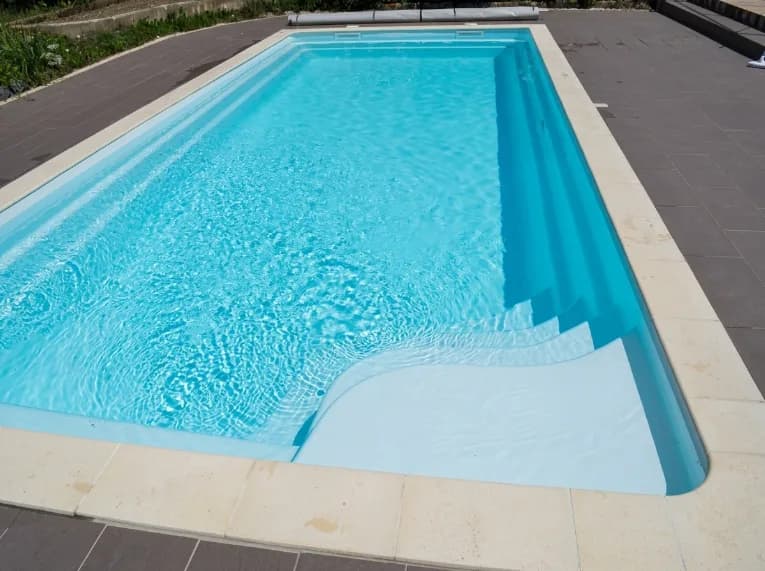
A one-piece composite shell manufactured in a factory under controlled conditions, then transported and set into an excavated pit on site. This shortens on-site labor time significantly and removes the joint-related leak risk that comes with poured concrete, but shapes and sizes are limited to what the manufacturer's mold library offers.
Prefabricated / Composite
Modular panel systems assembled on site offer the fastest installation and the lowest entry budget, at the cost of the most limited shape and size options. Panel joints require periodic inspection over the pool's life, similar in principle to checking any mechanically sealed connection.
How to Actually Decide
Start from the shape you actually need, not the budget you'd prefer. If the design calls for an infinity edge or an irregular form, concrete is the only real option regardless of price. If a standard rectangular or Roman-end shape works, fiberglass and composite both become valid, and the choice narrows to timeline and budget.
Conclusion
Reinforced concrete, fiberglass, and composite are three answers to three different briefs, not three rungs on a quality ladder. As Artemis Pool, we build all three and recommend the system based on your site's geometry and timeline, not on which one carries the highest margin.
Frequently Asked Questions
Is fiberglass a lower-quality choice than reinforced concrete?+
No — it's a different structural system, not a lower tier. Fiberglass shells are factory-built under controlled conditions and, for standard shapes, offer fewer joints and a lower long-term leak risk than a poorly waterproofed concrete shell. The right choice depends on the shape and depth you need, not a quality hierarchy.
Can I build an infinity-edge pool with fiberglass?+
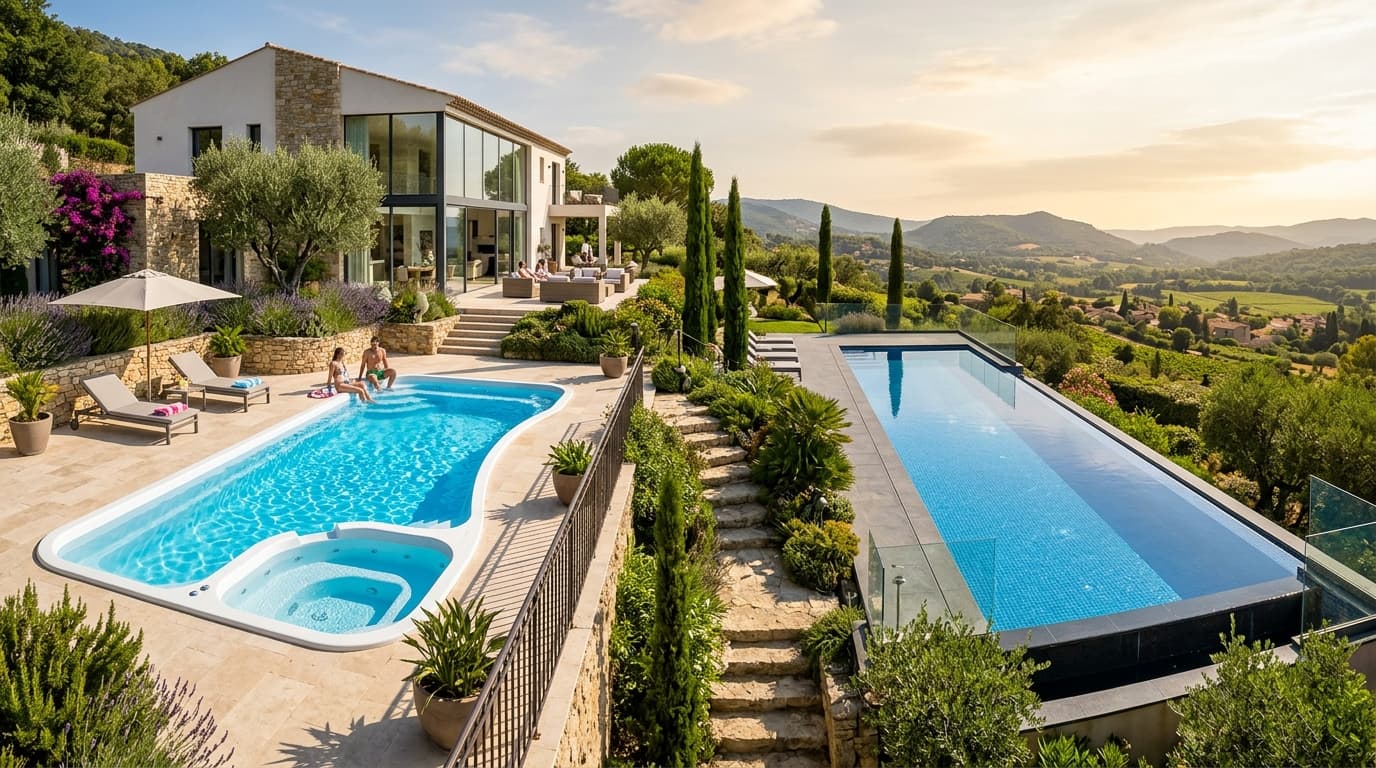
In practice, no — infinity edges, irregular freeform shapes, and custom variable depths require the on-site formwork flexibility that only reinforced concrete provides. Fiberglass and composite systems work within a manufacturer's fixed mold or panel library.
Which type is fastest to build?+
Prefabricated/composite systems are fastest due to modular assembly, followed by fiberglass monoblock (factory-built, then set and connected on site). Reinforced concrete takes the longest because of formwork, rebar placement, and required curing time before finishing can begin.
Does pool type affect the water treatment standard applied?+
No — TS 13661's turnover time and filtration rate targets are set by pool use and volume, not by the structural shell material. A fiberglass villa pool and a reinforced-concrete villa pool of the same volume are sized against the same water-treatment parameters.
Get a Structural System Recommendation
Tell us your desired shape, timeline, and budget — we'll recommend the system that actually fits, not the one we'd rather sell.