
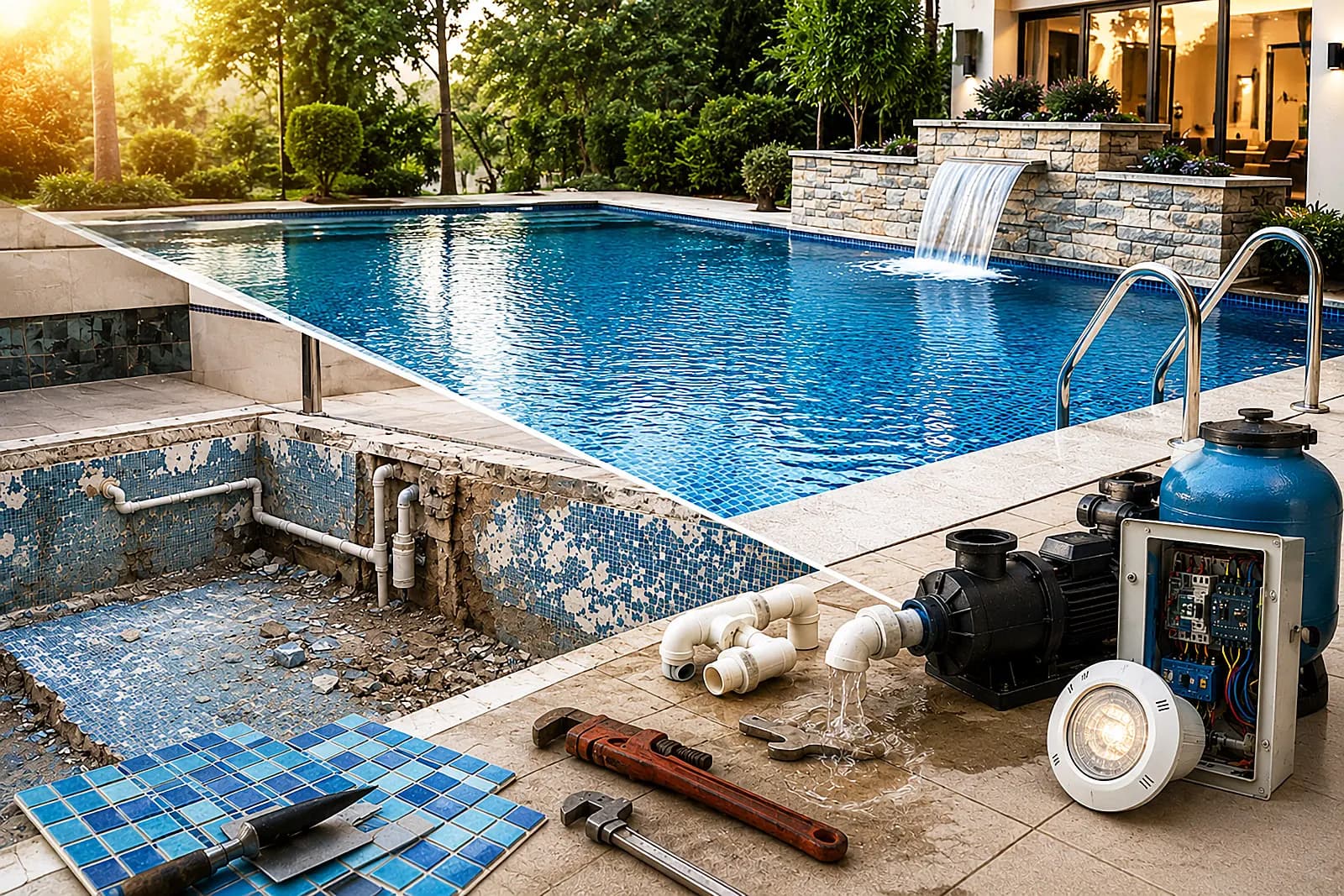
Pool renovation is a comprehensive practice that restores swimming pools that have worn down over time, developed technical problems, or lost their aesthetic appearance to a functional, safe, and modern condition. Professional pool renovation is not only about renewing the pool's outward appearance — checking the filtration system, pump equipment, piping lines, electrical system, waterproofing, mosaic coatings, and other technical components is also an important part of the process.
Since pools are constantly exposed to water, moisture, chemicals, sunlight, and temperature changes, it is normal for various problems to emerge over time. Grout deterioration, cracked mosaics, water leaks, piping problems, pump failures, and issues in the electrical system can all negatively affect both the comfort and the safety of using the pool.
Thanks to professional pool renovation, the necessary repairs can be carried out without needing to rebuild the existing pool completely, worn sections can be renewed, and the pool's service life can be significantly extended. In this article, we will cover in detail when pool renovation is necessary, how system fault diagnosis is carried out, mosaic and piping renewal processes, leak and fracture repairs, and the points to pay attention to when checking electrical systems.
A detailed technical comparison, cost analysis, and guide to making the right choice on pool renovation, maintenance, and repair. Renew your aging pool, resolve problems before they grow, and bring it back to life.
Pool renovation is not just replacing a broken mosaic or fixing a visible fault. Evaluating the piping, filtration, pump, electrical, and waterproofing systems that work beneath and behind the pool together is of great importance for the pool to be used safely, healthily, and for a long service life.
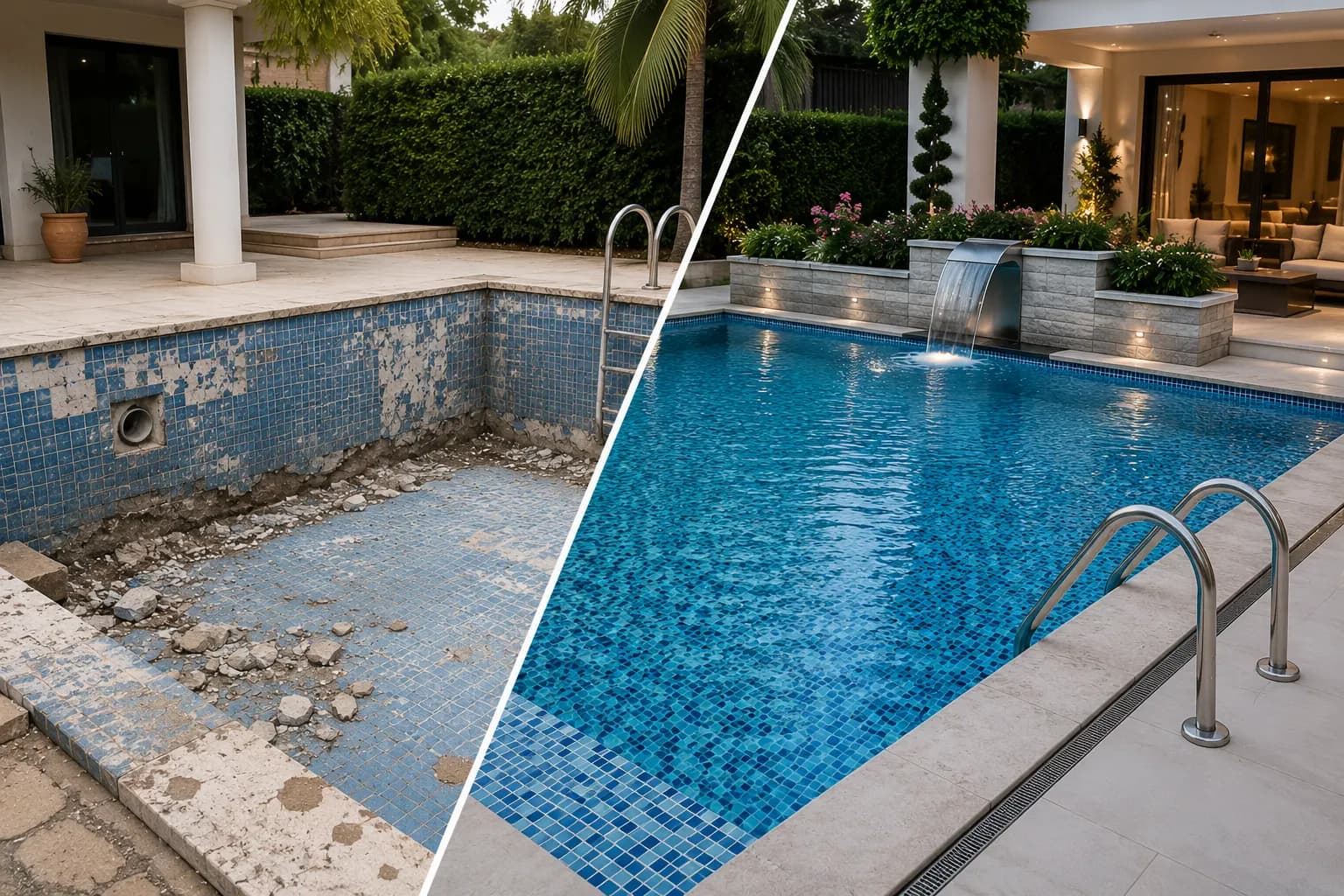
Water leaks, piping problems, fractures and cracks, worn mosaics, or technical systems that develop over time and lose performance may seem like a minor problem at first glance. However, if not addressed at the right time, these problems can turn into more extensive damage and high repair costs. With professional system fault diagnosis and properly planned renovation work, your pool's existing structure can be preserved while its usage comfort and aesthetic appearance are restored.
Artemis Pool provides professional solutions in pool renovation projects by evaluating system fault diagnosis, mosaic retiling, piping repair, leak and fracture repair, and electrical inspection and renovation as a whole — transforming your existing pool into a safe, aesthetic, and long-lasting living space.
Where to Start with a Pool Renovation? First, Correctly Diagnose the Problem
The most important step before deciding on a pool renovation is a detailed inspection of the existing structure and technical systems. This is because a visible problem in a pool is often a symptom of a different, deeper issue. For example, a continuously dropping water level may not only be the result of a surface crack — a leak occurring in the piping line, at connection points, or in the waterproofing system can cause the same problem.
With a proper survey and system fault diagnosis, the source of existing problems can be identified. This way, unnecessary interventions are avoided and only the sections that actually need work are treated. This approach helps keep renovation costs under control and makes the resulting repair more durable.
Which Problems Does Pool Renovation Cover?
Pool renovation does not consist of a single procedure. Depending on the pool's existing condition, different technical and aesthetic work may need to be carried out together. In some projects, mosaic retiling alone is sufficient, while in others the piping, leaks, pump, filtration, waterproofing, and electrical systems may all need to be addressed together.
It is quite common, especially in pools used for many years, for multiple problems to emerge at the same time. Along with aging piping, deformation can occur in the mosaics, water leaks can cause damage to surfaces, or old mechanical equipment can reduce the pool's circulation performance.
The goal of a professional renovation project is not only to fix the existing fault, but to restore the pool's overall operating system to a healthy state. For this reason, carrying out a comprehensive assessment before renovation is of great importance.
System Fault Diagnosis: Finding the Reason Behind the Visible Problem
Pool Systems Work Interdependently
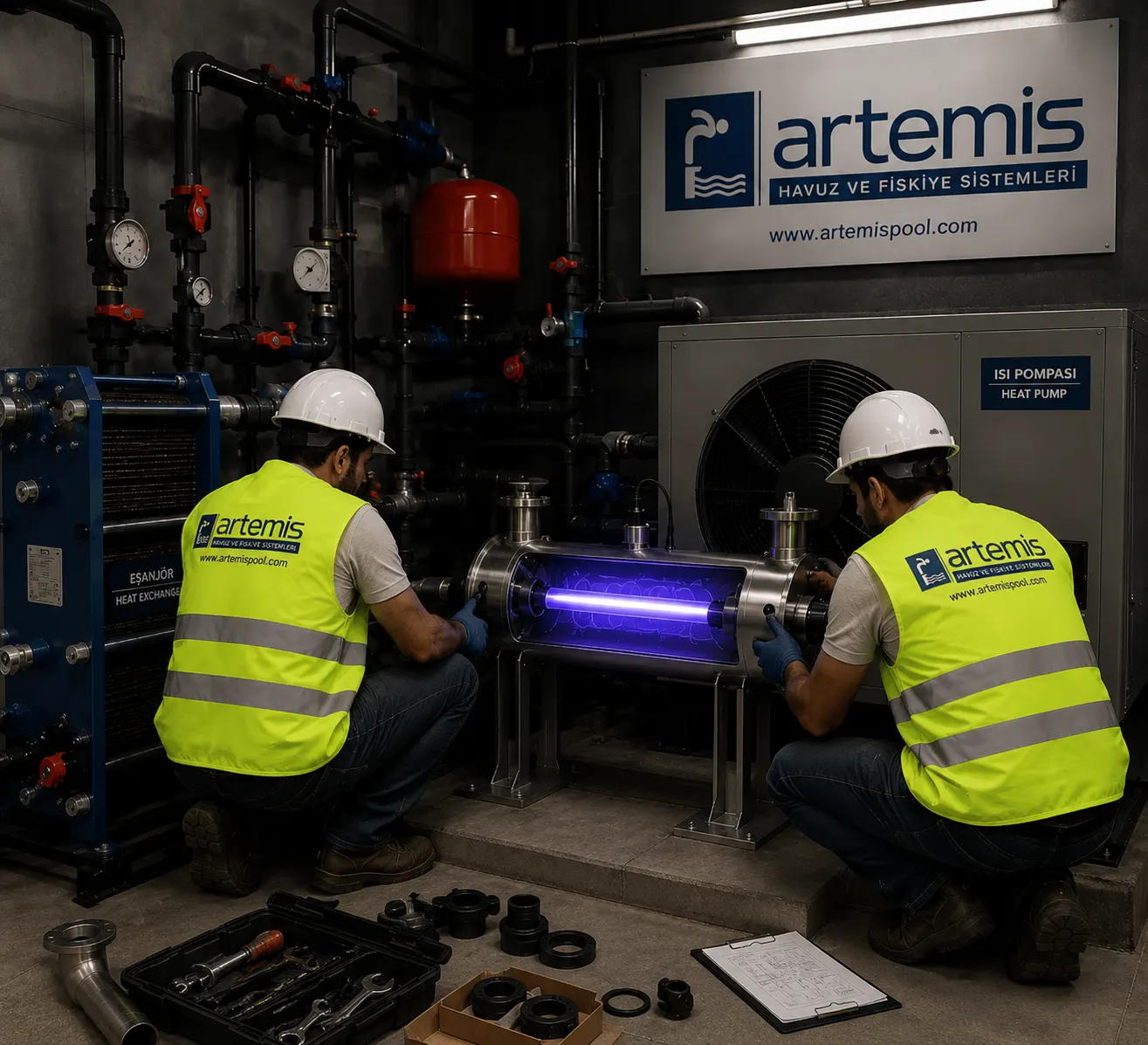
For a swimming pool to operate healthily, the pump, filter, skimmer, main drain, return lines, valves, balance tank, and other mechanical equipment need to work in harmony with each other. A problem occurring in even just one of these systems can affect the pool's overall performance.
For example, if the filtration system does not perform adequately, it can lead to cloudy water or problems balancing the pool chemistry. Similarly, if the pump cannot deliver sufficient flow, it can weaken circulation and prevent the system from operating as it should.
Correct Diagnosis, Correct Repair
During system fault diagnosis, rather than looking only at the area where the fault appears, the operating condition of the entire system should be assessed. Pump performance, filter connections, the valve system, piping lines, and water circulation are checked to determine the source of the problem.
Evaluating Technical Systems Together in Pool Renovation
Intervening only on the visible surface of the pool may not solve the underlying technical problem. For a lasting result, all components — from mechanical systems to piping, and from waterproofing to electrical infrastructure — need to be evaluated together.
- Mechanical System Check: The operating condition of the pump, filter, valves, skimmer, main drain, and return systems is examined.
- Piping Check: The pipe lines that carry water circulation are inspected for leaks, fractures, blockages, and connection problems.
- Waterproofing and Surface Check: The pool shell, surface coatings, and waterproofing layers are assessed to identify points that could cause water loss.
- Electrical System Check: Lighting, electrical connections, control panels, and the electrical infrastructure of the pool equipment are checked.
Renovating the Pool Pump and Filtration Systems
1. Checking Pump Performance
The pool pump is one of the fundamental pieces of equipment that circulates water through the system. Insufficient pump operation, noisy running, repeated stopping, or failure to provide adequate circulation can affect the system's overall performance. During renovation, the pump's existing capacity and the pool's needs should be evaluated together.
2. Renewing the Filtration System
The filtration system plays an important role in keeping pool water clean and clear. Aging filter equipment or an unsuitable filter capacity can make maintaining the pool more difficult. When necessary, renewing the filtration equipment can help the system operate more efficiently.
3. Valve and Connection Checks
The valves and connection points found in the filter and pump systems should also be checked regularly. Loose, worn, or damaged connections can cause water loss and a drop in system performance.
Consider Aesthetics and Technical Performance Together When Renewing Your Pool
During pool renovation it is possible not only to resolve technical problems, but also to improve the pool's overall appearance and usage comfort. Especially in older pools, renewing surface coatings, replacing lighting, and updating the surrounding landscaping can give the pool a completely different look.
Visual & Aesthetic Improvements
- Mosaic Retiling: Renewing broken, cracked, or dislodged mosaics can make the pool surface more aesthetic and durable.
- Grout Renewal: Renewing worn grout both improves visual cohesion and helps protect the surface.
- Pool Edge Refurbishment: Renewing worn surfaces around the pool can improve overall usage safety and aesthetic appearance.
- Pool Lighting: Renewing aging or underperforming lighting systems can improve the pool's nighttime appearance and usage comfort.
- Modern Coating Solutions: With new coating options suited to the project's architecture, old pools can be given a more modern appearance.
Increased Technical Performance
- Technical Equipment Renewal: Renewing pumps, filters, and auxiliary equipment that have reached the end of their service life can improve system performance.
- Energy Efficiency: Choosing more efficient equipment can help reduce operating and maintenance costs in the long run.
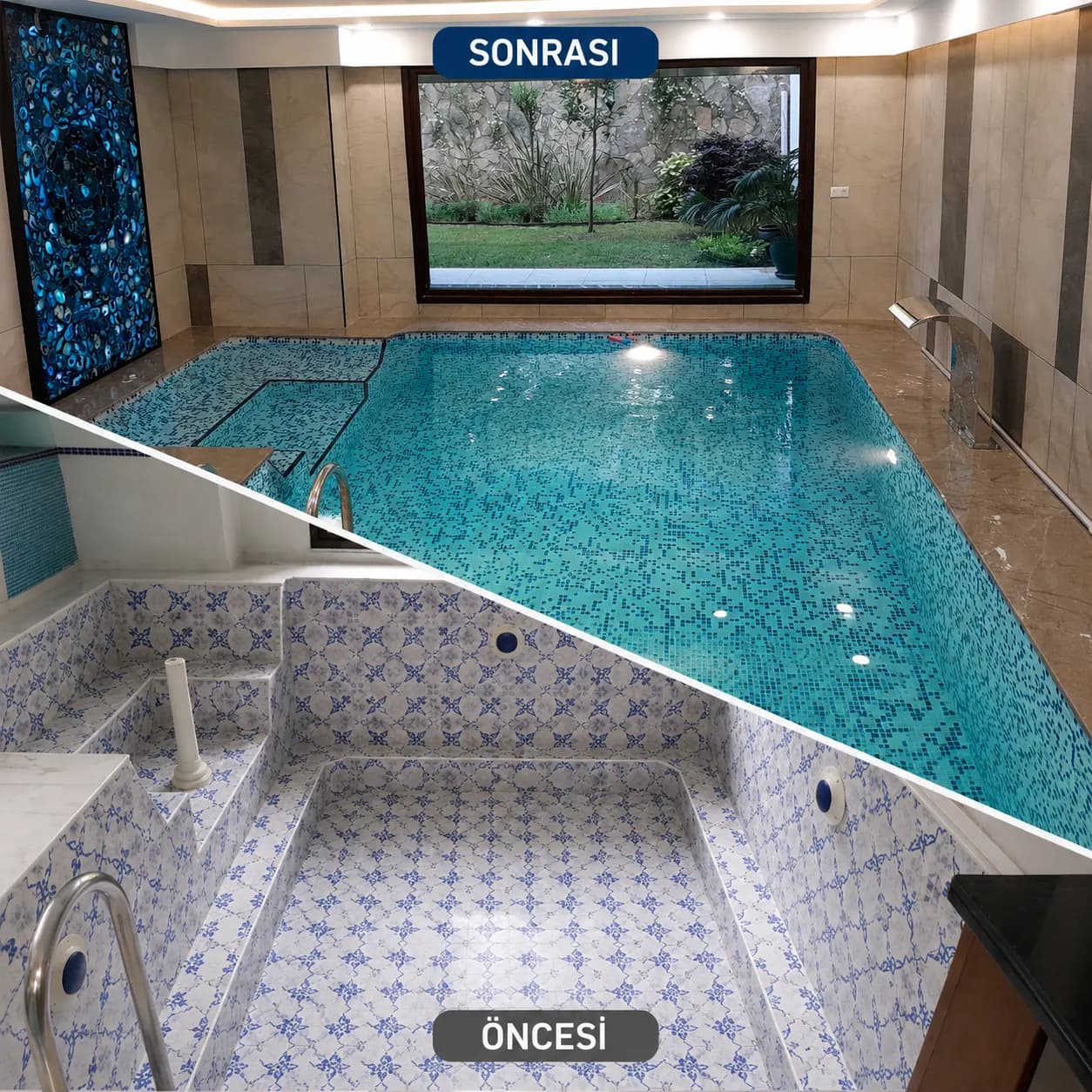
Mosaic Retiling: Transforming the Pool's Appearance from the Ground Up
Pool mosaics are constantly exposed to water, sunlight, and pool chemicals, so they can wear down over time. In some cases only color loss is visible in the mosaics, while in other pools more serious problems such as breaking, cracking, blistering, or dislodging can occur.
In the mosaic retiling process, the condition of the existing surface should be assessed first. Instead of applying new coating directly over loose mosaics, the soundness of the surface should be checked and the necessary preparations made. This ensures the new application adheres better to the surface and can be used for a longer time.
Piping Repair and Renewal
Pool piping is one of the sections that is often out of sight but critically important to the system's operation. Cracks, fractures, connection problems, and blockages occurring in the pipe lines can negatively affect water circulation.
- 1Piping leaks: Can cause continuous water loss in the pool or moisture forming in the surrounding area.
- 2Pipe fractures: Can occur for various reasons, especially in old piping systems.
- 3Connection problems: Loose or worn connections can lead to water loss.
- 4Blockages: Can cause reduced circulation and cause the pump system to run harder than necessary.
Pool Leaks: A Small Water Loss Can Be a Sign of a Bigger Problem
Pool leaks are often noticed by the user simply as a drop in water level. However, water loss beyond normal evaporation is a situation that must always be investigated.
A leak can originate from the pool shell, piping, drains, connection points, or mechanical equipment. For this reason, looking only at the pool surface is not sufficient for leak detection.
Repairing Fractures and Cracks
Cracks, coating damage, or fractures that occur on the pool surface can grow over time. Especially on surfaces that are in constant contact with water, neglecting a small piece of damage can lead to the need for a more extensive repair.
For this reason, during leak and fracture repair, not only the visible part of the damage but also its underlying cause should be evaluated. A surface-level crack and a structural problem should not be repaired using the same method.
Pool Electrical Inspection and Renovation
The electrical system in pools is one of the technical areas requiring the most attention for safety. Because lighting systems, pumps, control panels, and other electrical equipment share the same environment as water, the electrical infrastructure needs to be checked regularly.
- Pool LightingFaulty or damaged lighting should be checked and its watertightness tested.
- Electrical ConnectionsLoose or worn connections should be identified and renewed with high-standard wiring.
- Control PanelsWhether the system operates safely with short-circuit and residual-current protection relays is assessed.
- Electrical EquipmentThe motor insulation and phase balance of the pump and other auxiliary mechanical equipment are tested.
Positioning the Pool: What to Pay Attention to During Renovation
- In Villas and Private Residences: Making the pool consistent with the existing architecture can increase the overall aesthetic value of the living space.
- In Hotels and Holiday Facilities: Choosing coatings and technical systems that withstand heavy use is important for operations.
- In Residential Complex and Shared-Use Pools: Safety, durability, and ease of maintenance should be prioritized.
Maintenance and Ease of Operation in Pool Renovation
The purpose of a successful renovation is not only to renew the pool for that day. It should also aim to make the maintenance and operation process easier in the years to come.
The Future of Pool Renovation: Smarter, More Efficient, and More Sustainable Systems
As pool technologies advance, it is becoming possible to use more efficient and smarter systems in renovation projects as well. In particular, reducing energy consumption, using automatic control systems, and making equipment operate more efficiently are gaining increasing importance in modern pool projects.
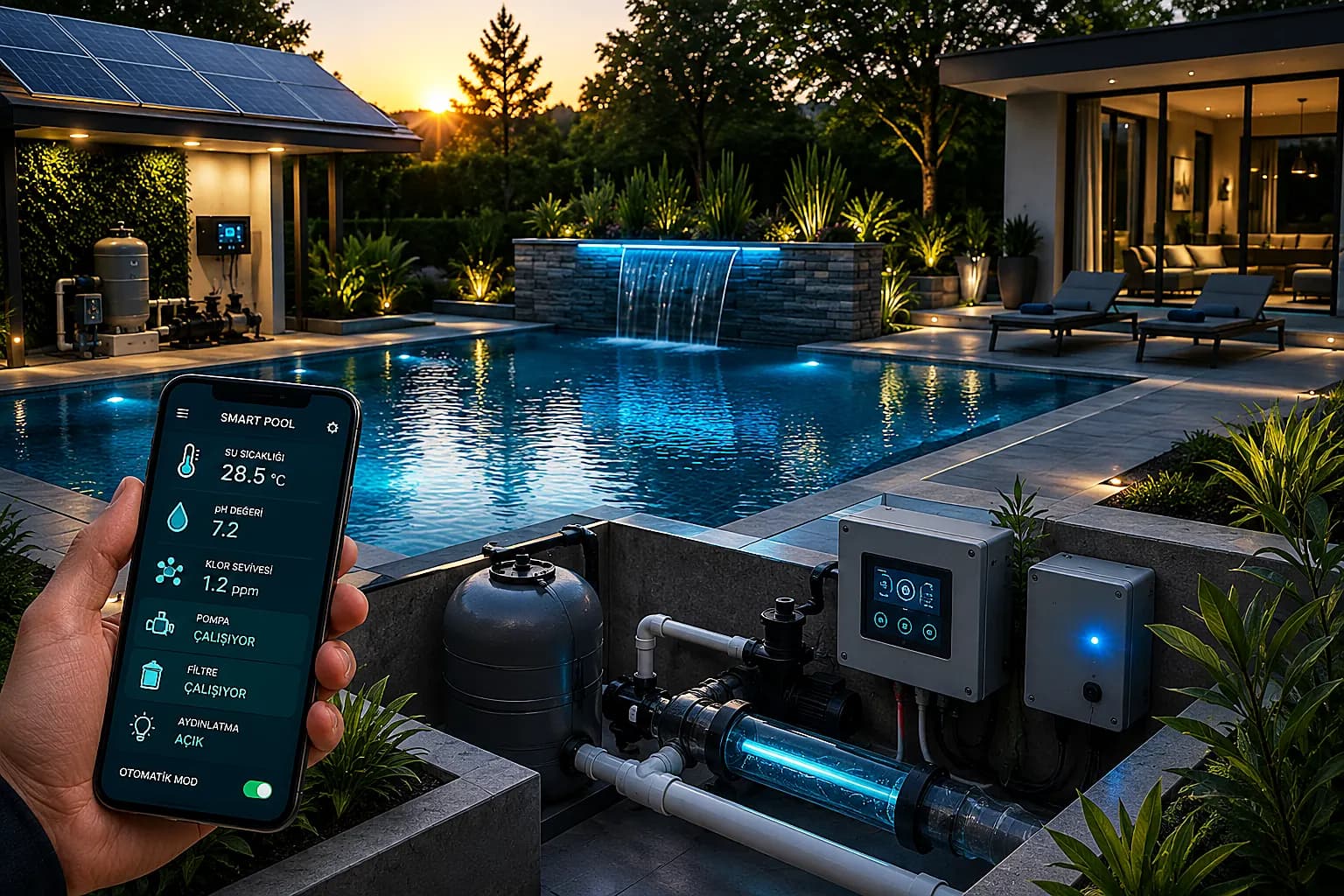
- ✓Smart Pool Systems:Systems that automatically control filtration, temperature, lighting, and certain technical functions offer ease of use.
- ✓Energy-Efficient Pumps:Next-generation pump systems that provide lower energy consumption can help reduce operating costs.
- ✓Modern Filtration Solutions:More efficient filtration systems contribute to maintaining water quality and simplifying maintenance processes.
- ✓LED Lighting Systems:Modern LED solutions can improve the pool's nighttime aesthetics while also offering an advantage in energy efficiency.
What to Know Before Pool Renovation
Before starting a pool renovation, the existing condition needs to be correctly analyzed, the scope of the work determined, and priorities properly ordered. Every pool differs in structure, age, the equipment used, and the problems it faces. For this reason, applying a solution used on a different pool directly in the same way may not always give the right result.
Especially in problems such as leaks, piping, and structural cracks, the source of the problem should be identified first. A renovation plan should then be created by assessing the existing condition of the surface, piping, mechanical system, and electrical infrastructure.
Reassess Your Old Pool with a Pool Renovation
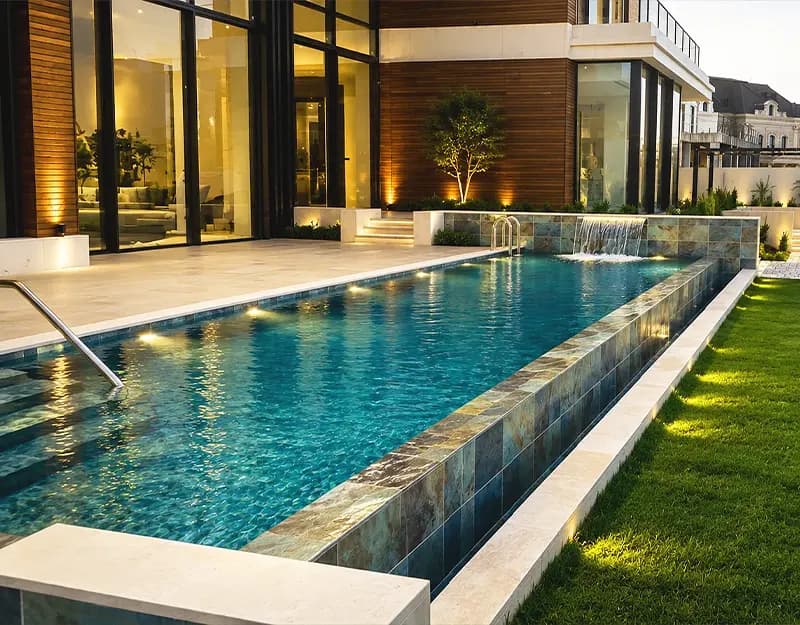
A pool built years ago does not necessarily need to be demolished and rebuilt entirely. If the condition of the existing structure allows, the pool can be significantly renewed through properly planned renovation work.
Conclusion: Pool Renovation Is Not Just Repair — It's a Process of Restoring Value
Pool renovation is a comprehensive renewal process applied to make a pool that has aged or experienced various technical problems safe, aesthetic, and functional again. Many different tasks can be part of this process, from system fault diagnosis to mosaic retiling, from piping repair to fixing leaks and fractures, and from electrical inspection to improving mechanical equipment.
A pool's value is not determined by its size or design alone. Safely operating technical systems, sound piping, correct filtration, solid coating, reliable electrical infrastructure, and regular maintenance are also important parts of a pool's true value.
Professional Renovation Solutions for Your Pool
By correctly identifying leak, piping, or mechanical problems in your existing pool, we create safe, aesthetic, and long-lasting solutions. Contact us now for a free survey and engineering analysis.
Frequently Asked Questions About Pool Renovation
When should a pool renovation be carried out?+
Renovation may be needed if the pool has a water leak, a piping problem, cracks or fractures, mosaic deterioration, performance loss in the pump and filtration systems, or issues related to the electrical system. Pools that have simply aged and lost their overall appearance can also be modernized through a comprehensive renovation project.
What is done first in a pool renovation?+
The first stage of a pool renovation is a detailed inspection of the current condition. The pool structure, piping system, pump and filtration equipment, mosaic and coating surfaces, waterproofing, and electrical infrastructure are all checked. Once the system fault diagnosis is complete, the necessary repair and renewal work is planned.
How is a leak in a pool detected?+
Pool leaks can be noticed through signs such as the water level dropping faster than normal, damp patches or standing water appearing around the pool, and pressure problems in the piping system. However, to pinpoint the exact source of the leak, the pool shell, piping lines, connections, and related equipment need to be assessed together.
When should pool mosaics be replaced?+
Replacement may be necessary if the mosaics show cracking, breakage, detachment, blistering, or heavy grout deterioration. During mosaic retiling, it's not just the visible surface that should be checked — the condition of the underlying surface matters too. This ensures the new coating is more solid and longer-lasting.
Can leaks or fractures in the pool piping be repaired?+
Yes. Once the source of the piping problem is correctly identified, damaged connections, pipe runs, or related equipment can be repaired or, where necessary, replaced. After the repair, it is important to re-check the piping and test that the system is working properly.
Is the pool's electrical system checked as part of the renovation?+
Yes. Pool lighting, electrical connections, control panels, and related electrical equipment can all be assessed within the scope of the renovation. Since water and electricity coexist in a pool environment, it is essential that the electrical infrastructure operates safely and correctly. Any work on electrical systems must be carried out by qualified professionals.
Does an old pool have to be rebuilt completely?+
Not every old pool needs to be rebuilt from scratch. Depending on the condition of the existing structure, a pool can be modernized by retiling the mosaics, repairing the piping, resolving leaks, upgrading the pump and filtration systems, checking the electrical infrastructure, and renewing the surrounding landscaping.
How long does a pool renovation take?+
The duration of a pool renovation depends on the scope of the work involved and the current condition of the pool. A pool that only needs mosaic or surface renewal will not take as long as one that requires piping, leak, mechanical system, and electrical renovation. A healthier work schedule can be drawn up after the initial survey and system fault diagnosis.
In a pool renovation, is only the problem area repaired?+
The scope of the renovation is determined by the existing problem. However, especially with leak, piping, and mechanical system issues, checking the entire system rather than intervening only in the visible area gives a more accurate result. This makes it possible to identify the true source of the problem and avoid unnecessary, recurring repairs.
Is maintenance needed after a pool renovation?+
Yes. Regular maintenance after the renovation extends the service life of the renewed systems and surfaces. Periodically checking the filtration, pump, piping, mosaics, electrical system, and other technical equipment helps small problems get noticed before they grow.