
How are indoor swimming pools engineered for four-season comfort and structural protection?
Indoor swimming pool engineering requires dedicated commercial dehumidifiers (keeping RH between 50-60%), high-efficiency inverter heat pumps maintaining water at 28-30°C, corrosion-resistant vapor barriers, and multi-air-turnover HVAC systems to prevent condensation, structural corrosion, and chloramine buildup.
Introduction: Experiencing Swimming Comfort in Every Season
Swimming is one of the most vital activities that enhances both physical fitness and quality of life. However, outdoor pools can only be used during certain times of the year due to weather conditions. This is where indoor swimming pools stand out by providing comfortable, uninterrupted four-season usage. Whether in hotels, sports complexes, or private luxury villas, indoor pools grant users seamless year-round swimming opportunities.
Indoor Swimming Pools: Engineering 4-Season Climate & Comfort
Indoor swimming pools are modern living environments that deliver uninterrupted swimming comfort all year round, independent of season and weather conditions. Through thermal insulation, relative humidity control, and advanced ventilation systems, both bather health and structural durability are securely safeguarded.
Preferred in hotels, athletic complexes, and bespoke villa projects, indoor pools stand out not only for recreation and hydrotherapy rehabilitation, but also as prestigious architectural centerpieces. Engineered with precise thermodynamic calculations, premium corrosion-resistant materials, and intelligent automation, indoor pools ensure a hygienic, energy-efficient, and sustainable experience in all four seasons.
Indoor Swimming Pools: Engineering 4-Season Climate & Comfort
Swimming is one of the most essential activities for physical well-being and health. While outdoor pools depend on seasonal weather, indoor swimming pools deliver uninterrupted comfort across all four seasons.
Whether built for luxury hotel wellness centers, athletic facilities, or private residences, indoor pools deliver continuous, year-round swimming. In contemporary architecture, they represent not just a sports amenity, but a hallmark of wellness and luxury living.
Advantages of Indoor Swimming Pools
1. 4-Season Usability
- Enjoy heated water comfort even during the coldest winter days.
- Never miss pool time due to rain, wind, or storm conditions.
- Swim in a refreshing, controlled environment in the summer heat.
2. Comfort and Privacy
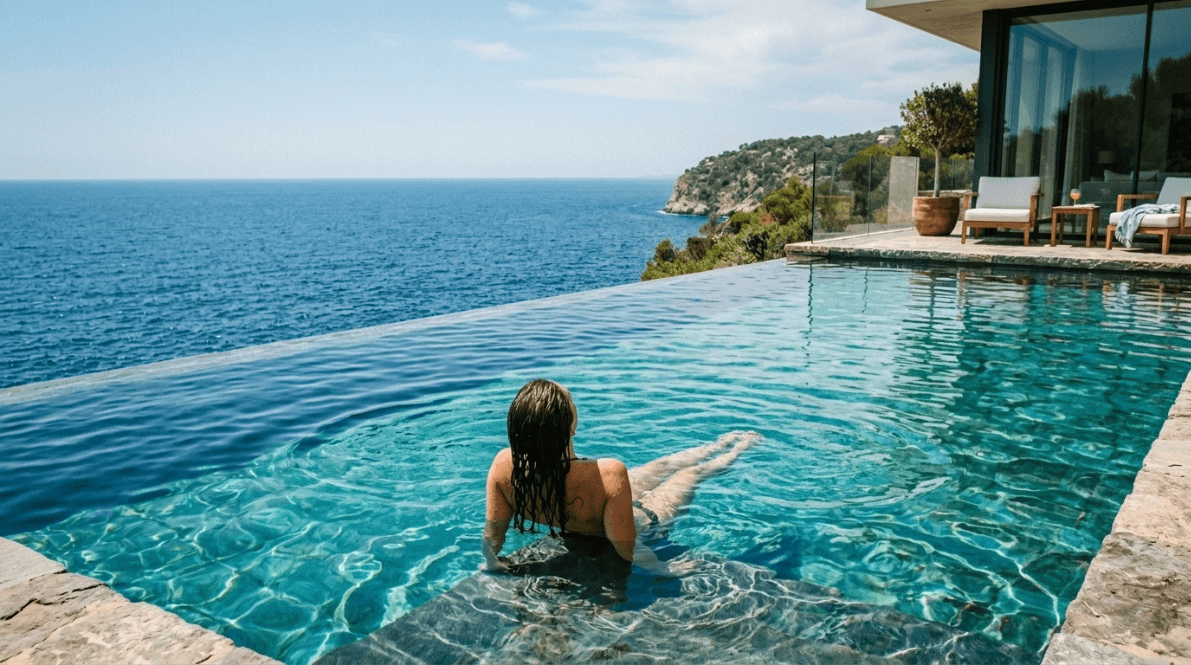
Especially in private villas, indoor pools provide users with secluded privacy and utmost comfort, creating a serene personal retreat away from outside view.
3. Hygiene and Purity
Being completely sheltered from outdoor elements, indoor pools maintain a cleaner, more controlled environment free from airborne dust, leaves, and insect contamination.
4. Extended Structural Lifespan
Protected from harsh weather extremes and ultraviolet degradation, indoor pool structures last significantly longer. Water chemistry and temperature remain highly stable.
Architectural and Design Approaches
Optimal Structural Positioning
The physical placement of an indoor pool is vital for architectural harmony. In villas, it is typically planned on the ground floor or basement level, often connecting seamlessly to living spaces or private spa suites. In hospitality projects, it serves as the central anchor of the wellness and spa wing.
Material Selection & Durability
Materials used in indoor pools must balance refined aesthetics with long-term moisture and chemical resistance:
- Flooring and Wall Finishes: Vitrified porcelain ceramics, natural stone, and glass mosaic are preferred for low porosity and slip resistance.
- Ceiling Design: Vapor-barrier moisture-resistant ceilings and treated acoustic wood finishes prevent mold while establishing a warm, welcoming ambience.
- Lighting Engineering: Natural daylight glass facades paired with waterproof IP68 LED systems amplify spatial depth and ambiance.
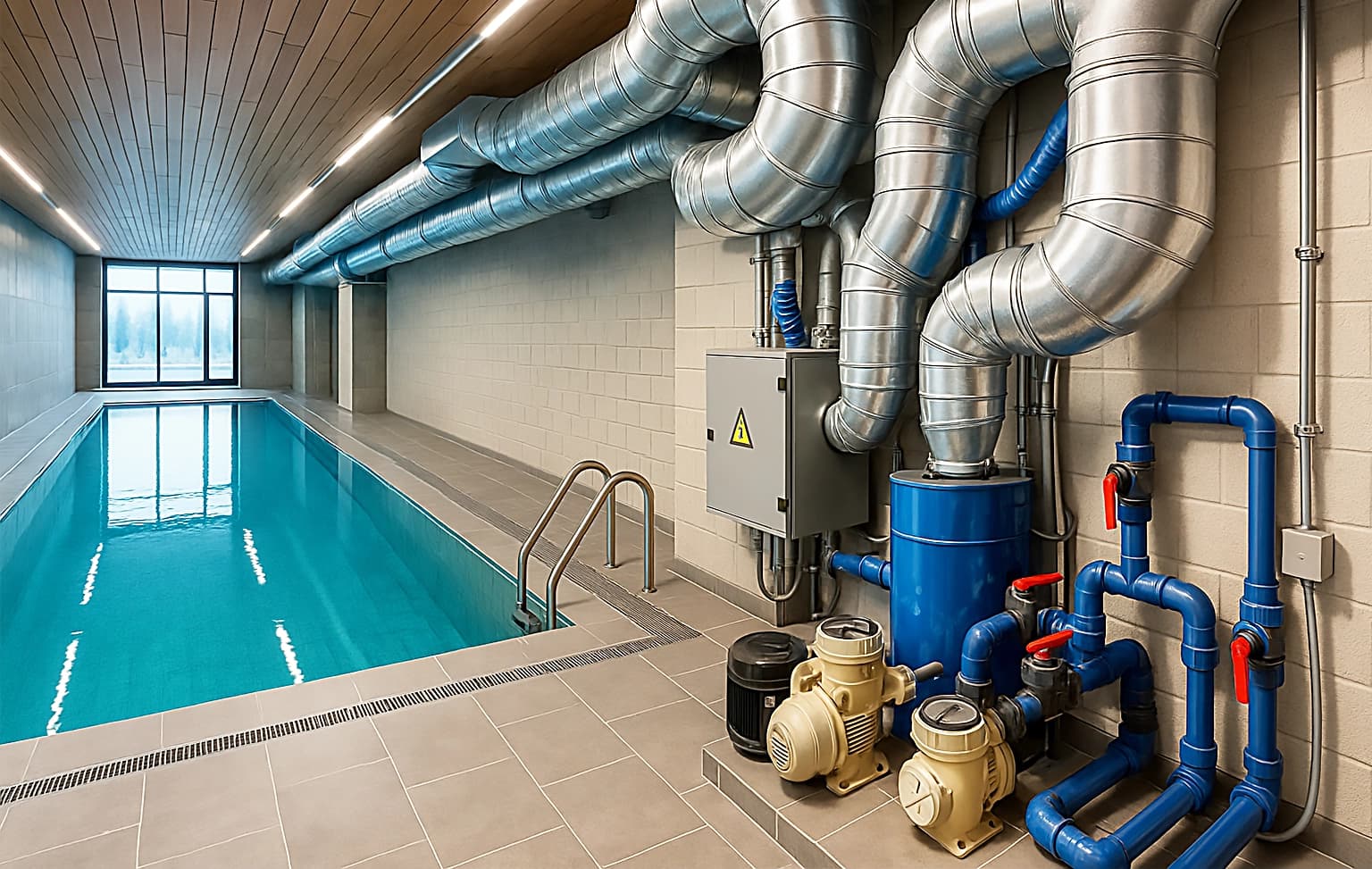
Ventilation, Dehumidification & Climate Control
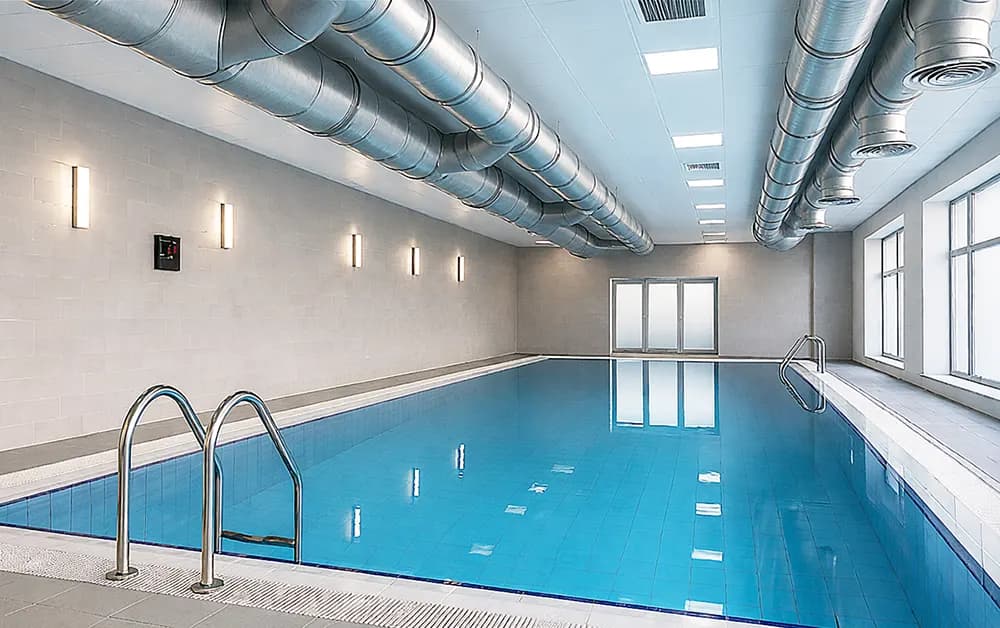
In indoor pool enclosures, unmanaged relative humidity is a critical hazard for bather respiratory comfort and building structural integrity. Therefore, an engineered HVAC and dehumidification system is mandatory.
1. Commercial Dehumidifiers:
Continuously extracts surplus moisture from ambient air to prevent condensation, mold, mildew, and structural corrosion, extending the building envelope's lifespan while maintaining air freshness.
2. Inverter Heat Pumps:
Maintains optimal water temperature with superior coefficient of performance (COP) ratings, providing energy-efficient thermal equilibrium throughout the year.
3. Smart Energy Automation:
Intelligent microprocessors synchronize room air temperature, water temperature, relative humidity (50-60%), and air exchange rates in real time, minimizing operating energy waste.
Properly calculated ventilation and climate systems guarantee that indoor swimming pools remain durable, safe, and comfortable over decades of operation.
Health, Fitness and Hydrotherapy Benefits
Indoor swimming pools offer extensive wellness advantages beyond recreational comfort. Regular swimming supports cardiovascular endurance, low-impact muscle development, joint relief, and mental clarity in a safe, controlled environment all year long.
Year-Round Fitness: Enables continuous swimming routines across all seasons, building core strength, muscle tone, lung capacity, and flexibility while supporting healthy weight management.
Hydrotherapy & Rehabilitation: Water buoyancy eliminates compressive force on joints and spinal discs, accelerating recovery from orthopedic injuries and supporting physical rehabilitation therapies.
Stress Reduction & Mental Serenity: Integrated with tranquil spa acoustics and ambient lighting, indoor pools provide an optimal environment for mental relaxation, reducing cortisol and improving sleep patterns.
Indoor Pools in Hotels and Sports Facilities
Hospitality & Resort Centers
- Serves as a major prestige asset and bather attraction for luxury hotels.
- Delivers year-round swimming comfort to guests regardless of outdoor season.
- Complements holistic spa, wellness, and fitness offerings.
- Acts as a decisive booking factor, especially for urban and boutique hotels.
Athletic & Aquatic Complexes
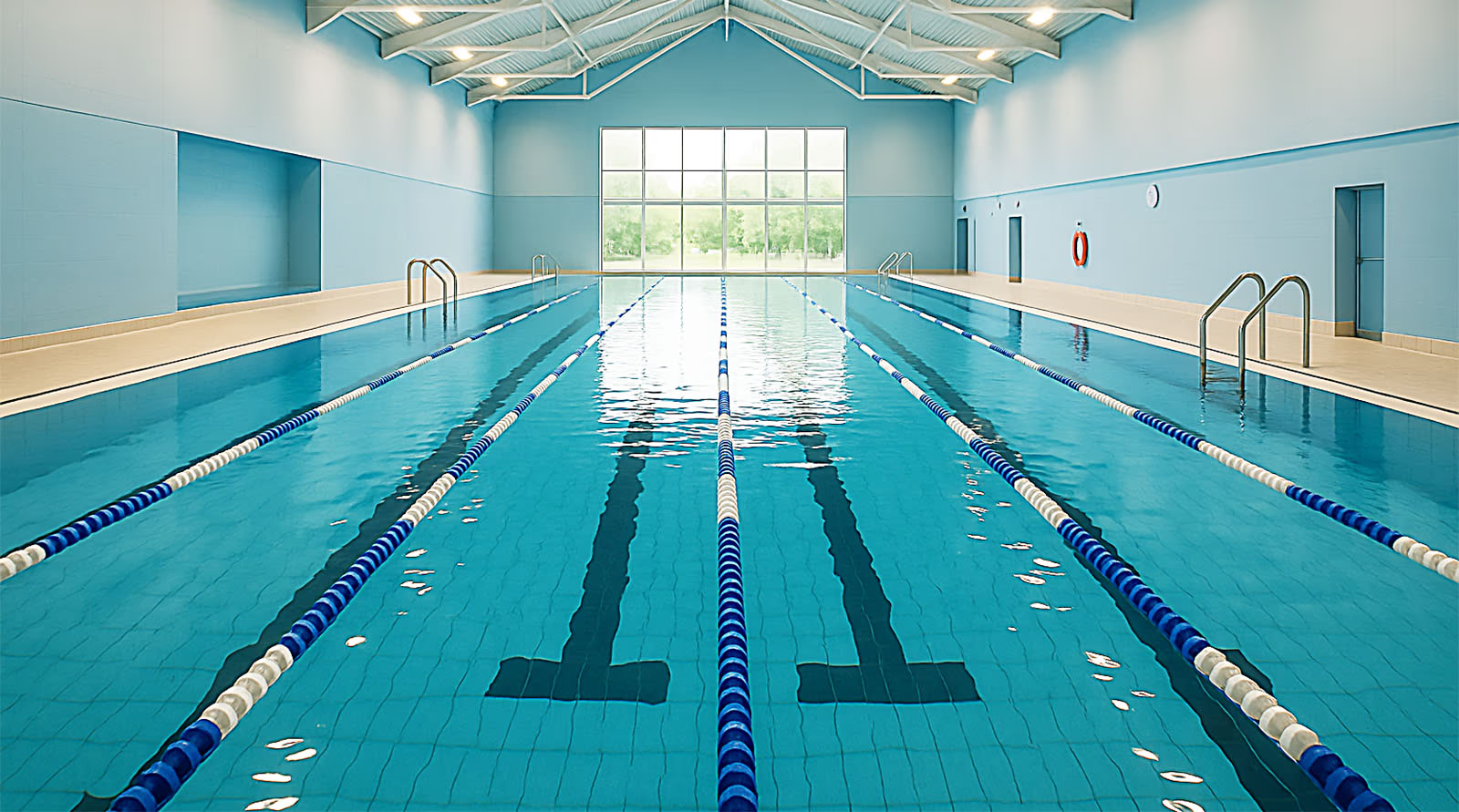
Accommodates professional athletic training, swim schools, and aquatic sports under regulated competition parameters, providing standardized temperature and lane precision.
Indoor Swimming Pools in Private Luxury Villas
As the ultimate hallmark of luxury residential architecture, indoor pools have surged in popularity for bespoke villas. They deliver personal wellness, family safety, and undeniable market value appreciation to private residences.
Complete Personal Privacy: Grants villa residents an exclusive swimming haven shielded from external eyes and urban noise, ensuring total peace of mind.
Enhanced Family Safety: Controlled access enclosures and climate-monitored surroundings provide a secure environment for families with young children.
Smart Pool Automation: Modern microcontrollers coordinate water heating, disinfection dosing, ambient humidity, and multi-zone LED scenes from a single mobile interface, keeping maintenance effortless.
Seamless Living Space Integration: Positioned alongside personal gyms, home spas, or lounges with floor-to-ceiling glass partitions, the pool becomes an active extension of daily living.
Aesthetics & Bespoke Atmosphere: Architectural wood paneling, indirect mood lighting, and underwater acoustics turn the indoor pool into a stunning decorative centerpiece day and night.
In summary, private villa indoor pools seamlessly blend personal privacy, health, safety, and smart technology into an essential luxury living feature.
These attributes elevate the daily standard of living while dramatically increasing the villa's real estate valuation.
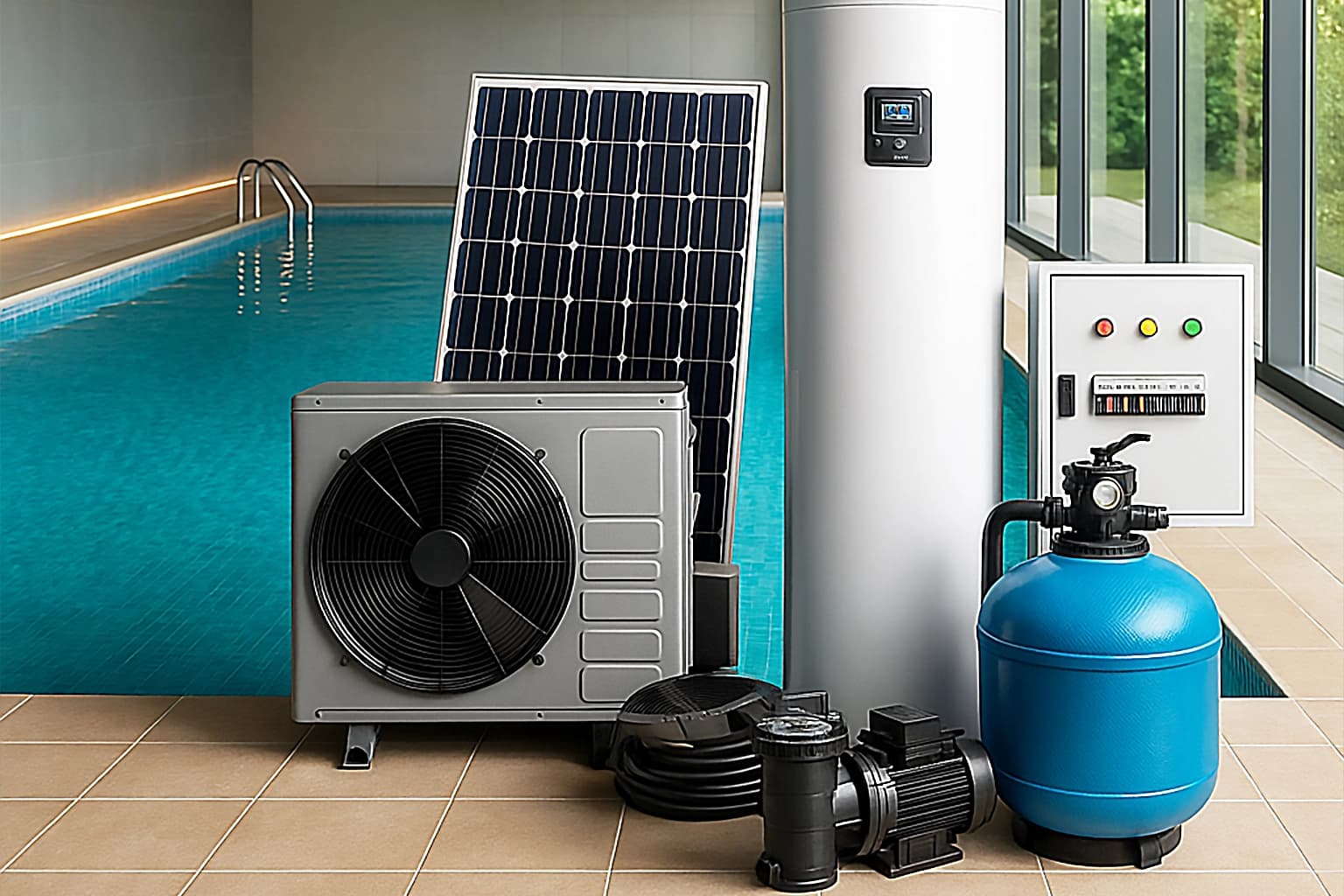
Energy Efficiency and Sustainable Technologies
Energy management is a fundamental consideration in operating indoor pools. Modern engineering strategies balance peak bather comfort with low operating overhead:
1. Automated Micro-Controls: Synchronizes variable-speed pumps, LED lighting, and chemical dosing to match actual bather load without power waste.
2. High-Efficiency Heat Pumps: Harnesses ambient thermal energy with high COP metrics to heat pool water at a fraction of electric resistance costs.
3. Solar Thermal Integration: Rooftop solar collector arrays supplement water heating loops using free renewable energy.
4. Low-Voltage LED Illumination: Consumes up to 70% less electricity than halogen units while providing versatile architectural color scenarios.
Deploying these technologies ensures high efficiency, low carbon footprint, and sustainable lifetime operation for indoor swimming pools.
Aesthetic and Architectural Innovations
Modern indoor pools represent high-impact architectural design where light, materials, and water converge harmoniously.
- •Curtain Wall Glazing: Floor-to-ceiling glass walls merge the indoor pool room with surrounding gardens, creating a bright, expansive atmosphere.
- •Natural Timber Accents: Specially treated cedar and teak ceiling battens introduce warmth, biophilic elegance, and acoustic dampening.
- •Custom Mood Lighting: Dimmable linear LED coves and underwater optical lighting allow customizable scenes for exercise, party, or evening relaxation.
Technical Challenges & Operating Requirements
While offering exceptional year-round advantages, indoor pool facilities demand meticulous engineering diligence in three primary areas:
Relative Humidity
Uncontrolled moisture will cause structural corrosion and condensation damage without dedicated HVAC dehumidification.
Operating Overhead
Thermal heating, ventilation, and air circulation require higher operational energy budgets than unheated outdoor pools.
Mandatory Maintenance
Scheduled calibration of ventilation dampers, chemical dosing sensors, and water filtration cycles is essential.
The Future of Indoor Pools: Smart and Sustainable
Next-generation indoor pools will integrate green engineering, artificial intelligence, and modular construction to achieve zero-emission, effortless operation.
Real-Time Water Quality Sensors: Photometric and amperometric probes monitor free chlorine, pH, and conductivity with cloud-connected predictive analytics.
Renewable Energy Co-Generation: Heat recovery ventilators combined with geothermal heat pumps and solar arrays minimize total power draw.
Modular Component Engineering: Factory-precision mechanical skids and prefabricated structural panels accelerate construction with tight quality tolerances.
Adaptive Circadian HVAC & Lighting: Dynamic spectral lighting shifts throughout the day to sync with natural circadian rhythms while HVAC adjusts to occupancy in real time.
Frequently Asked Questions
Why is humidity control so important in an indoor swimming pool?+
If the high humidity in an indoor pool environment is not controlled, mold, fungus, and corrosion develop in the building materials, shortening the structure's lifespan and compromising user comfort. Dehumidification devices balance this excess moisture, extending the structural lifespan and providing a healthy usage environment.
What climate-control systems are used in indoor pools?+
Three core systems work together in indoor swimming pools: dehumidification devices prevent mold and corrosion, heat pumps keep the water temperature at an ideal level in an energy-efficient way, and smart automation systems continuously control temperature, humidity, and air circulation to lower operating costs.
Is building an indoor swimming pool more expensive than an outdoor one?+
Yes, the operating costs of indoor pools are higher than outdoor pools, since dehumidification, heat pump, and ventilation systems require additional energy and maintenance expenses. In return, year-round usability, a longer-lasting structure, and more stable water quality offset this extra cost over the operating lifetime.
What materials should be preferred for indoor pools?+
Ceramic, natural stone, and glass mosaic are commonly used for floor and wall finishes. Moisture- and steam-resistant materials should be chosen for the ceiling design; wood ceilings, when applied correctly, create a warm atmosphere. For lighting, glass panels that let in natural light along with modern LED systems are recommended.
What kinds of projects typically choose indoor swimming pools?+
Indoor pools are widely chosen by hotels as a prestige feature and a customer draw, by sports complexes for professional training and water sports, and by private villas to add privacy, safety, and aesthetic value.
How is energy efficiency achieved in indoor pools?+
Pool automation manages temperature, lighting, and filtration through smart control, preventing unnecessary energy consumption. Heat pumps run more efficiently than conventional systems, solar energy integration lowers water heating costs, and LED lighting delivers up to 70% energy savings.
Where should an indoor swimming pool be positioned in a villa?+
In villas, an indoor swimming pool is typically planned on the basement or ground floor; designing it as an integrated part of the living room or spa area turns it into a social and leisure space the home can use continuously. In hotels, it is preferably positioned at the center of the spa and wellness area.
Conclusion: The Key to Four-Season Comfort
Indoor swimming pools deliver the joy and vitality of swimming every single day of the year. Uniting athletics, health, architectural beauty, and climate comfort, they remain indispensable for luxury hotels, fitness complexes, and private residences.
With meticulous architectural planning, energy-efficient engineering, and refined materials, an indoor pool stands as a crowning architectural feature that transforms how spaces are experienced.