1. What Is an Automated Disinfection System?
Maintaining the biological and chemical balance of swimming pool water with traditional methods is quite difficult. The number of bathers entering the pool, air temperature, sunlight (UV radiation), rain, and environmental pollution continuously change the water's pH and chlorine (Cl) levels. Manual test kits and hand-added chemicals offer instant fixes, but they cause large swings throughout the day.
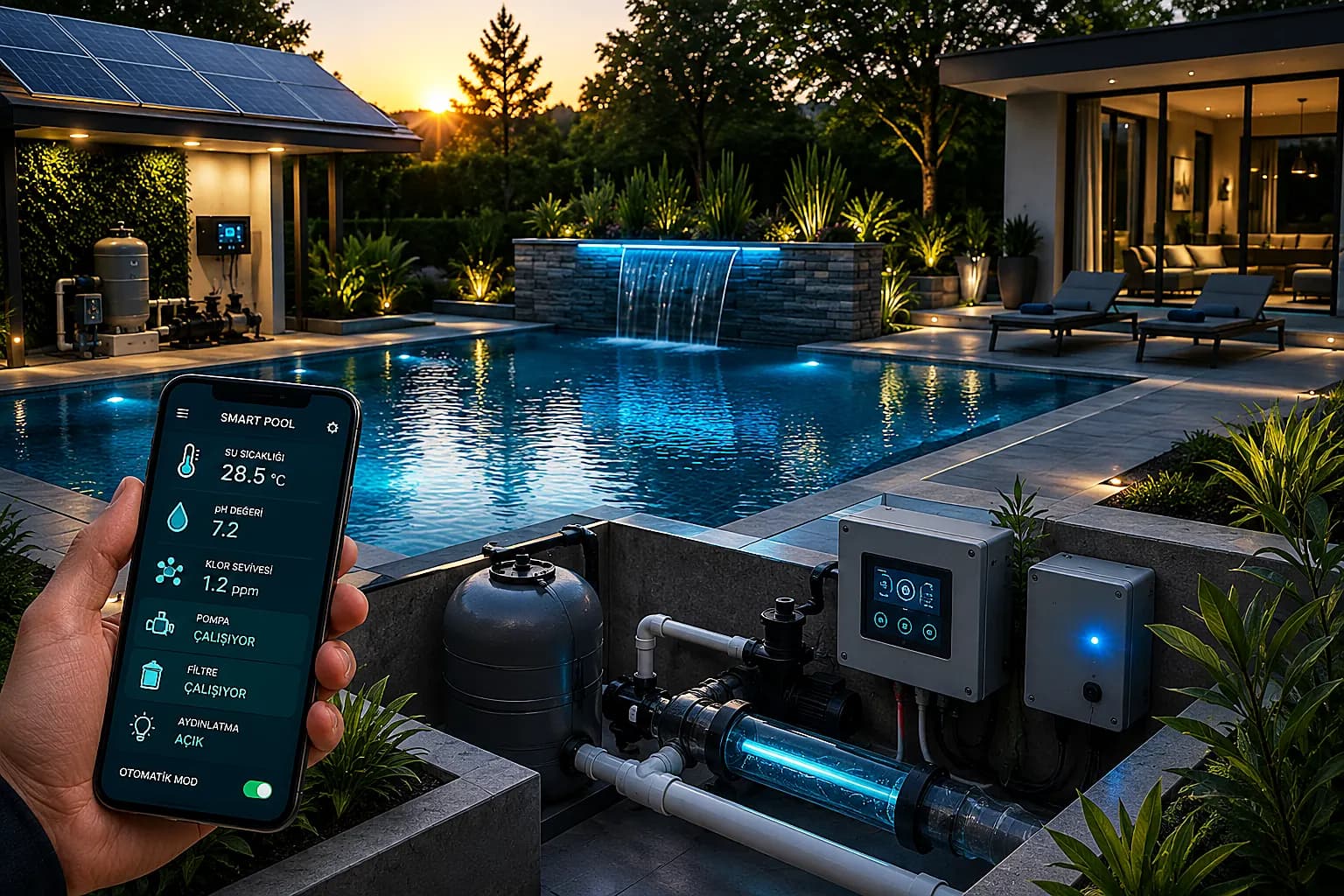
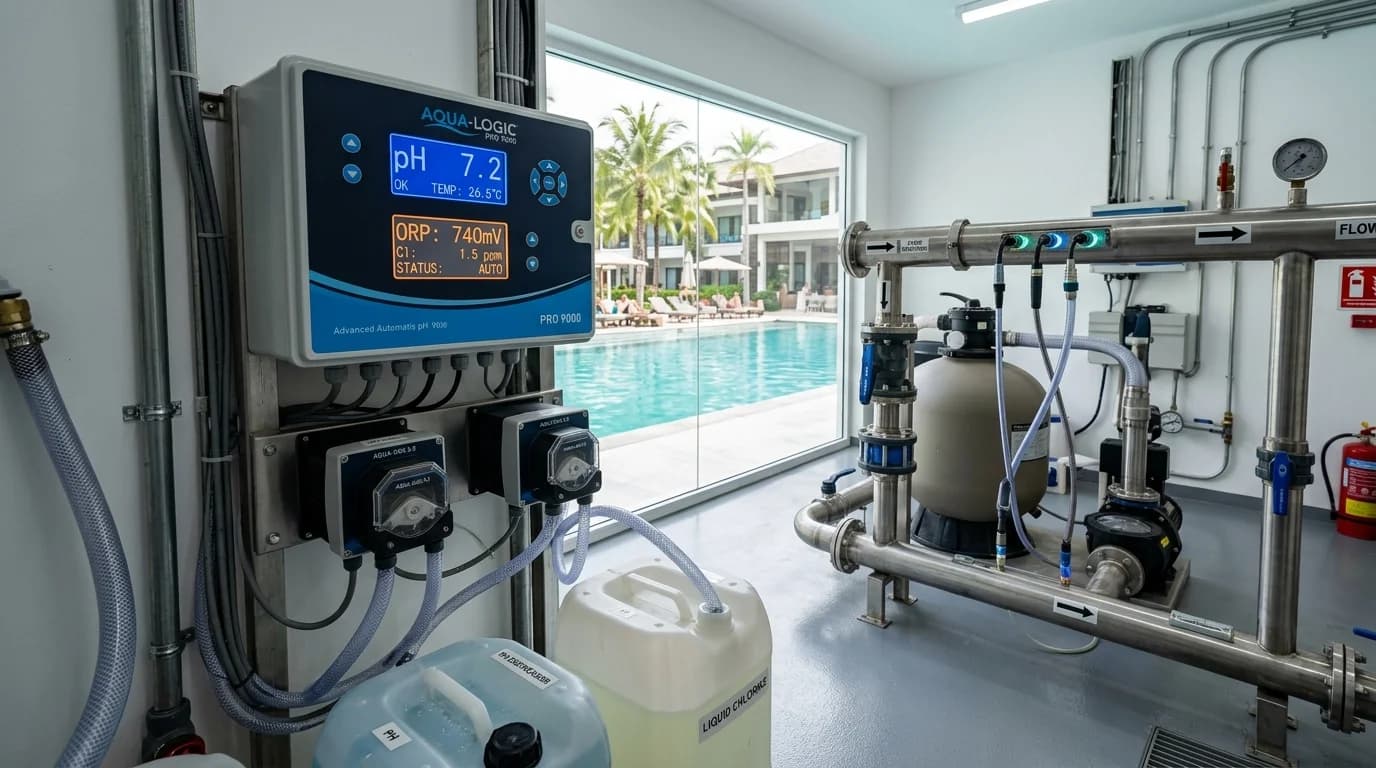
An Automated Pool Disinfection System is a closed-loop automation system made up of precision electrodes (pH and ORP/chlorine probes) connected to the pool circulation line, a microprocessor-based control unit, and periodic dosing pumps (peristaltic or solenoid-diaphragm). The system measures the water's parameters within seconds and, whenever there is a deviation from the target value, automatically injects exactly the required amount of chemical (pH reducer or liquid chlorine).
2. The Engineering Fundamentals of the pH–Chlorine Relationship
Many pool users and operators wonder why the water still turns cloudy or why bacterial growth still cannot be prevented even though the pool contains enough chlorine. The fundamental engineering reason is the direct relationship between pH and chlorine activity.
When chlorine is added to water, it dissociates into Hypochlorous Acid (HOCl) and Hypochlorite Ion (OCl⁻). The main component with high disinfection power — killing bacteria 80-100 times faster — is Hypochlorous Acid (HOCl).
Active Chlorine (HOCl) Ratio by pH Level
| pH Value | Disinfection Power (HOCl %) | Assessment |
|---|---|---|
| 6.8 | 90% HOCl | High disinfection, but risk of eye/skin irritation and corrosion. |
| 7.2 - 7.4 | 65% - 75% HOCl | IDEAL RANGE: Maximum bather comfort & high hygiene. |
| 7.8 | 33% HOCl | 67% of chlorine's power is lost; scaling begins. |
| 8.0+ | < 20% HOCl | Chlorine becomes fully ineffective; algae growth and cloudiness are inevitable. |
As shown, once pH rises to 8.0, disinfection efficiency drops below 20% even if the pool holds 2.0 ppm of chlorine. This is why the primary task of an automated disinfection system is to keep pH continuously fixed within the 7.2 - 7.4 band.
3. Core Components of an Automatic Dosing System
A professional automatic pH and chlorine dosing system runs on the synchronized operation of four main components:
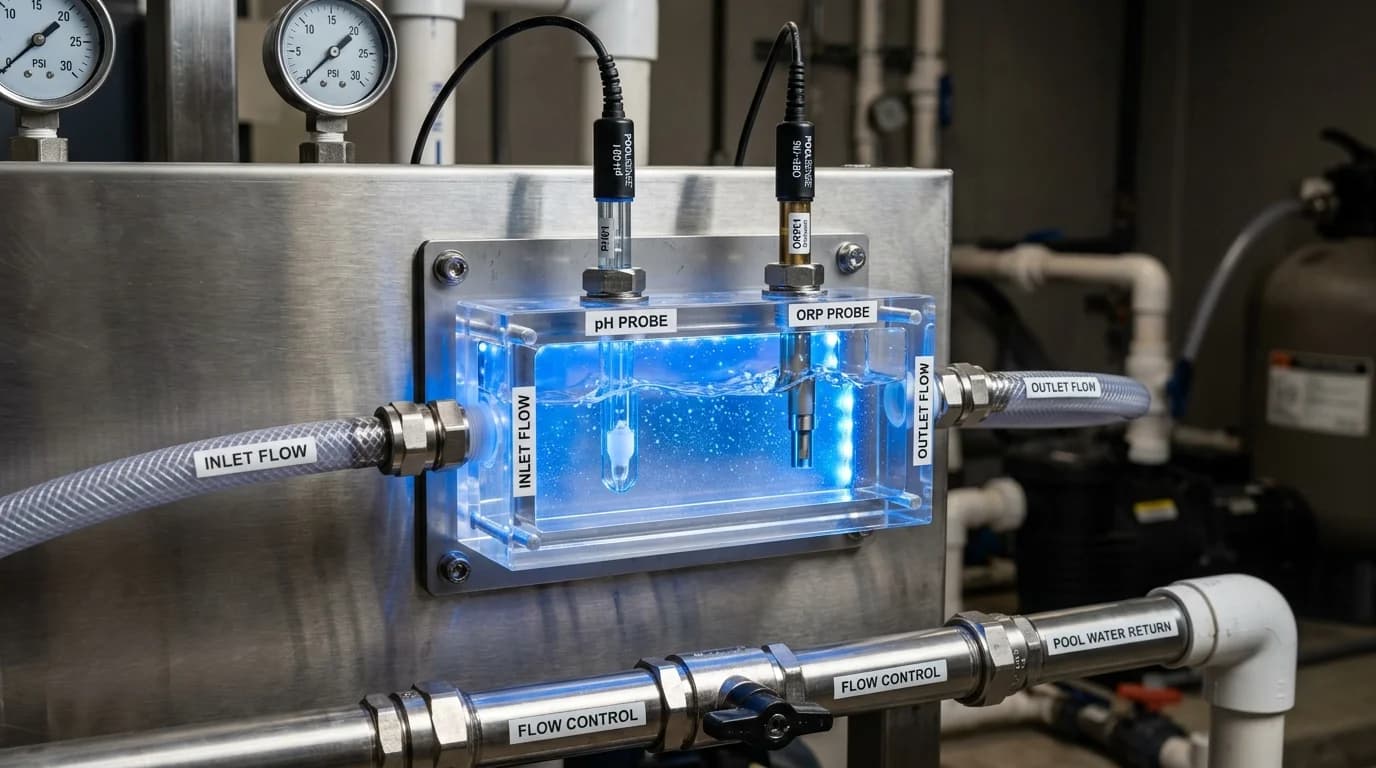
1Measurement Probes (pH & ORP/PPM)
Specialized gel- or liquid-filled glass electrodes that measure dissolved H⁺ ions and oxidation potential in water at millivolt (mV) resolution.
2Microprocessor Control Panel
The brain unit that converts the electrical signals from the probes into digital values, compares them against setpoints (e.g. pH 7.2, ORP 720 mV), and issues the dosing command.
3Dosing Pumps
Peristaltic or motorized diaphragm pumps that draw from chemical drums and inject liquid chlorine or acid into the pool return line at a precise flow rate.
4Bypass Flow Cell & Flow Switch
The bypass manifold and flow switch component that protect the probes from high pressure and turbulent flow, and cut off dosing for safety whenever water flow stops.
4. ORP (Redox) and Free Chlorine (PPM) Measurement Methods
Two main technologies are used in automatic chlorine control: ORP (Redox) Measurement and Amperometric Free Chlorine (PPM) Measurement.
- ORP (Oxidation-Reduction Potential): Measures, in millivolts (mV), the power of the chlorine present in the water to burn/destroy bacteria and organic matter. Per World Health Organization (WHO) standards, an ORP value between 650 mV and 750 mV guarantees that the water is free of microorganisms. It is the most widely used method for residential and villa pools in terms of price/performance.
- Amperometric PPM Measurement: Directly detects the amount of free chlorine in the water in milligrams per liter (PPM) via specialized membrane probes or photometric cells. Commercial hotels, public swimming pools, and Olympic facilities prefer direct PPM-measuring systems due to legal requirements.
5. Advantages Delivered by an Automatic Dosing System
6. Plumbing Installation and Bypass Cell Details
For the automatic dosing system to run correctly over the long term, the plumbing connections must follow proper hydraulic rules:
- Measurement Point (Suction): The sample water for measurement must always be drawn after it exits the filter, but before the heater and injection points.
- Injection Points (Discharge): Liquid chlorine and pH-reducer injection valves must be positioned at the very last point in the circulation line (on the main line feeding the pool inlet nozzles) so as not to damage any filters, pumps, or heaters upstream.
- Injection Spacing: There must be at least 50-70 cm of distance between the pH and chlorine injection points, so the two chemicals cannot come into direct contact and precipitate inside the pipe.
7. Electrode Calibration and System Maintenance
Electrodes are living chemical sensors and can become coated over time with minerals, oils, and scale in the water. This causes inaccurate readings.
Engineering Tip: Periodic Calibration
Probes should be calibrated with standard buffer solutions of pH 4.0, pH 7.0, and 468 mV at the start of the season and every 2 months thereafter. When closing the pool for winter, probes must never be left dry — they should be stored in their protective caps in KCl (potassium chloride) storage solution.
8. Common Mistakes and Recommended Solutions
Mistake 1: Installing Without a Flow Switch
If dosing pumps keep running after the circulation pump stops, a heavy concentration of chemical builds up in the pipe. When circulation resumes, a sudden high concentration of acid/chlorine is injected into the pool.
Solution: A flow switch safety interlock must always be connected between the pump and the dosing panel.
Mistake 2: Ignoring Cyanuric Acid (Stabilizer) Buildup
When cyanuric acid accumulated in the water from using powdered chlorine rises above 50-70 ppm, ORP probes misread chlorine efficiency and cause unnecessary chlorine to be injected.
Solution: Stabilizer-free liquid chlorine (sodium hypochlorite) should be preferred in automated systems.
9. Conclusion and Evaluation
Automated disinfection and pH dosing systems are a modern necessity that leaves hygiene to nothing left to chance — from villa pools to luxury hotels and Olympic facilities. Continuously maintaining the ideal pH and chlorine balance not only increases water clarity but also lowers operating costs and extends the service life of pool equipment.
As Artemis Pool, we deliver survey, sales, installation, and calibration services with engineering rigor for the dosing and automation panels best suited to your project's volume and usage intensity.
Frequently Asked Questions
Does an automatic pH and chlorine system reduce pool chemical usage?+
Yes. Because automated systems perform precise micro-dosing 24/7, they prevent the excess chemical loading (including the need for shocking) that manual dosing tends to cause. This delivers chemical savings of roughly 25% to 40%.
What is the difference between an ORP (redox) sensor and a free chlorine (PPM) sensor?+
An ORP sensor measures the water's disinfection power (oxidation potential in mV) and is practical and economical. A PPM amperometric sensor, on the other hand, directly measures exactly how much free chlorine is in the water in milligrams per liter; it is preferred in commercial and Olympic pools.
How often should pH electrodes and ORP probes be calibrated?+
Probes should be calibrated at least 1-2 times per season (or monthly) using standard buffer solutions (pH 4, pH 7, and 468 mV ORP). Electrode lifespan ranges from 1 to 3 years depending on usage conditions.
What happens to the automatic dosing pump during a power outage?+
Quality automation panels include a flow sensor (flow switch) and time-relay protection. When the circulation pump stops or power is cut, the dosing pump automatically locks out and stops injecting chemicals.
Can liquid chlorine and a salt chlorine generator be used together with an automatic pH system?+
Absolutely. Salt chlorine generators tend to raise the water's pH. For this reason, pairing a salt chlorine cell with an automatic pH-reducer dosing system is essential for overall system efficiency.
Let's Choose the Right Dosing System for Your Pool Together
Contact our expert engineering team for automatic pH and chlorine automation packages suited to your facility's water volume and intended use.