

What are the most durable pool waterproofing methods and application stages?
The most durable swimming pool waterproofing systems combine two-component polymer-modified cementitious membranes (TS EN 14891 CM P) or pure polyurea hot-spray coatings. Key execution stages include substrate chamfering (pah), hydrophilic swelling joint tape installation, 28-day concrete curing, and 7-day hydrostatic leak testing before tiling.
Pool waterproofing has a critical importance for long service life, water conservation, and structural durability, especially in reinforced concrete swimming pools. Waterproofing systems that are applied incorrectly or neglected can, over time, lead to water leaks, damage to reinforced concrete structures, and seriously costly repair processes. Today, modern pool projects prioritize not only aesthetic and functional solutions but also engineering-based water insulation systems. In this comprehensive guide, we will examine in detail the causes of water leaks in reinforced concrete pools, prevention methods, the materials used, and professional application techniques.
MENU
Why Is Pool Waterproofing So Important?
Insufficient or improperly executed waterproofing applications can, over time, lead to water leaks, damage to the reinforced concrete structure, and high repair costs. For this reason, using correct insulation techniques both increases the pool's durability and significantly reduces operating costs in the long run.
To learn why pool waterproofing is so critical and what kinds of problems incorrect applications can cause, you can check out our guide on why pool insulation is important.
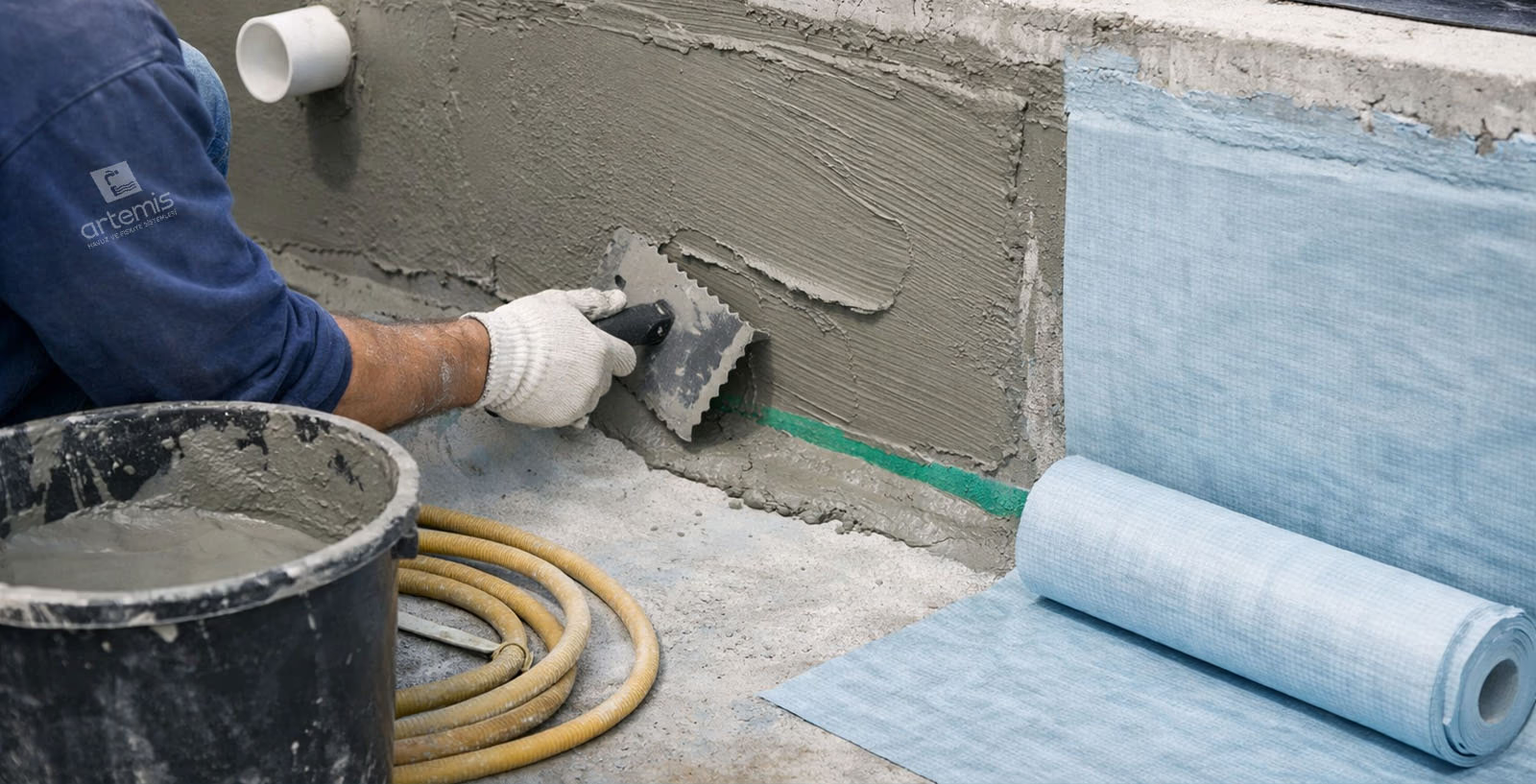
Waterproofing in reinforced concrete pools is one of the most critical stages of the project.
What Is Pool Waterproofing and Why Is It Important?
Pool waterproofing is a complete set of technical solutions applied to ensure the water-tightness of the pool structure, and it not only prevents water from leaving the pool but also protects the pool structure from being damaged by external factors. Reinforced concrete pools naturally have water permeability due to their porous structure, and this inevitably leads to water loss when proper waterproofing is not carried out. For this reason, waterproofing plays a vital role in swimming pool projects both in terms of protecting the water and increasing the durability of the structure.
Insufficient waterproofing can, over time, cause reinforcement corrosion, concrete cracks, and structural weakening. In addition, leaking water can disrupt the surrounding soil structure and lead to serious engineering problems. For this reason, waterproofing systems in professional pool projects must be planned from the design stage onward and applied with the correct techniques. For detailed information, you can check out our why pool insulation is important guide.
The Main Causes of Water Leaks in Reinforced Concrete Pools
1. Structural Cracks
One of the most common causes of water leaks in reinforced concrete pools is structural cracks. These cracks generally occur as a result of incorrect concrete mixtures, insufficient curing, ground movements, or temperature changes. Errors made especially during the swimming pool construction stage increase these risks.
2. Cold Joint Problems
Cold joints that occur during concrete pouring — that is, the junction points of two different concrete pours — are one of the riskiest areas in terms of waterproofing. When sufficient water-stop bands are not used in these areas, water seeping through these weak points becomes inevitable. For this reason, correct engineering solutions must be applied together with balance tank systems in particular.
3. Incorrect Waterproofing Material Selection
When the appropriate waterproofing material is not selected for each pool project, the applied system can lose its function in a short time. For example, standard brush-applied insulation materials cannot show sufficient performance in a pool exposed to high water pressure. The selection of the correct chemical products is also important at this point; system balance must be ensured with pool chemicals.
4. Application Errors
Even the highest-quality materials can become ineffective when applied incorrectly. Insufficient surface preparation, incorrect layer thickness, and missing detail solutions cause the waterproofing system to fail.
Basic Methods Used in Pool Waterproofing
1. Brush-Applied Waterproofing Systems
Brush-applied waterproofing materials are cement- or polyurethane-based products applied to the surface. These systems are preferred especially in small and medium-scale projects.
2. Crystalline Waterproofing
Crystalline waterproofing systems penetrate the pores of the concrete to provide permanent waterproofing and are a highly effective solution especially in reinforced concrete pools.
3. Membrane Waterproofing Systems
PVC- or EPDM-based membranes are laid over the pool surface to provide water-tightness. These systems are widely used especially in indoor swimming pools.
4. Injection Method
The injection method, used to eliminate existing leaks, involves the pressurized application of special chemicals into the cracks.
Correct Material Selection in Pool Waterproofing
The success of the waterproofing system largely depends on the quality of the material used. In addition, details such as pool lighting systems must also be planned in modern projects in an integrated manner with the structure.
Key Selection Criteria:
- High elasticity
- Chemical resistance
- UV resistance
- Long service life
- Ease of application
Professional Application Stages
Surface Preparation
The concrete surface must be clean and sound.
Primer Application
The primer layer improves system performance.
Waterproofing Layers
Multiple coats must be applied, and drying times must be observed carefully.
Protective Coating
The system is protected with ceramic and coating materials.
Conclusion: Correct Waterproofing = A Long-Lasting Pool
Pool waterproofing is not just an application, it is an engineering process. Correct waterproofing is of great importance especially in different designs such as infinity and skimmer pool systems.