
Explore our full product range, project applications, and service areas in detail through our E-Catalogue. Our engineering-led solutions and internationally certified services are presented in this comprehensive reference document.
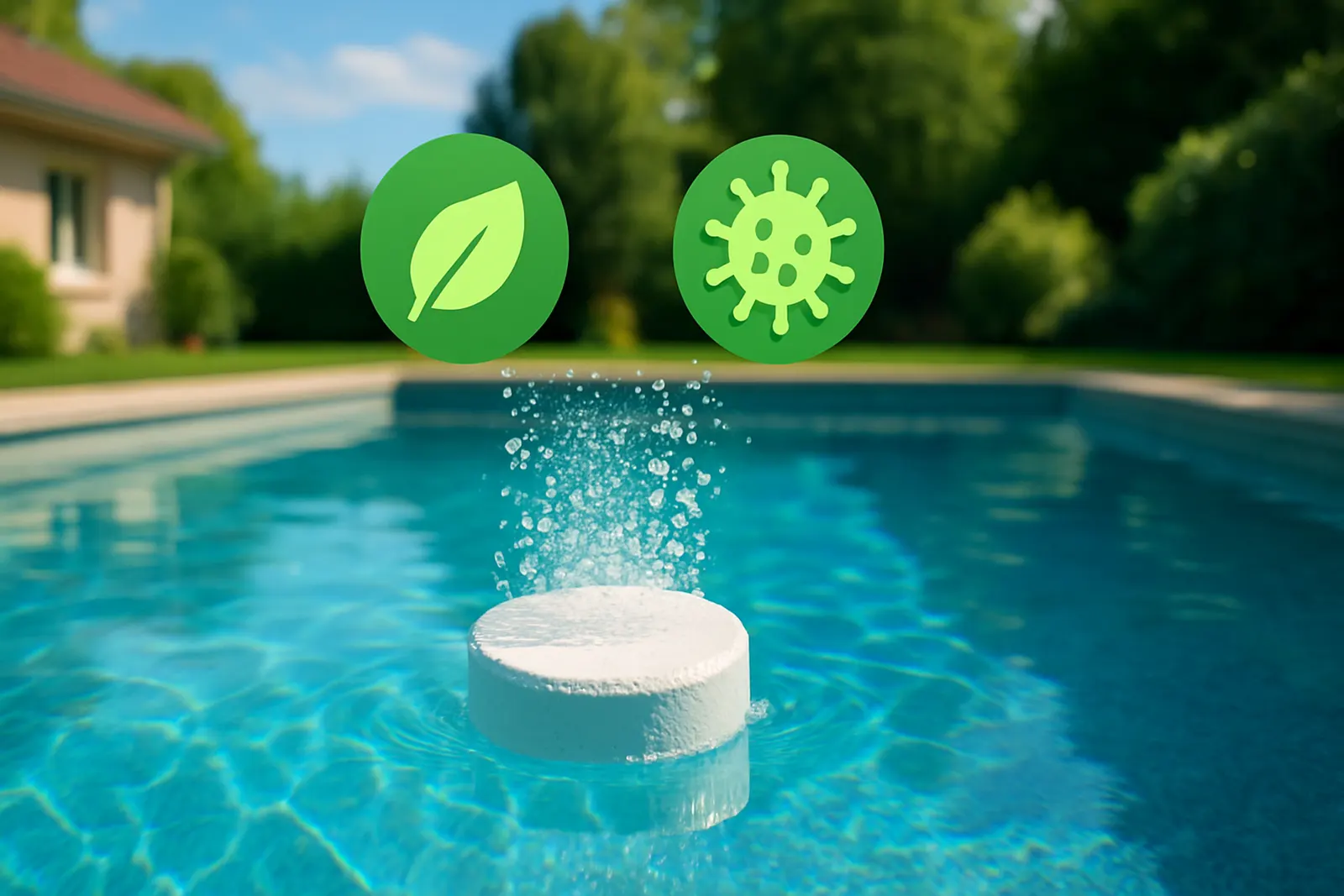
Pool chemicals eliminate harmful pathogens, neutralize algae, and protect bather health. For optimal chemical balance according to TS 13661, maintain pH at 7.2–7.8, free chlorine at 1.0–3.0 ppm, total alkalinity at 80–120 ppm, and calcium hardness at 200–400 ppm. Always add chemicals to water, never water to chemicals.
Pool water must not only appear crystal clear, but also be microbiologically safe, chemically balanced, and comfortable for bathers. When applied in precise dosages and schedules, pool chemicals ensure a safe and pristine swimming environment. Conversely, improper dosing, inadequate storage, or uncalibrated application can trigger eye and skin irritation, chloramine odors, surface corrosion, and severe mechanical equipment degradation.
In this comprehensive guide, you will discover the most essential pool chemicals, water balance parameters, safety protocols, routine maintenance schedules, and efficiency strategies powered by smart automation.
Precise chemical management is especially critical in indoor swimming pools; inadequate ventilation paired with improper dosing drastically increases chloramine accumulation, degrading air and water quality. This not only impairs hygienic conditions but also leads to eye and respiratory irritation among bathers. Additionally, it elevates structural corrosion risks, significantly increasing long-term maintenance and overhaul expenses.
Function: Primary disinfectant and oxidizer. Advantages: High biocidal efficacy, widely available, and cost-effective. Caution: Degrades rapidly under solar UV radiation (in outdoor pools); biocidal efficacy depends heavily on pH; overdosing induces mucosal irritation.
Function: Shields free chlorine from ultraviolet photodegradation in sunlight. Caution: Excessive levels induce chlorine lock; target 30–50 ppm (strictly for outdoor pools).
pH Increasers: Soda ash (sodium carbonate). pH Decreasers: Muriatic acid or sodium bisulfate (dry acid). Keeping pH within the 7.2–7.8 range maximizes hypochlorous acid efficacy and prevents bather discomfort.
Typically sodium bicarbonate. Acts as a chemical buffer against sudden pH fluctuations. Target Range: 80–120 ppm
Water with deficient hardness corrodes cementitious plaster and metallic fittings; excessive hardness precipitates scaling and cloudiness. Recommended range: 200–400 ppm.
Administered after heavy bather loads, storm runoff, or chloramine buildup. Restrict swimming until free chlorine drops back to safe operational levels (typically 1.0–3.0 ppm).
Prevents microscopic algae colonies and aggregates micro-particles for effective filtration removal. Maximum efficiency when paired with continuous sand filtration.
Bromine: Particularly suited for high-temperature hydrotherapy spas and indoor facilities where volatile chlorine odor is minimized. Saltwater Chlorinators: Generates chlorine in-situ via electrolysis of sodium chloride, providing steady baseline sanitization. Regular electrolytic cell maintenance is required.
The operational ranges below represent internationally recognized standards for residential and commercial pools according to TS 13661 and TS EN 15288. Minor target adjustments may apply based on indoor/outdoor placement and municipal codes.
| Parameter | Ideal Range | If Too Low | If Too High |
|---|---|---|---|
| pH | 7.2 – 7.8 | Acidic; eye/skin irritation, aggressive corrosion | Chlorine efficacy plummets, scaling/turbidity risk |
| Free Chlorine (FC) | 1.0 – 3.0 ppm (residential) / 1.0 – 4.0 ppm (commercial) | Inadequate sanitization, chloramine buildup | Ocular irritation, unnecessary chemical expenditure |
| Total Alkalinity | 80 – 120 ppm | Erratic pH bouncing, heightened corrosion risk | pH becomes difficult to adjust, water clouding |
| Calcium Hardness | 200 – 400 ppm | Plaster etching, dissolved pump/pipe metals | Scale deposits, clogged sand filters |
Note: In high-temperature volumes such as hydrotherapy spas and hot tubs, water chemistry parameters diverge from standard swimming pools, making continuous monitoring indispensable. Elevated water temperature accelerates chemical volatility and chlorine depletion. In indoor pool environments, precise water chemistry must be combined with dehumidification and fresh air HVAC systems. Inadequate airflow allows airborne chloramines to accumulate, accelerating structural corrosion and degrading bather respiratory comfort. Effective mechanical ventilation and disciplined maintenance schedules are essential.
Measure free chlorine and pH; calibrate as needed. Skim surface debris and clean skimmer baskets.
Test total alkalinity and balance. Light shock dosing (load-dependent), monitor filter pressure gauge, and backwash.
Measure calcium hardness and CYA stabilization (especially for outdoor pools); assess water clarity and apply clarifier.
Log full chemical test profile; perform partial water dilution if TDS or CYA levels are elevated. Visual equipment inspection.
Deep physical basin cleaning, comprehensive shock sanitization, and surface repairs. Waterproofing and hydraulic seal integrity checks.
Automated dosing systems (pool automation) with real-time pH/ORP sensors, peristaltic metering pumps, and digital timers eliminate human error, optimize chemical consumption, streamline maintenance, and substantially enhance overall safety, efficiency, and sustainability while reducing long-term operating costs.
In indoor pool halls, dedicated HVAC climate control and fresh air ventilation are essential to prevent condensation, CO₂ buildup, and volatile chloramines. In addition to following specialized chemical targets for indoor swimming pools, dehumidifiers and heat recovery ventilation systems ensure structural longevity and visitor comfort. Regular indoor air quality testing should be conducted routinely.
Strong pungent odors are caused not by excess free chlorine, but by combined chloramines formed when free chlorine reacts with bather organic waste (sweat, skin oils, urea). Chloramines degrade water hygiene and trigger eye and respiratory discomfort. Solution: Perform breakpoint shock chlorination, verify continuous mechanical ventilation, ensure proper sand filtration cycles, and refresh water via partial dilution.
For outdoor swimming pools, evening or dusk application is ideal to avoid rapid UV photodegradation caused by direct sunlight. For indoor and automated pools, continuous micro-dosing via automated pumps during filtration cycles provides consistent sanitization.
Partial water drainage and refilling with fresh water is the only reliable solution. Switch temporarily to unstabilized chlorine sources such as liquid sodium hypochlorite or calcium hypochlorite.
No. Human tears naturally have a pH of approximately 7.4. Water with low pH (acidic) or high pH (basic), as well as elevated chloramines, severely irritates mucosal membranes regardless of chlorine levels. Solution: Keep water pH rigorously balanced within 7.2–7.8 and maintain combined chlorine below 0.2 ppm to ensure total bather comfort and equipment longevity.
When the correct chemical compounds are administered at precise dosages and intervals, pool water achieves pristine clarity, biological safety, and optimal bather comfort. Rigorous testing protocols, meticulous log keeping, automated sensor-driven dosing, and high-efficiency filtration circulation cut long-term operational expenditures while maximizing swimmer satisfaction.
Water chemistry requirements vary substantially across architectural pool types, including infinity pools or indoor pools. Contact our engineering team to design a customized chemical management and automated dosing program tailored to your facility volume and bather load.
Procure high-purity chlorine compounds, certified pH balancers, algaecides, and automated chemical dosing stations with Artemis Pool engineering assurance.