
How does an Olympic swimming pool filtration system operate under TS 13661?
Olympic pool filtration circulates 2,500 m³ of water through an overflow surge channel into a balance tank sized at 7-10% of total pool volume. Heavy-duty multi-layer sand/AFM glass filters run at velocities under 30 m/h, completing full volume turnover in 4 hours with automatic flocculation and chlorine dosing.
The Olympic pool filtration system is the core engineering system that keeps the water in large-volume swimming pools continuously clean.
Olympic swimming pools are professional sports facilities with a large water volume. For this reason, advanced filtration systems are used so that the water can stay clean, clear, and hygienic. The Olympic pool filtration system is a technical infrastructure consisting of circulation pumps, filter tanks, a balance tank, and chemical dosing equipment. These systems work together to ensure the pool water is continuously cleaned.
Olympic pools can become dirty quickly due to intensive use. Sweat, sunscreen, cosmetic residues, and environmental particles can mix into the water. The filtration system removes these contaminants from the water, creating a hygienic swimming environment while also keeping the water looking clear. For this reason, the filtration system is one of the most important technical components of Olympic pool projects.
In swimming pools, water quality does not only mean visual cleanliness. Microorganisms must be brought under control, particulate contaminants must be filtered, and the water chemistry must be kept in balance. Thanks to professional filtration and disinfection systems, bacteria and organic contaminants in the water are brought under control, creating a safe environment for swimmers.
In modern Olympic pools, water is sent to the filtration system in a specific cycle and returned to the pool once cleaned. This process continues constantly, and the entire volume of pool water is passed through the filters at certain intervals. This cycle is called the circulation system and plays an important role in preserving pool water quality.
This article covers how the Olympic pool filtration system works, what the system's core equipment consists of, and how filtration capacity is planned in professional swimming pools. It also explains why the filtration system plays a critical role in Olympic pool projects.
MENU
Why Are Pool Filtration Systems Important?
Pool filtration systems ensure that the water not only looks clear, but also remains hygienic, balanced, and sustainable. Thanks to correctly selected filters, pumps, and hydraulic components, suspended solids, oils, and microscopic contaminants in the water are effectively captured.
Choosing the correct filtration system is of great importance in Olympic pool projects. For detailed information on this topic, you can review our pool filtration systems guide.
For more information on the technical standards of Olympic swimming pools, you can review the World Aquatics (FINA) regulations.
What Is an Olympic Pool Filtration System?
The Olympic pool filtration system is the technical infrastructure that ensures the pool water is continuously cleaned. Thanks to this system, dirt, particles, and microorganisms that form in the pool are filtered out, keeping the water hygienic.
The filtration system does not only provide physical cleanliness. It also helps preserve the chemical balance of the water. Because the pool water is continuously circulated, every point in the water is treated equally.
In large-volume Olympic pools, the filtration system must be quite powerful. This is because these pools are used intensively by both athletes and training groups. Filtration capacity must be calculated correctly so that water quality can be preserved.
Core Components of an Olympic Pool Filtration System
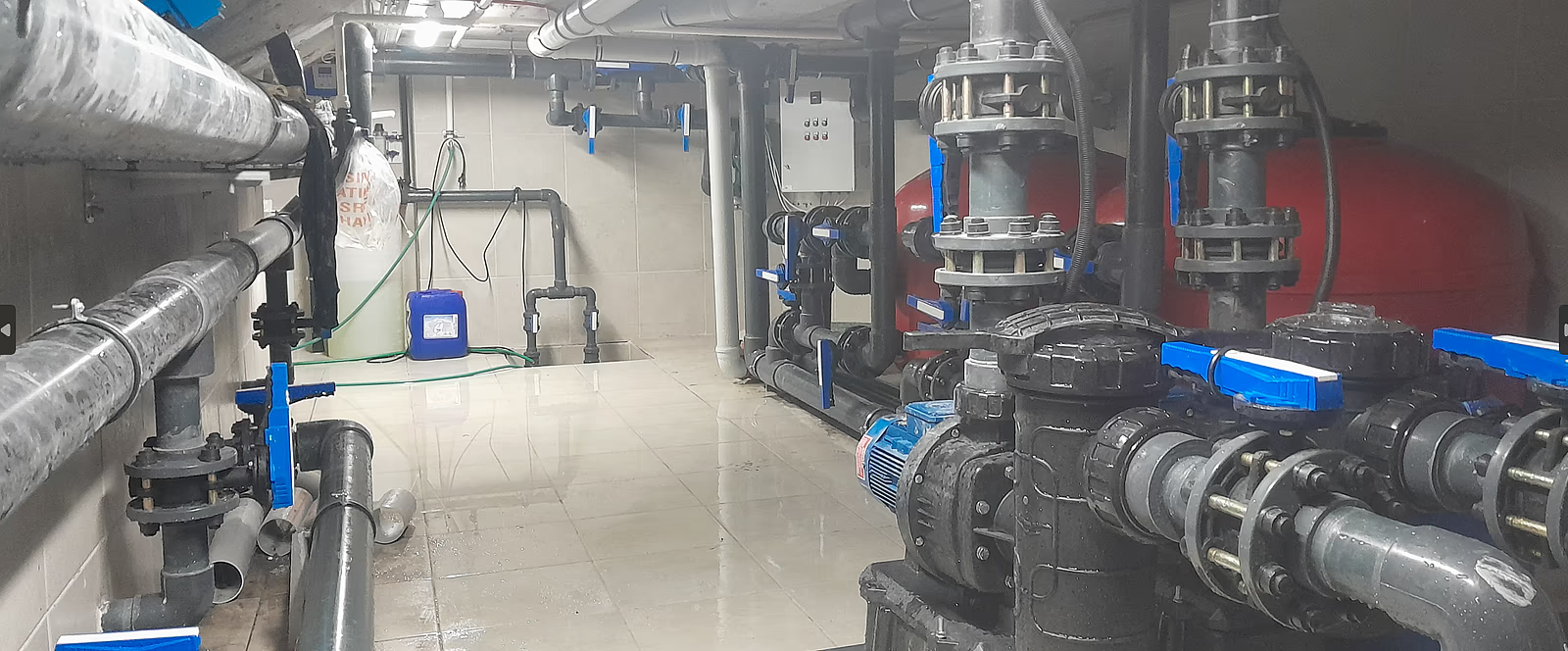
A professional Olympic pool filtration system consists of many different pieces of equipment. This equipment works together to ensure the water is cleaned.
Main filtration system equipment
- Circulation pumps
- Sand filters
- Balance tank
- Piping and valve system
- Chemical dosing systems
- Automation and control panels
All of this equipment works together to ensure the pool water is continuously cleaned. If the filtration system is not designed correctly, water quality can deteriorate rapidly.
How Does Water Circulation Work in Olympic Pools?
The core principle of the filtration system is water circulation. The water in the pool is continuously drawn through pumps and sent to the filtration system.
This process generally takes place through the following steps:
- Contaminants on the pool surface reach the overflow channels
- The water is directed to the balance tank
- Circulation pumps send the water to the filters
- The filtered water is returned to the pool
This cycle continues constantly. As a result, all of the water in the pool is passed through the filters within certain periods.
The Role of the Balance Tank in the Filtration System
In Olympic swimming pools, the balance tank is a very important piece of equipment. In overflow pool systems, water on the pool surface is directed to the balance tank via overflow channels.
The core duties of the balance tank are as follows:
- Keeping the pool water level constant
- Storing the overflowing water
- Supplying regular water to the filtration system
During intensive use, swimmers entering the pool cause the water level to rise. The balance tank takes in this excess water, ensuring the system operates in a balanced manner.
How Do Sand Filters Work?
The most widely used filtration method in Olympic pools is sand filters. These filters mechanically capture particulate contaminants in the water.
The working principle of sand filters is quite simple. Water enters from the top of the filter tank and exits from the bottom after passing through the filter sand. During this process, contaminants in the water are captured by the sand layer.
The structure of the filter sand is designed to capture particles. The filtered water is then returned to the pool.
Advantages of sand filters
- High filtration capacity
- Long service life
- Easy maintenance
- Low operating cost
How Is Filtration Capacity Calculated?
In Olympic pool filtration systems, capacity calculation is of great importance. All of the water in the pool must be completely filtered within certain periods.
This period is called the circulation time. In Olympic swimming pools, the circulation time is generally planned to be around 4 hours.
For example, for an Olympic pool with a volume of 2,500 m³, the filtration system should have the capacity to filter approximately 600–700 m³ of water per hour.
When making these calculations, pool usage intensity and local regulations must also be taken into account.
Chemical Treatment in Olympic Pools
The filtration system cleans the water physically, but chemical treatment is also required to completely eliminate microorganisms.
The most commonly used disinfection method in pools is the chlorination system. Chlorine destroys bacteria, viruses, and other harmful microorganisms.
Pool chemical systems
- Automatic chlorine dosing system
- pH balance system
- Redox control system
These systems operate automatically to keep the water chemistry under continuous control.
Automation Systems in Olympic Pools
In modern Olympic pools, the filtration system is generally controlled by automation systems. These systems continuously monitor water quality and automatically make the necessary adjustments.
Thanks to the automation system, the following parameters are continuously monitored:
- pH level
- chlorine level
- water temperature
- circulation flow rate
Thanks to this, pool operation becomes both safer and more efficient.
The Importance of the Olympic Pool Filtration System
In professional sports facilities, water quality is not merely an aesthetic matter. It is of great importance for health and athletic performance.
An inadequate filtration system can cause the water to become cloudy, bacteria to form, and the pool to become unusable. For this reason, a strong filtration infrastructure is essential in Olympic pools.
Thanks to a correctly designed filtration system, water quality is preserved, maintenance costs are reduced, and the user experience improves.
Conclusion
The Olympic pool filtration system is the core infrastructure that keeps large-volume swimming pools clean and hygienic. Circulation pumps, sand filters, the balance tank, and chemical dosing systems work together to ensure the water is continuously cleaned.
In a professional Olympic pool project, the filtration system must be planned correctly and designed with a capacity suited to the pool volume. This makes it possible to create a safe and healthy swimming environment for both athletes and users.
A filtration system designed with correct engineering calculations enables Olympic pools to operate efficiently for many years.
Our Installation & Plumbing Service Areas
- Olympic pool filtration system equipment installation
- Prefabricated linear ready pool mechanical installation
- Swimming pool machine room filtration and disinfection system
- Polyester pool filtration system manufacturing process
- Swimming pool infrastructure plumbing
- Swimming pool infrastructure plumbing application works
- Ready pool assembly application
- Filtration, mechanical, disinfection, ozone, and heating system installation and commissioning
Frequently Asked Questions
How long does a full turnover take in an Olympic pool?+
In Olympic pools designed to the TS 13661 standard, a full turnover typically takes 4 hours. For an Olympic pool with a volume of about 2,500 m³, this corresponds to a circulation rate of 625 m³/h, meaning the entire pool volume passes through the filtration system once within that period.
Which standards govern Olympic pool filtration systems?+
Olympic pool treatment and circulation systems are designed according to TS 13661 (Treatment of Swimming and Bathing Pool Water) and TS 13661. These standards clearly define filtration velocity, balance tank volume, fresh water supply, and disinfection parameters.
Why is a balance tank mandatory in Olympic pools, and what size should it be?+
The balance tank stores water collected from the overflow channels and absorbs the level fluctuations caused by bather movement and wave action; without this reservoir, pumps draw in air and filtration becomes erratic. In Olympic pools the balance tank volume should generally be 7-10% of the total pool water, meaning 175-250 m³ for a 2,500 m³ pool.
What is the maximum filtration velocity for the sand filters?+
In TS 13661-compliant Olympic pool projects, heavy-duty multi-layer sand/AFM glass filters are operated at velocities not exceeding 30 m/h. Staying under this limit ensures the filter media can effectively retain particles in the water and sustain water clarity.
How much daily fresh water supply is required in Olympic pools?+
The TS 13661 standard requires a minimum daily fresh water supply of 30 liters per bather in Olympic pools. This supply dilutes the organic load in the system, limits the accumulation of disinfection by-products, and supports consistent water quality.
What role does automation play in Olympic pool filtration?+
Automation systems continuously and automatically manage chlorine dosing, pH balance, and coagulation (flocculation), reducing the risk of human error and keeping water quality stable. They also monitor parameters such as temperature, circulation flow rate, and filter pressure differential to detect maintenance needs early.
How many main components make up an Olympic pool filtration system?+
The system consists of four main components: the water collection and storage line made up of the overflow surge channels and balance tank, the multi-layer sand/AFM filters, the circulation pumps, and the chemical treatment and automation system supported by chlorine/pH dosing and coagulation units.