
Explore our full product range, project applications, and service areas in detail through our E-Catalogue. Our engineering-led solutions and internationally certified services are presented in this comprehensive reference document.
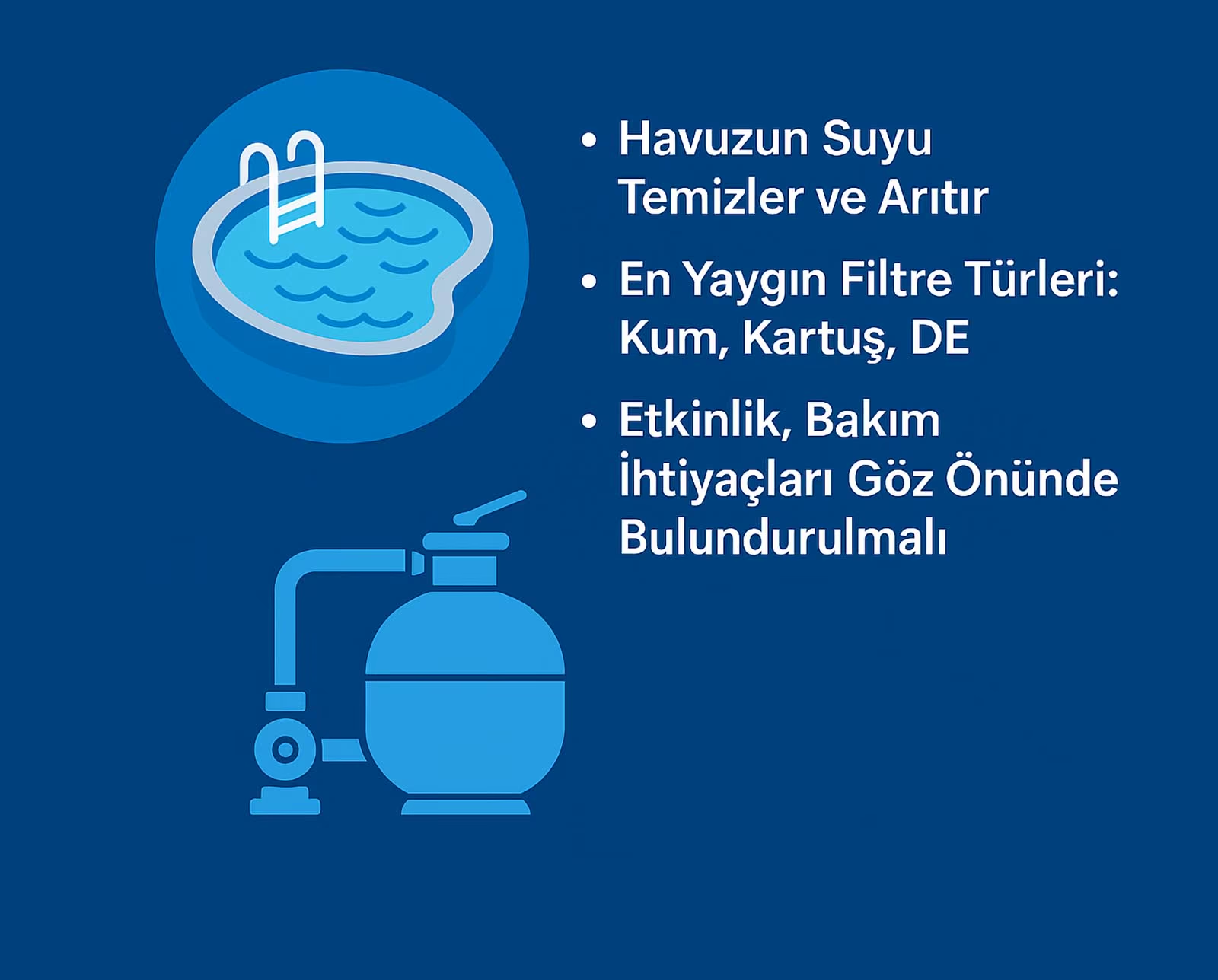
The foundation of clear, hygienic, and safe water in swimming pools is the correct filtration system. In this article we detail filter types, pump and balance tank selection, automation and energy-efficient solutions, as well as maintenance tips.
A swimming pool filtration system circulates water via centrifugal pumps through quartz sand, AFM glass media, or cartridge filters to remove suspended particles down to 5-15 microns. Under TS 13661, full water volume turnover must occur within 4 hours for semi-olympic/public pools and 4-6 hours for residential pools.
Pool filtration systems ensure that water is not only visually clear, but also stays hygienic, balanced, and sustainable. Thanks to correctly selected filter, pump, and hydraulic components, suspended solids, oils, and microscopic contaminants in the water are effectively captured. This reduces chemical consumption, extends equipment life, and lowers operating costs. When sand, glass media, cartridge, and D.E. filter solutions are optimized according to the pool's usage intensity, volume, and design, both energy efficiency and maximum water quality are achieved. A professional filtration infrastructure forms the foundation of a healthy swimming experience.
Before choosing filtration systems, it is very important to evaluate the hydraulic design and the overall engineering concept. For detailed technical planning, you can review our pool design and consultancy services.
The cycle of water being collected from the skimmer/overflow channel and the main drain, sent to the filter via the pump, and the filtered water returning to the pool through the return lines, repeats several times a day. The goal is to filter the entire volume with sufficient frequency, depending on the design turnover time.
Pros: Economical, durable, reliable in large volumes.
Cons: Regular backwash water loss; media is replaced every 3–5 years.
Pros: Longer lifespan, less backwash, better retention of fine particles.
Cons: Higher initial investment cost than sand.
Pros: High precision in small pools/spas, low water consumption.
Cons: Maintenance frequency increases in large volumes; cartridge replacement is required.
Pros: Crystal clarity at the 2–5 micron level.
Cons: Maintenance and operating cost is relatively high.
Recommendation: For villas/residences, glass media or quality sand; for commercial and heavy-use facilities, automated multiple sand filter batteries are common.
Pumps are the heart of filtration. Flow rate, discharge head, and hydraulic losses must be calculated specifically for the project. In overflow systems, the balance tank keeps surface circulation stable and stores water during sudden loading.
Triggered when filter clogging and pressure differential increase. It can be automated based on a timer or differential pressure; glass media and optimized cycles are preferred to reduce water consumption.
Tip: Increasing the flow rate during busy daytime hours and lowering it at night significantly reduces total consumption.
| Parameter | Recommended Range |
|---|---|
| Free Chlorine | 1–3 ppm |
| pH | 7.2–7.8 |
| Total Alkalinity | 80–120 ppm |
| Calcium Hardness | 200–400 ppm |
Filtration manages physical pollution, while chemical balance manages microbiological risk. Automatic pH/ORP dosing systems reduce human error.
Pressure differential check, backwash if needed.
Skimmer baskets, hair/lint catchers, cartridge rinsing.
Periodic pump maintenance, valve/seal inspection.
Sand media replacement (less frequent for glass).
When you pair the correct filter type with the right pump and automation and perform regular maintenance, water is managed in a way that is both clear and economical. Make the selection specific to your project by evaluating usage intensity and the targeted energy savings together.
At Artemis Pool, we offer project-specific hydraulic calculations, glass and sand filter systems, and automated plant room installation.