
Explore our full product range, project applications, and service areas in detail through our E-Catalogue. Our engineering-led solutions and internationally certified services are presented in this comprehensive reference document.
A custom-engineered safety system that releases controlled air bubbles from the pool floor, reducing the impact on the diver at the moment of water entry in diving pools.
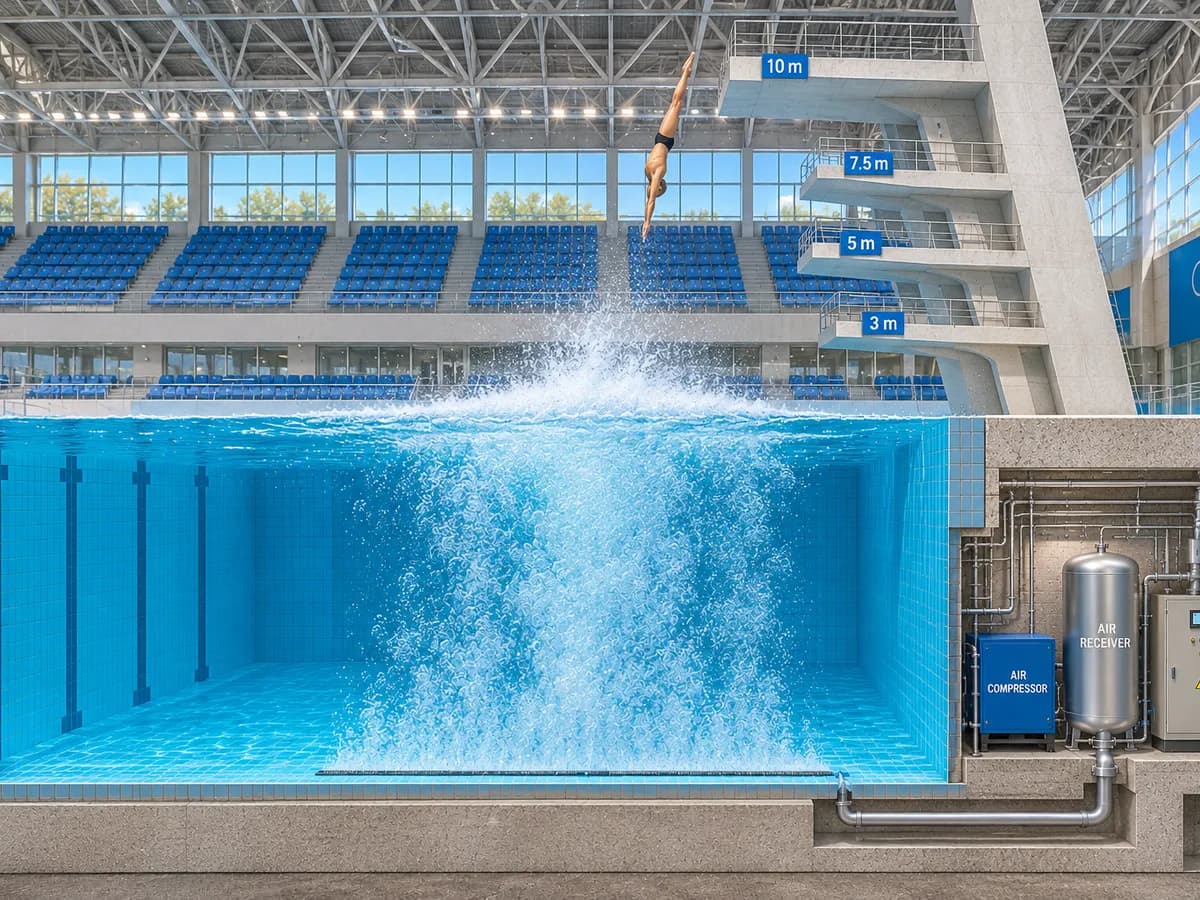
A sparger air system is a safety system that creates an air cushion in the water by releasing compressed air through AISI 316 stainless steel diffusers embedded in the diving pool floor beneath the springboards and platforms. Because aerated water is less dense, water entry becomes softer; bubble duration is adjustable from 10 to 120 s and the system runs at a single touch from a touch screen or remote control.
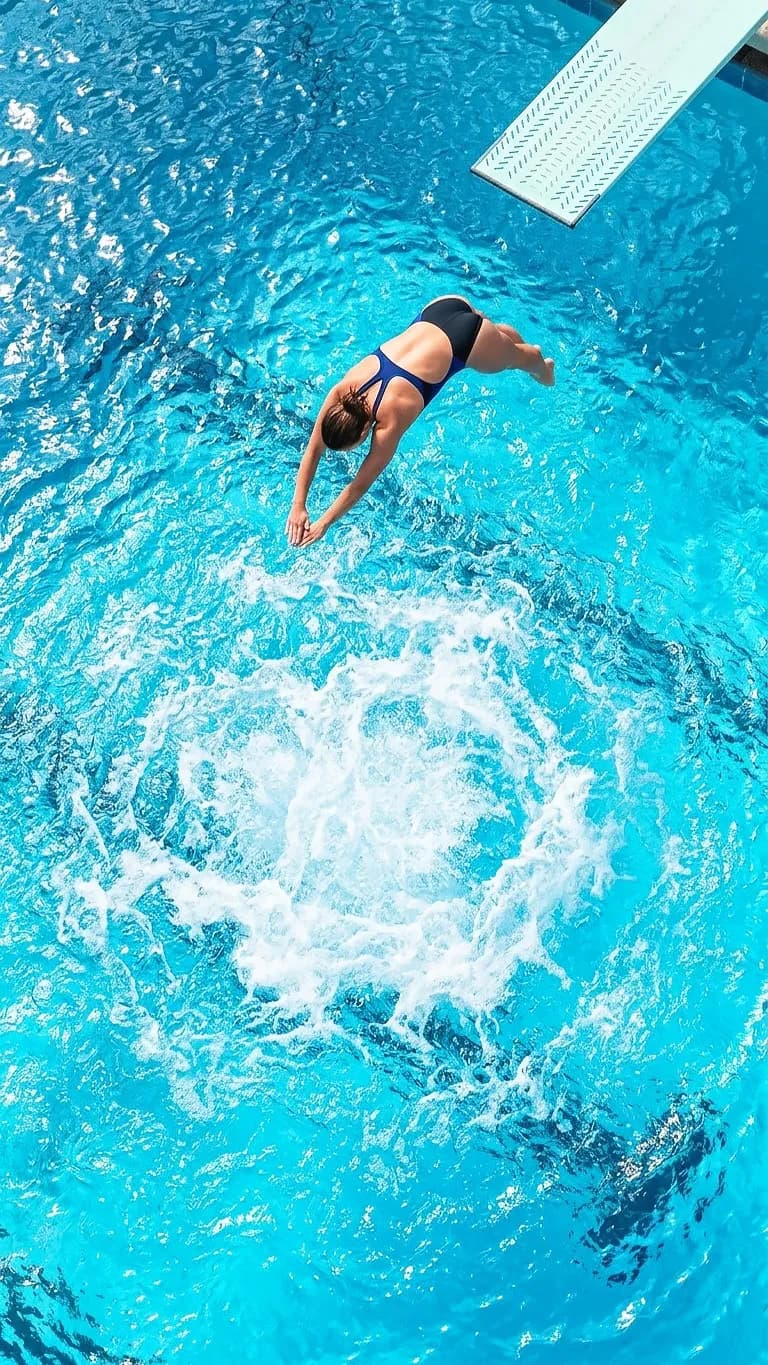
A sparger air system is a system that creates an air cushion in the water by releasing high-pressure air through stainless steel diffusers installed in the floor of the diving pool, directly beneath the springboards and platforms.
Compressed air produced by the compressor is stored in tanks in the plant room. As the diver leaves the platform, the coach or the diver triggers the system; air is delivered to the diffusers through proportional valves and a dense column of bubbles rises beneath the entry point. Because the density of the aerated water drops, water entry becomes softer and a white, foamy cushion forms on the water surface.
Internationally, the system is used as standard safety equipment in Olympic venues, national training centres and university aquatic complexes, especially in training sessions where new and difficult dives are learned. In diving pools built to World Aquatics (formerly FINA) facility rules, surface agitation and air cushion systems are an important design element.
The air cushion reduces the load on the diver at the moment of water entry while improving both the pace and the safety of training. The main benefits of the system:
Water aerated with bubbles significantly reduces the impact on the diver at the moment of entry and lowers the risk of injury from poor entries.
Reduces the fear of injury, so divers learn new and complex dive techniques with more comfort and speed. Training efficiency increases.
The foam and agitation on the surface give the diver a clear visual reference, especially during rotating dives.
Operated with a single touch from the touch screen on the tower or the handheld remote. No special training is required.
Calculated separately for each facility, taking into account pool depth, tower/springboard heights and positions, the number of diffusers and the interval between dives.
AISI 316 stainless steel diffusers operate trouble-free for many years in chemically treated pool water; the in-pool components require no maintenance.
The system consists of four main sections: air generation, storage, control and distribution. All mechanical equipment is located in the plant room outside the pool; only the floor-embedded diffusers are inside the pool.
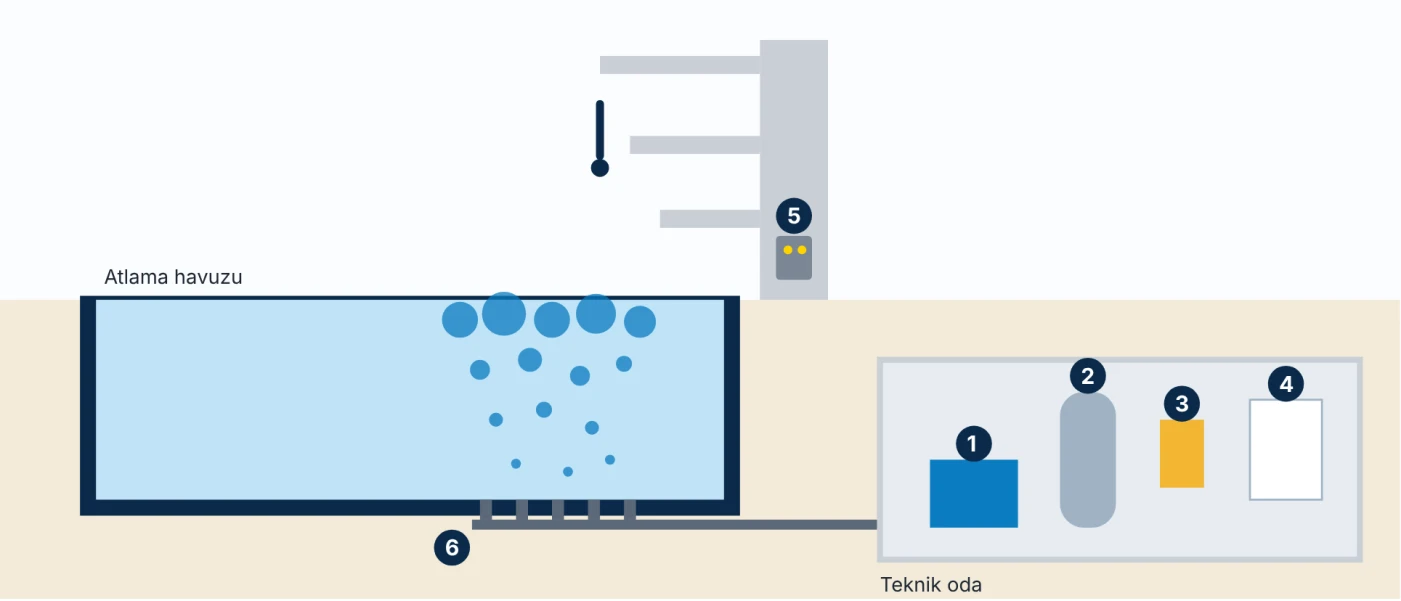
The compressor produces the air, filters it and stores it in the pressure tank.
The diver climbs to the platform; bubble duration and intensity are selected on the panel.
As the diver takes off, the system is started from the touch screen or remote control.
The valve opens; bubbles rising from the diffusers form a cushion at the entry point.
At the end of the set time the valve closes; the tank refills for the next dive.
When the tank pressure reaches its set value, a “ready” indicator lights up on the panel; the system is ready for the next dive.
The compressed air tank is an air reservoir that meets the sudden air demand at the moment of the dive. The free air volume a tank can deliver in a single discharge is approximately V_free ≈ V_tank × (P_start − P_end) / P_atm. For example, a 3,000 l tank discharging from 10 bar to 4 bar delivers about 18,000 l of free air; a compressor with a free air delivery of 3,220 l/min refills this volume in about 5.6 minutes. Tank volume is therefore sized for the required bubble duration and compressor delivery for the waiting time between dives, together.
All components are sized according to the facility's diving layout and usage intensity and are integrated into a single automation infrastructure.
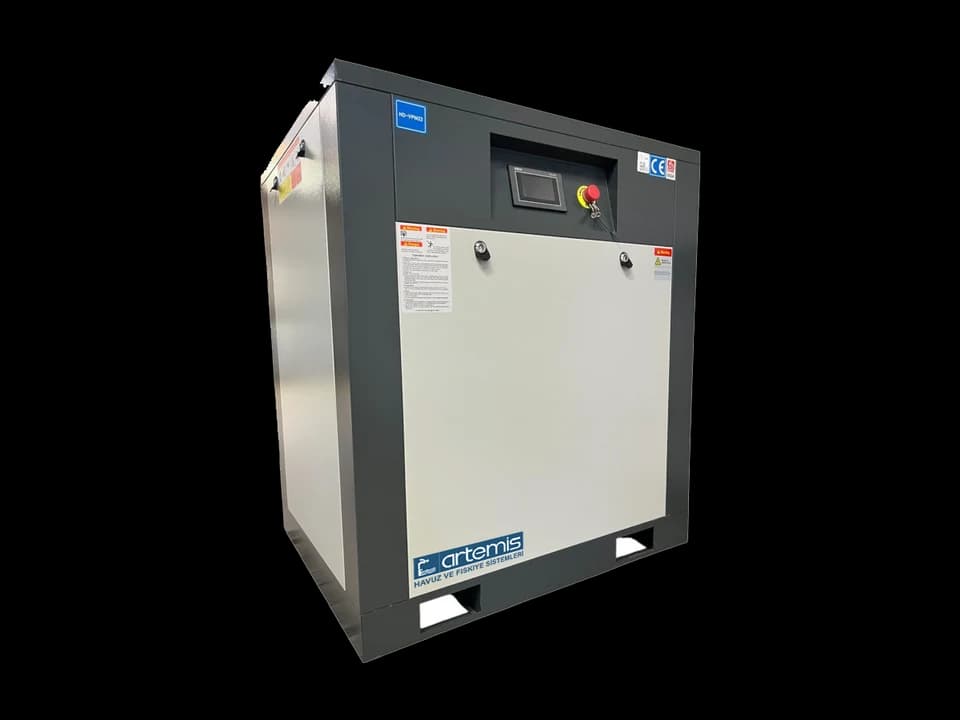
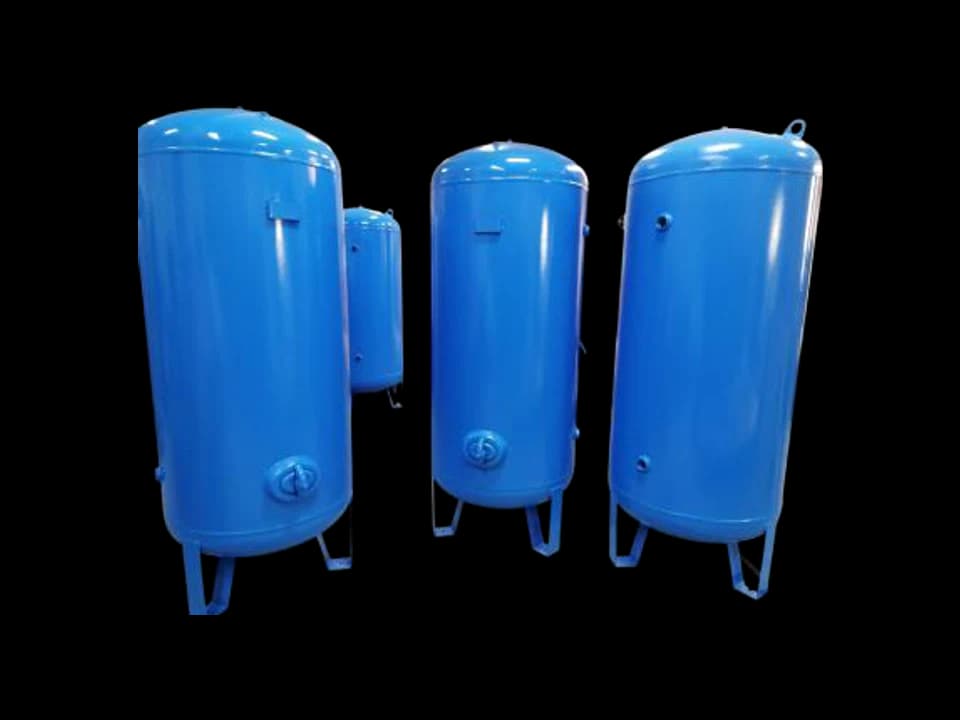
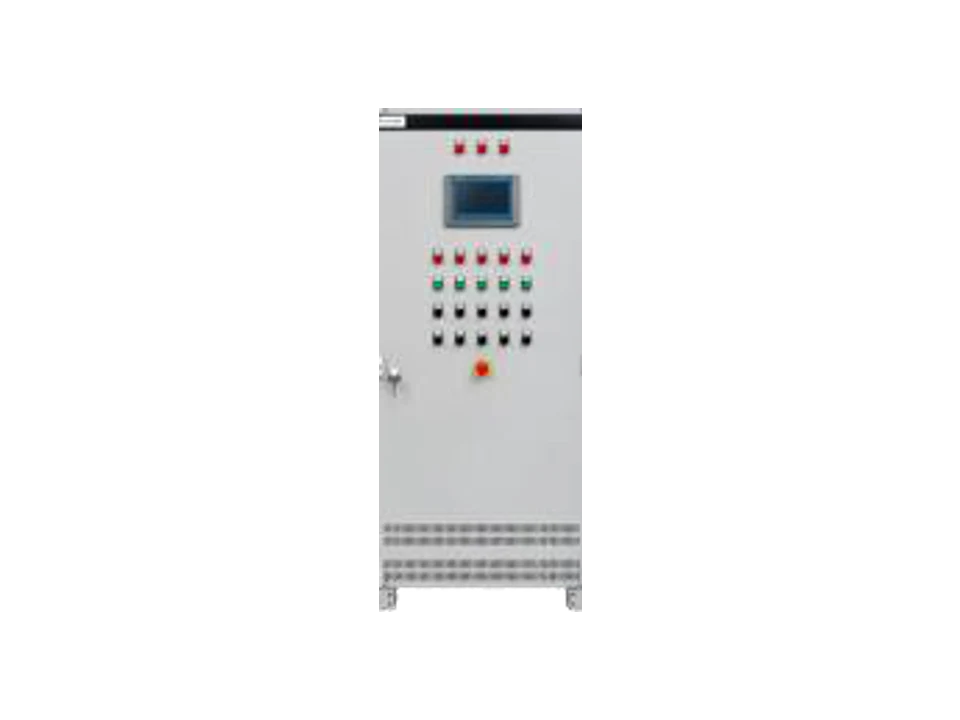
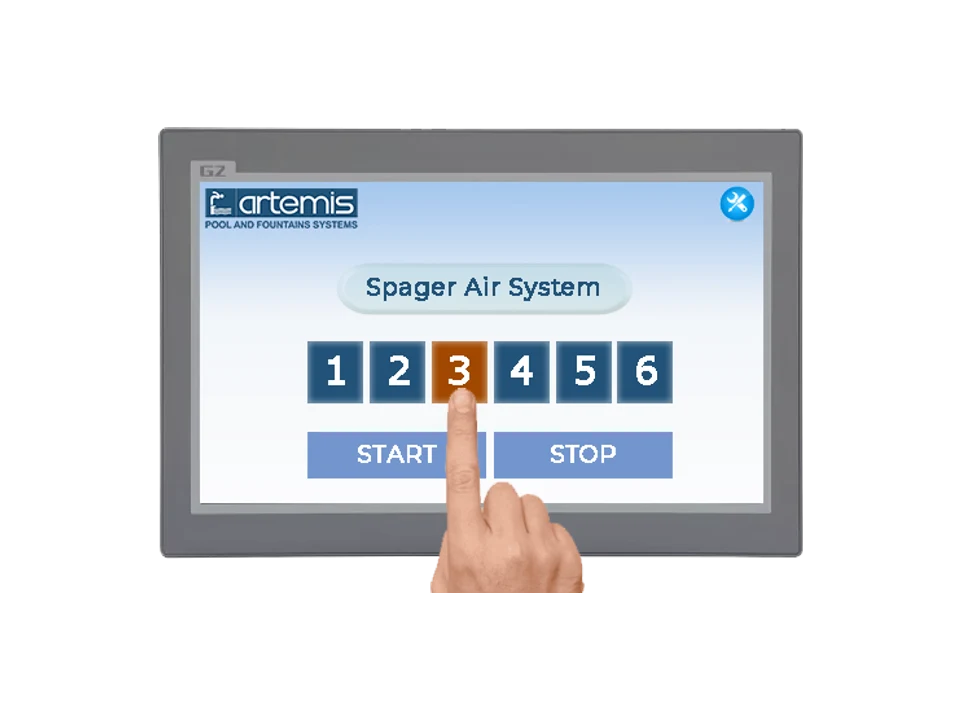
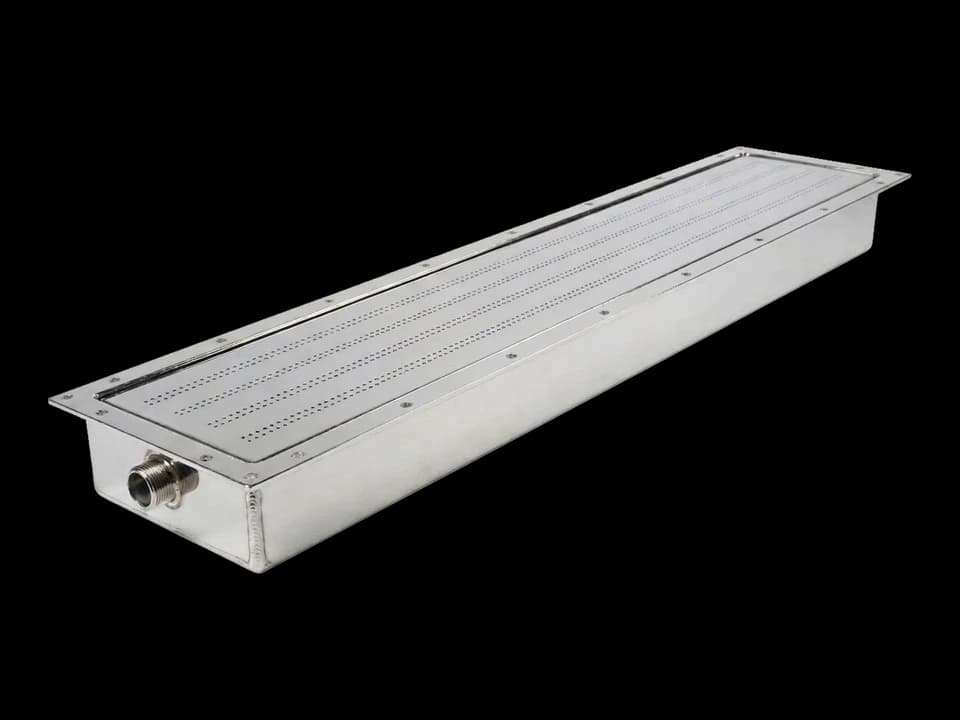
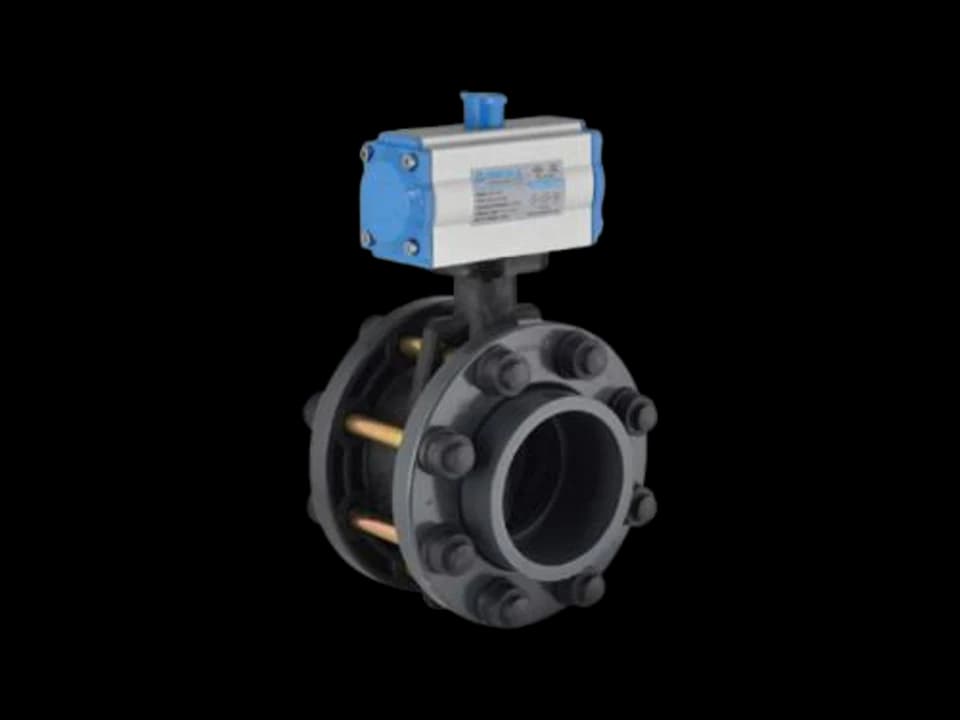
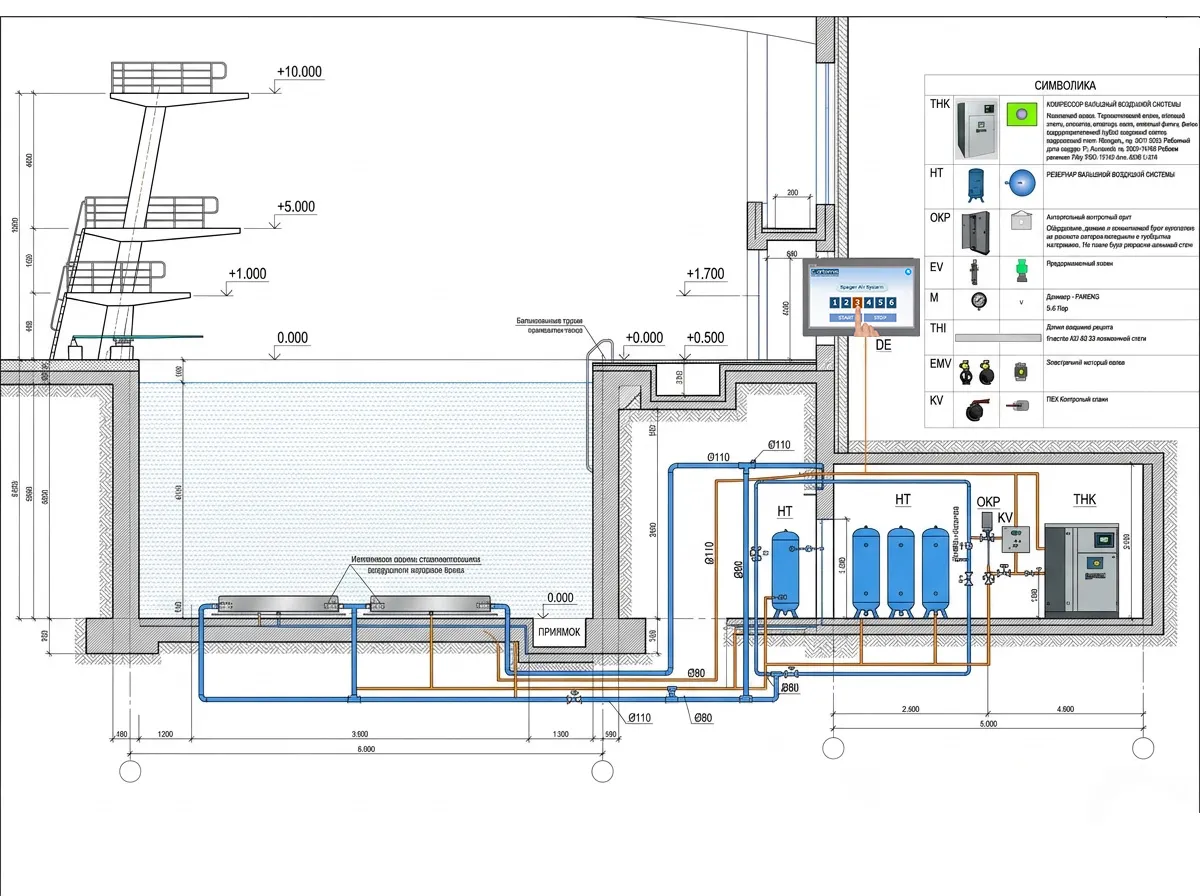
In the sample section, the diffusers placed in the entry area beneath the platforms at levels +1.000, +5.000 and +10.000 are connected to the rotary screw compressor, vertical compressed air tanks, proportional valves and automation panel located in the plant room outside the pool. The touch screen on the tower operates the system from the platform.
The number, size and layout of the diffusers are calculated according to pool depth, platform height and position.
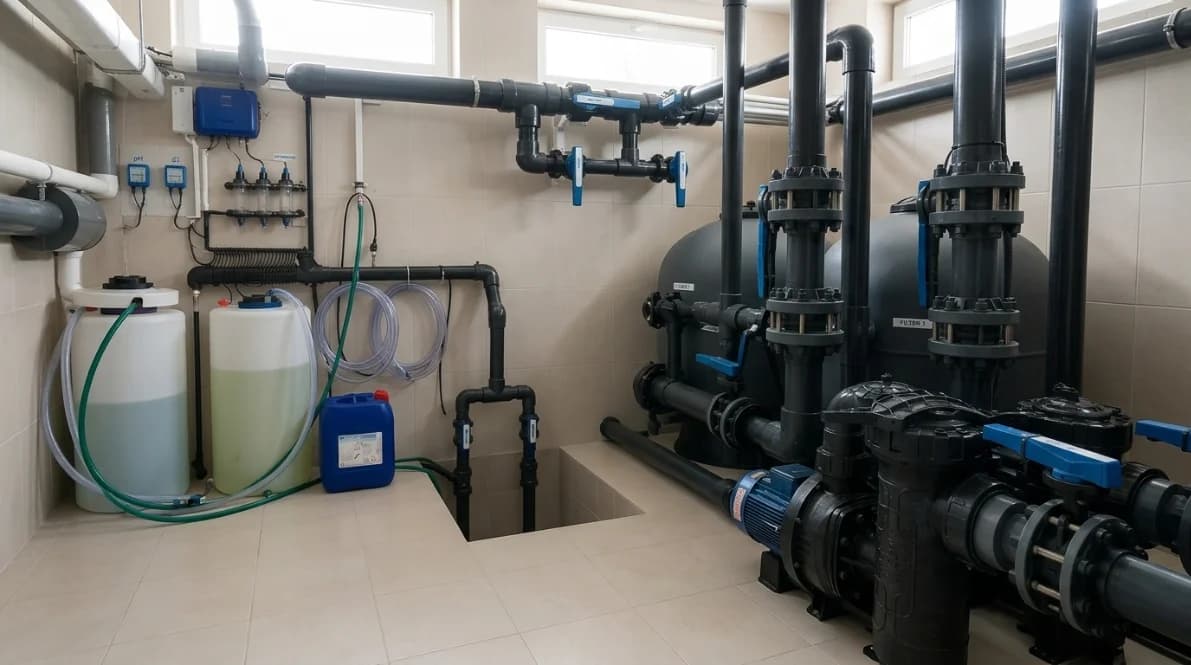
Compressors and tanks are located in a separate mechanical room away from the pool hall to reduce noise.
Compressor and tank capacity determine the waiting time between consecutive dives.
A separate valve for each diving point; air is released only beneath the platform in use.
Floor-embedded diffusers are preferred for new builds, surface-mounted models for renovation projects.
Design, manufacturing, installation, commissioning and user training from a single source.
A single-source, custom solution for the safety of your diving pool and the development of your divers. System summary:
| Feature | Artemis Sparger Air System |
|---|---|
| Bubble duration | 10 – 120 s adjustable |
| Intensity control | Actuated proportional valve, 1 – 100 steps |
| User interface | Platform touch screen + wireless remote control |
| Diffuser material | AISI 316 stainless steel |
| Installation | Floor-embedded (new build) / surface-mounted (renovation) |
| Control infrastructure | PLC + HMI, password-protected access |
| Design | Custom-designed, turnkey |
The specifications given here are for general information; final values are determined at the design stage according to the pool and tower characteristics. See the product catalogue for all technical values of the components and the sample project section.
Download the Sparger Air System Catalogue (PDF)It lowers the density of the water by creating a dense column of bubbles in the entry area beneath the platforms and springboards. This reduces the impact on the diver at the moment of water entry, lowers the risk of injury from poor entries and lets divers practise new dives with more confidence.
Yes. Bubble duration is adjustable from 10 to 120 seconds; intensity is controlled from 1 to 100 steps with an actuated proportional valve. Settings are made from the touch screen at the platform or from the automation panel.
Yes. In new builds the diffusers are embedded in the pool floor; in existing pools, surface-mounted diffuser models suited to renovation projects are preferred. The compressor, tank and panel are installed in the plant room outside the pool.
Tank volume (1,000 – 10,000 l) is calculated according to the required bubble duration, and compressor delivery according to the waiting time between dives. Pool depth, tower/springboard heights, the number of diving points and the diffuser layout are also evaluated together at the design stage.
No. The rotary screw compressor works together with a dryer, filters and automatic drain equipment and produces clean, oil-free air. This protects both the AISI 316 stainless steel diffusers and the pool water from oil and moisture.
The air cushion mode creates a short, dense bubble column beneath the entry point at the moment of the dive. The optional surface agitation mode moves the water surface with continuous low-flow air, making it easier for the diver to perceive the surface visually.
A sparger air system delivers the best results when it is planned together with the mechanical infrastructure of an Olympic-size diving pool. See our Olympic Pools service for pool geometry and filtration, our Pool Automation service for central control, and our FINA standards guide for international facility rules.
Competition and diving pool engineering to World Aquatics (FINA) and TS 13661 standards.
A guide to dimensions, depths and facility rules for Olympic and diving pools.
Share your facility's pool dimensions, tower and springboard heights and usage intensity with us; we will calculate the diffuser layout, compressor and tank capacity and automation infrastructure for you, and install the system on a turnkey basis.
Request a Quote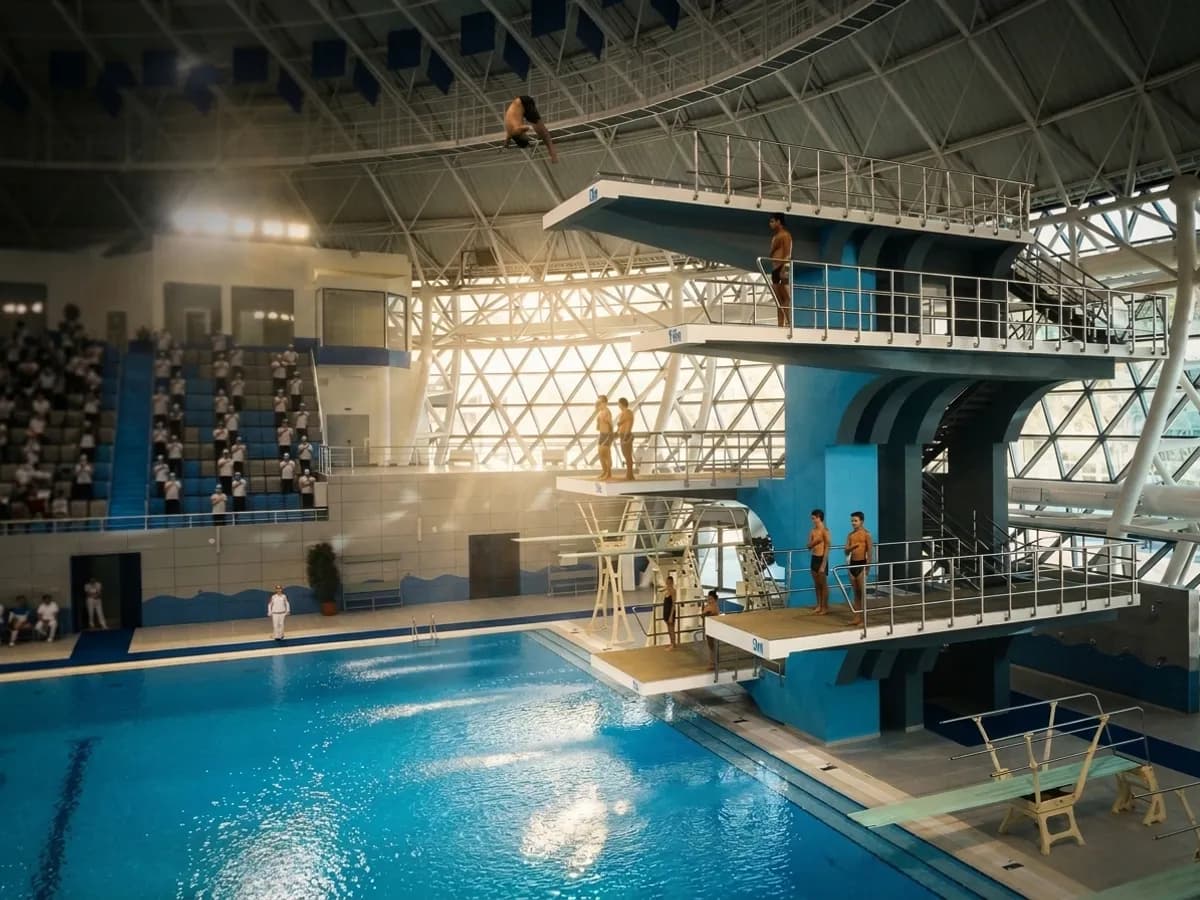
Explore our comprehensive engineering solutions and discover the right system for your project.